A university campus, the garage where Silicon Valley began, marsh and foothill trails and a downtown made for walking. Here is how to spend your time, sorted by what you like.
Palo Alto is a small city with an outsized reputation. It is home to Stanford University, the garage where Hewlett-Packard began and enough venture capital to fund a small country. It is also leafy, walkable and surrounded by protected open space. You can stand in a 19th century sandstone quad in the morning, hike past a working radio telescope at lunch and watch a 1940s movie on a big screen at night.
This guide groups the best things to do by interest, so you can build a day around what you enjoy. Each section points to our deeper guides. Many of the top sights are free. Most of them are close enough to reach by bike.
Stanford campus and museums
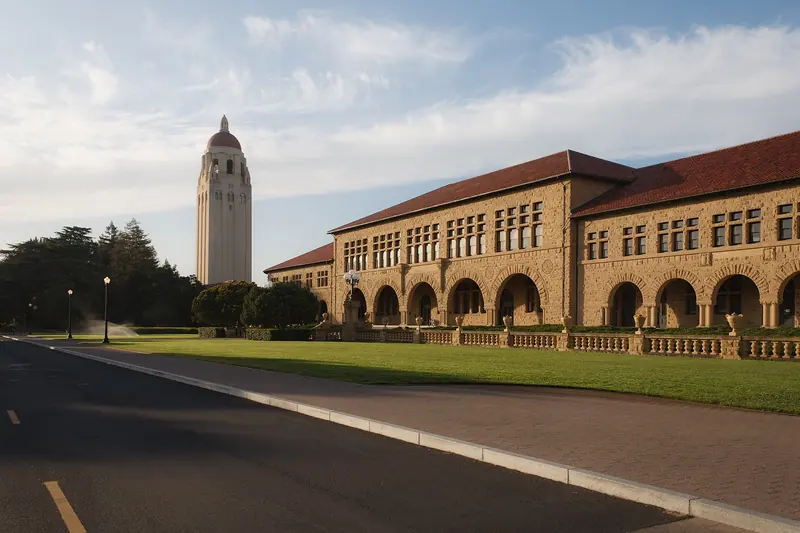
Start with Stanford. The campus is open to the public and most of its sights cost nothing. Walk up Palm Drive to the Main Quad, the sandstone heart of the university with its red tile roofs and long arcades. At the far end stands Memorial Church, finished in 1903, with a gold mosaic facade and a glowing interior.
A few minutes away, the Cantor Arts Center holds a large collection that spans continents and centuries. Admission is free. Outside, the Rodin Sculpture Garden displays bronzes by Auguste Rodin. More Rodin works stand in Memorial Court at the entrance to the Main Quad.
For the best view on campus, ride the elevator up Hoover Tower. The observation platform on the 14th floor looks out over the campus and much of the Bay Area. Check the Hoover Institution's site for current hours and tickets.
Two gardens round out a campus visit. The Arizona Cactus Garden was designed for Jane and Leland Stanford by Rudolf Ulrich in the early 1880s. The Papua New Guinea Sculpture Garden holds 40 carvings in wood and stone of people, animals and magical beings. Our Stanford visitor guide covers parking, tours and how to fit it all in.
The Main Quad arcades, with Hoover Tower rising behind. Most of campus is free to explore. Photo: King of Hearts, Wikimedia Commons, CC BY-SA 3.0
Tech history
Silicon Valley began here. The single most important stop is the HP Garage at 367 Addison Avenue, where Bill Hewlett and Dave Packard formed their partnership in 1939. The state of California named it the Birthplace of Silicon Valley. The house is a private residence, so view the garage and its landmark plaque from the sidewalk.
From there it is a short walk to other markers of the city's tech story. A state landmark plaque at Channing Avenue and Emerson Street marks the lab where Lee de Forest worked on the vacuum tube amplifier for the Federal Telegraph Company. Downtown, the modest office at 165 University Avenue earned the nickname "the lucky building" after early versions of Google and PayPal worked there.
Palo Alto runs from the edge of San Francisco Bay to the foothills. Much of that land is protected. These are the best ways to enjoy it:
Hike the Dish. The paved loop through Stanford's foothills is about 3.5 miles with real climbs and wide views. See our Dish guide.
Walk the Baylands boardwalk. A quarter mile across the salt marsh to open water, with world-class birding in winter.
Picnic at Boronda Lake. Foothills Nature Preserve has oak woodland, 15 miles of trails and a small lake. Arrive early on weekends, since the city caps the number of visitors.
Ride the Bryant Street bike boulevard. Palo Alto created the first bicycle boulevard in the country. It is still a pleasant way to cross town.
Our outdoors hub has full guides to the Baylands, Foothills Nature Preserve and every other park, plus dog rules and bike routes.
Shopping and food streets
University Avenue and downtown
University Avenue runs from the Caltrain station toward Stanford and is the city's main street. The blocks between Alma Street and Webster Street hold restaurants, cafes, bookshops and boutiques. Ramona Street, just off University, has Spanish Revival storefronts from the 1920s and 1930s. Our downtown guide walks you through it.
California Avenue
California Avenue was once the main street of the town of Mayfield, which joined Palo Alto in 1925. Today it is a relaxed strip of restaurants and cafes near its own Caltrain station. It feels more local than downtown and is an easy lunch stop after a Baylands walk.
Stanford Shopping Center
This open-air shopping center sits just north of campus off El Camino Real. Its outdoor walkways and seasonal displays make it pleasant to stroll even if you do not plan to buy anything.
For where to eat and drink, including the best coffee in town, see our food and drink guide.
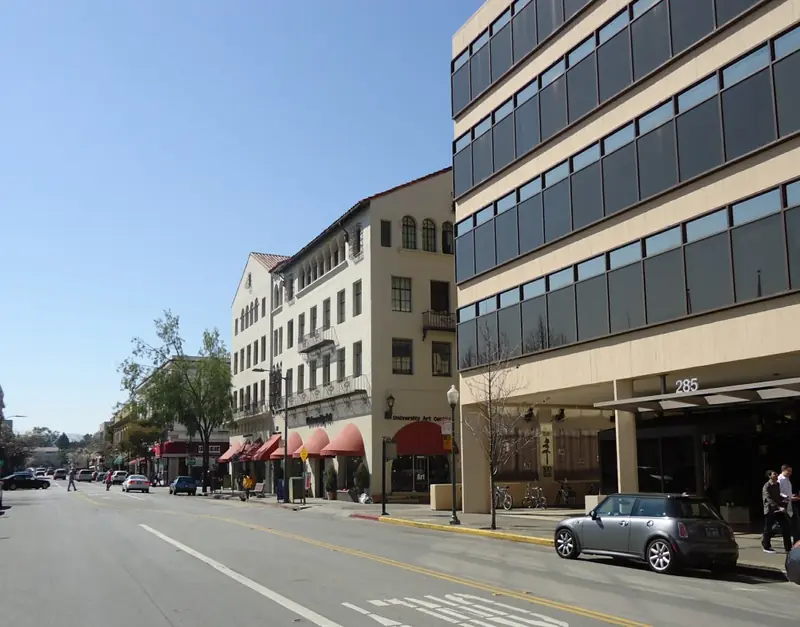
Downtown Palo Alto is compact and easy to explore on foot. Photo: Tomwsulcer, Wikimedia Commons, CC0
Arts and film
The Stanford Theatre on University Avenue first opened in 1925. Today it is devoted to classic Hollywood films from the golden age, shown on a big screen. The schedule runs in themed series, often built around a single star or director. Check the theater's website for what is playing during your visit.
Stanford adds a deep calendar of concerts, lectures and performances, many of them open to the public. The Cantor Arts Center rotates special exhibitions through the year. Check the university calendar during your visit for free talks and student performances.
Advertisement
With kids
Palo Alto is an easy city for families. The Junior Museum and Zoo has flamingos, meerkats, lemurs and a bald eagle in a compact space that suits young children. Mitchell Park is home to the Magical Bridge Playground, designed so kids of all abilities can play together. The Winter Lodge runs an outdoor ice rink from fall into spring. The Baylands nature center and boardwalk make an easy nature outing.
We cover all of this in detail in our guide to Palo Alto with kids, including libraries, parks and rainy day ideas.
Free things to do
You can fill a full day in Palo Alto without paying admission anywhere:
Walk Palm Drive and the Main Quad, then step inside Memorial Church.
Visit the Cantor Arts Center and the Rodin Sculpture Garden.
Hike the Stanford Dish loop.
Walk the Baylands boardwalk at sunset.
See the HP Garage at 367 Addison Avenue from the sidewalk.
Stroll the 2.5 acres of Elizabeth F. Gamble Garden on Waverley Street, free during daylight hours.
Find El Palo Alto, the redwood that gave the city its name, beside the Caltrain tracks near the Palo Alto station.
Wander the shingled houses of Professorville, a few blocks south of University Avenue.
Day trips nearby
Filoli
Filoli is a country estate in Woodside, a short drive west of Palo Alto. The house dates to 1917 and the estate covers about 654 acres, with 16 acres of formal gardens. It is a site of the National Trust for Historic Preservation. Buy tickets ahead through the estate's website, especially for its seasonal events.
Half Moon Bay
The coast town of Half Moon Bay sits on the other side of the Santa Cruz Mountains. Expect beaches, bluff trails and a small historic main street. Summer often brings fog and cool air, so bring a jacket even on a hot day in Palo Alto.
San Francisco
Caltrain runs from Palo Alto to San Francisco, which makes a car-free day trip easy. You can also drive up Highway 101 or the more scenic Interstate 280. For guided options, compare San Francisco day tours.
Santa Cruz
Santa Cruz is south over Highway 17, which winds through the mountains. The beach boardwalk, surf breaks and redwood parks nearby make it a classic summer escape. Leave early on weekends since the highway backs up.
All four trips work best with an early start. Summer weekends bring the heaviest traffic to the coast and to Santa Cruz.
Palo Alto is best known as the home of Stanford University and the birthplace of Silicon Valley. Hewlett-Packard started in a garage at 367 Addison Avenue in 1939. The city is also known for its leafy neighborhoods and large open space preserves.
Is Palo Alto worth visiting?
Yes, especially if you are interested in technology, universities or the outdoors. Stanford's campus and museums are free to visit and the HP Garage, the Dish and the Baylands are all close by. One or two days covers the highlights.
What are the best free things to do in Palo Alto?
Walk the Stanford campus and visit Memorial Church and the Cantor Arts Center. Hike the Dish or the Baylands boardwalk. See the HP Garage from the sidewalk and wander Gamble Garden during daylight hours.
How do you get from Palo Alto to San Francisco?
Caltrain runs from Palo Alto and California Avenue stations to San Francisco. Driving takes under an hour in light traffic on Highway 101 or Interstate 280. Check Caltrain schedules for express trains.
What is there to do in Palo Alto at night?
Catch a classic film at the Stanford Theatre or a performance on campus. Downtown on University Avenue has many restaurants and bars within a few blocks. California Avenue is a quieter option for dinner.