On this page
The Cantor Arts Center is the best free museum on the Peninsula and one of the easiest to enjoy. You can walk in without a ticket, see Egyptian antiquities and Asian ceramics in one room and American modernism in the next, then step outside into a garden full of Rodin bronzes. The building itself carries more than a century of Stanford history, including two earthquakes that nearly finished it.
This guide covers the museum's story, the main collections, the Rodin Sculpture Garden and the Anderson Collection next door. It closes with practical tips on hours, parking and food.
From family memorial to campus museum
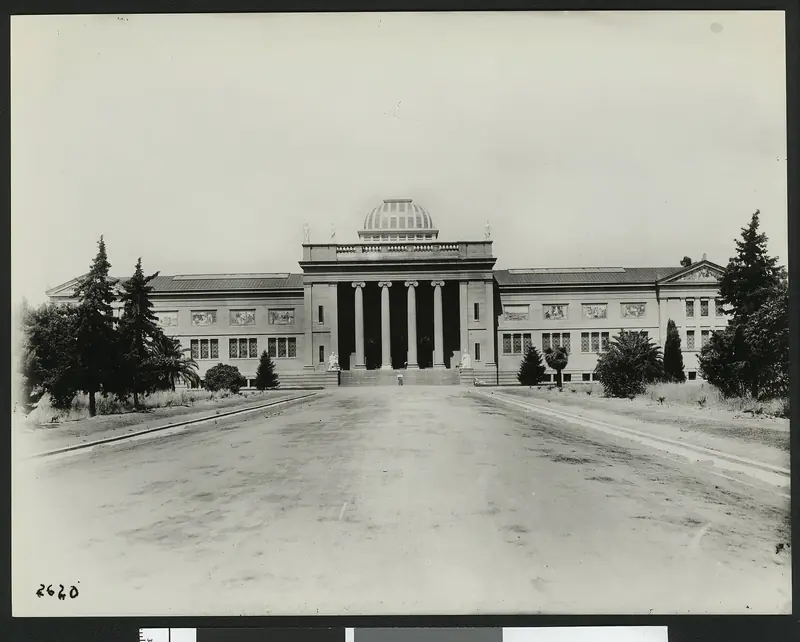
The museum began as part of the founders' grief. Leland Stanford Jr. died of typhoid fever in 1884, two months short of his sixteenth birthday. His parents founded the university in his name and they also planned a museum to hold the objects he had collected and the art they gathered on their travels. The museum was founded when the university opened in 1891 and it opened its doors in 1894 as the Leland Stanford Jr. Museum.
It was ambitious from the start. By the turn of the twentieth century it was the largest privately owned museum building in the world, according to the museum's own history. Jane Stanford filled it with antiquities, paintings and family memorabilia.

Two earthquakes and a rebirth
The 1906 San Francisco earthquake devastated the building. The Roman, Egyptian and Asian galleries were destroyed and much of the structure was damaged beyond repair. Years of budget cuts, disrepair and lost or sold artworks followed. The museum closed in 1945 to take an inventory of what remained.
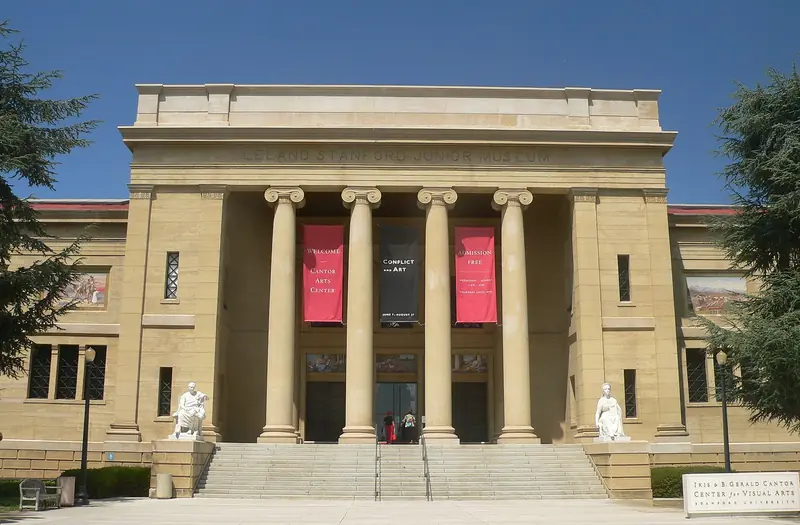
It recovered slowly over the following decades, only to be hit again. The 1989 Loma Prieta earthquake caused severe damage and forced another closure. This time the university committed to restoring and expanding the museum. A $36.8 million project added a seismic retrofit and a new wing of about 42,000 square feet designed by Polshek and Partners, with Richard Olcott as the principal designer. The museum reopened in late 1999 as the Iris and B. Gerald Cantor Center for Visual Arts, named for the donors Iris and B. Gerald Cantor. Most people now just call it the Cantor.
What is in the collections
The Cantor's collection holds more than 38,000 objects and spans thousands of years. You will not see it all in one visit, so it helps to pick a few areas.
- Ancient and Asian art: Antiquities from the ancient world along with art from across Asia.
- Africa, Oceania and the Americas: Sculpture, textiles and objects from African, Oceanic and Indigenous American cultures.
- European and American art: Paintings, sculpture and decorative arts across several centuries.
- Modern and contemporary art: Works by twentieth and twenty-first century artists.
- Photography, prints and drawings: A deep works on paper collection, Richard Diebenkorn sketchbooks and the photography archive of Andy Warhol.
- Stanford family collection: Objects tied to the founders and their son, which tell the story of how the university began.
The museum also holds work by Eadweard Muybridge, the photographer who captured a galloping horse at Leland Stanford's stock farm in 1878. Those images are a key step toward motion pictures and a direct link between the museum and the land it stands on.
Exhibitions rotate several times a year. Check the museum's visit page for what is on during your trip.
The Rodin Sculpture Garden
Stanford has close to 200 works by Auguste Rodin, most of them bronzes, with many given by the collector B. Gerald Cantor. It is one of the largest Rodin collections outside Paris. Some are inside the museum, but the most famous pieces stand outdoors.
The B. Gerald Cantor Rodin Sculpture Garden opened in 1985. It covers about one acre and holds about 20 monumental bronzes, including The Walking Man, Adam, Eve and The Three Shades. According to the museum, the garden is open 24 hours a day, every day of the year.
The Gates of Hell anchors the garden's eastern end. This cast was made in 1981 by the Coubertin Foundry in France using the lost-wax method that Rodin favored. Stand close and you will find a version of The Thinker brooding above the doors. Conservators wash the bronzes and apply protective wax to guard them against dust, sun and acid rain.
Two heads from The Burghers of Calais are in the garden. Life-size figures from the same group stand in Memorial Court at the front of the Main Quad, a ten minute walk south.

The Anderson Collection next door
A few steps from the Cantor, a sleek stone and glass building holds the Anderson Collection at Stanford University. It is a free museum of modern and contemporary American art built around the core of a private collection assembled by Harry W. Anderson, Mary Margaret Anderson and their daughter Mary Patricia Anderson Pence. The family gave the works to Stanford in 2011 and the museum opened to the public on September 21, 2014. Richard Olcott, who designed the Cantor's 1999 wing, also designed this building.
The collection includes 121 works by 86 artists, with a focus on postwar American art. Highlights include Jackson Pollock's 1947 drip painting Lucifer (on loan to the Metropolitan Museum of Art until January 31, 2027) and works by Mark Rothko, Joan Mitchell, Philip Guston and Wayne Thiebaud. It is small enough to see properly in under an hour. The museum's website lists it as open Thursday through Monday, so check anderson.stanford.edu before you go.
Hours, admission and getting there
Admission to the Cantor is always free. The museum is closed on Tuesdays and Wednesdays and open the other five days, with a late evening on Thursdays until 8 p.m. Weekend hours start earlier than weekday hours. Exact times can change, so confirm on the official visit page.
- Address: 328 Lomita Drive at Museum Way, at the north end of the campus near Palm Drive.
- Parking: Spaces are limited. Visitor parking is paid through ParkMobile, using the zone number posted on green signs.
- Transit: Take Caltrain to Palo Alto and ride the free Marguerite shuttle, or walk about 20 minutes up Palm Drive. Our Stanford visitor guide has the details.
- Accessibility: The museum says its galleries, gardens and restrooms are wheelchair accessible. There is an accessible drop-off on Lomita Drive, a ramp to the south entrance and wheelchairs for visitor use.
- Tours: The museum offers public tours. Groups of 10 or more should register in advance.
Food at the museum
Tootsie's at the Cantor is the museum cafe. It is open Thursday through Monday, serving lunch from 11 a.m. to 3 p.m. and tea in the afternoon, with a prix fixe dinner on Thursday evenings. It makes an easy break between the galleries and the garden. Downtown Palo Alto is the other easy option, a short shuttle ride away.
Planning tips
- Pair it with the campus core. The Cantor, the Anderson Collection, the Rodin garden, Memorial Church and Hoover Tower are all within a 15 minute walk of each other.
- Use Thursday evenings. The late opening suits anyone working during the day and the sculpture garden looks best in soft evening light.
- See the garden at both ends of the day. Since it never closes, you can visit the bronzes at sunset after the galleries shut.
- Bring children. The free entry makes a short visit low risk and the outdoor bronzes are easy to enjoy. See our Palo Alto with kids guide for more ideas.
- Plan around football. Stanford Stadium is close by and home game days bring heavy traffic to this end of campus.
The Cantor is one of the anchors of Palo Alto's arts and culture scene. For the rest of the city's sights, see our attractions overview. Visitors who want a guide for the whole campus can browse Stanford and Silicon Valley tours.
Frequently asked questions
Is the Cantor Arts Center free?
Yes. Admission to the Cantor Arts Center is always free and so is the Anderson Collection next door. The museum says it is open and free for everyone.
What days is the Cantor Arts Center closed?
The Cantor is closed on Tuesdays and Wednesdays. It is open the other five days, with a late evening on Thursdays until 8 p.m. Check museum.stanford.edu for current hours before you go.
Where is the Rodin Sculpture Garden?
The B. Gerald Cantor Rodin Sculpture Garden sits beside the Cantor Arts Center at the north end of the Stanford campus. More Rodin bronzes, from The Burghers of Calais, stand in Memorial Court at the front of the Main Quad.
How many Rodin sculptures does Stanford have?
Stanford's collection includes close to 200 works by Rodin, most of them bronzes. It is one of the largest Rodin collections outside Paris.
Where do you park for the Cantor Arts Center?
Parking near the museum is limited and paid through ParkMobile. Find a zone number on the green sign in your space and pay by app, website or phone. Arriving by Caltrain and the free Marguerite shuttle avoids the hunt for a space.