On this page
- Radio comes first: Federal Telegraph and Lee de Forest
- Frederick Terman and the Stanford connection
- Hewlett and Packard in the garage
- Varian, the klystron and Stanford Industrial Park
- Shockley, the traitorous eight and Fairchild
- Xerox PARC and the Alto
- The internet era in downtown Palo Alto
- From Tesla to the AI era
- Timeline
- Seeing this history in person
- FAQ
Silicon Valley is not on any map. It is a nickname for a string of cities between San Jose and San Mateo where the modern electronics and software industries took shape. Palo Alto sits near the northern end. It is small and quiet and full of trees. It is also where many of the region's most important chapters began.
This page tells that story in order, with a focus on what happened inside Palo Alto. For the city's earlier history, from the Ohlone to the founding of Stanford, see our main history of Palo Alto. For a walking route past the places mentioned here, use our famous tech addresses tour.
Radio comes first: Federal Telegraph and Lee de Forest
Palo Alto's tech story starts with radio. In 1909 Cyril Elwell, a young Stanford graduate, founded the Federal Telegraph Company in Palo Alto. Its lab and factory stood near the corner of Channing Avenue and Emerson Street, a few blocks from downtown.
The inventor Lee de Forest joined the company. Between 1911 and 1913 he developed the first vacuum tube amplifier and oscillator at the Palo Alto lab. Those devices made it possible to boost weak signals and generate steady radio waves. According to the state landmark listing, the work led to modern radio communication, television and the electronics age.
The site is California Historical Landmark No. 836, registered in 1969. A plaque is set into the sidewalk at the southeast corner of Channing and Emerson. It is easy to miss, so look down.
Frederick Terman and the Stanford connection
Frederick Terman taught radio engineering at Stanford in the 1920s and 1930s. He noticed that his best students left California for jobs with big companies back East. Terman thought they should build companies near campus instead. He helped them find work, made introductions and invested his own money in some of their ventures.
During World War II Terman led the Radio Research Laboratory at Harvard, with a staff of roughly 800 to 850. The lab built radar jammers and other countermeasures. He came back to Stanford after the war as dean of engineering (sources give 1944 or 1946) and later served as provost from 1955 to 1965. He used government research funding and industry ties to make Stanford a leading engineering school. He is widely called the father of Silicon Valley.
Hewlett and Packard in the garage
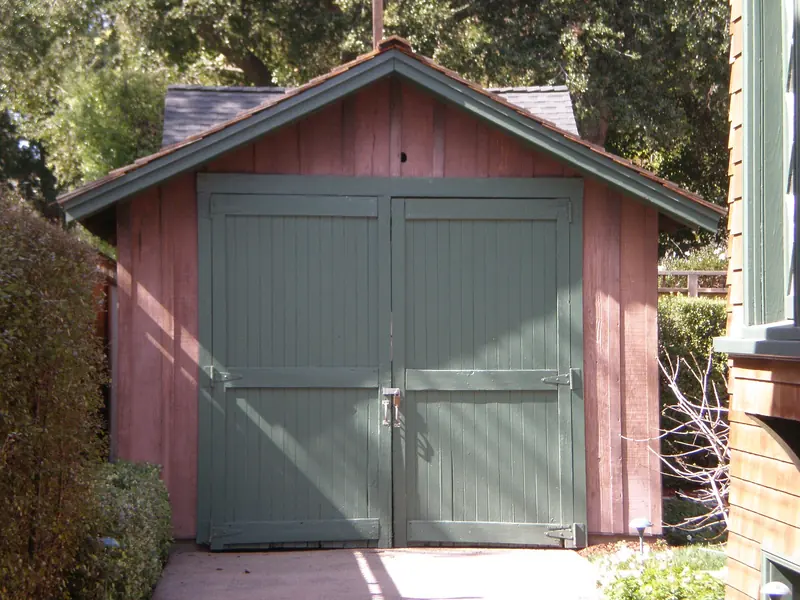
Two of Terman's students were Bill Hewlett and Dave Packard. In 1938 Packard and his new wife Lucile rented the ground floor of a house at 367 Addison Avenue. Hewlett lived in a shed out back. The two friends set up shop in the small garage.
On January 1, 1939, they formalized their partnership with $538 in cash and equipment. They picked the name by flipping a coin. Their first product was the Model 200A audio oscillator, which used a small light bulb to keep its output stable. Walt Disney Studios bought eight of a modified model to monitor sound during work on the film Fantasia.
By 1940 they had outgrown the garage and moved to a building on Page Mill Road. The garage is now California Historical Landmark No. 976, the "Birthplace of Silicon Valley." Read more on our HP Garage page.

Varian, the klystron and Stanford Industrial Park
Another pair of brothers, Russell and Sigurd Varian, built a prototype klystron at Stanford in 1937. It was the first tube that could generate microwaves. It was also light enough to put radar on airplanes. After the war the brothers founded Varian Associates.
Stanford had a lot of land and could not sell it. In 1951 Terman pushed a new idea. The university and the City of Palo Alto created the Stanford Industrial Park, leasing land along Page Mill Road to technology firms. The city annexed 700 acres for the project. Varian moved into the first building in 1953. Hewlett-Packard leased 40 acres in 1956, opened its first building there in 1957 and moved its headquarters to 1501 Page Mill Road in 1960. HP Inc. is still headquartered at that address.
The research park model was new. A university next to a campus of companies, with talent moving freely between them, became the template copied around the world. Today it is called Stanford Research Park and holds more than 150 companies.
Shockley, the traitorous eight and Fairchild
Silicon arrived in the mid 1950s. William Shockley, a co-inventor of the transistor, reached an agreement with Arnold Beckman in September 1955 to start a semiconductor lab. Shockley rented a building at 391 South San Antonio Road in Mountain View, a few miles south of downtown Palo Alto. He hired brilliant young scientists.
He was also a difficult boss. In September 1957 eight employees resigned together after Beckman declined to replace him. They were Gordon Moore, Robert Noyce, Julius Blank, Victor Grinich, Jean Hoerni, Eugene Kleiner, Jay Last and Sheldon Roberts. Shockley reportedly called them traitors and the nickname stuck.
The eight founded Fairchild Semiconductor in Palo Alto, at 844 East Charleston Road near the Mountain View border. There, in 1959, Noyce invented the first integrated circuit that could be mass produced, building on Hoerni's planar process. The site is California Historical Landmark No. 1000. Fairchild alumni went on to found Intel, AMD and dozens of other companies. Eugene Kleiner co-founded the venture firm Kleiner Perkins, which links the chip era to the venture era. Read more in our venture capital guide.
Xerox PARC and the Alto
In 1970 Xerox opened the Palo Alto Research Center, known as PARC, in Stanford Research Park. It later settled into its long, low building on Coyote Hill Road. Its researchers set out to invent the office of the future. They came close.
On March 1, 1973, PARC introduced the Alto. It had a bit-mapped screen, a three-button mouse, windows on the screen and a network connection. It is widely considered the first modern personal computer, though it was never sold as a mass product. PARC teams also developed Ethernet, the laser printer and much of the graphical user interface used today.
In December 1979 Steve Jobs and a team from Apple got demonstrations of PARC technology in exchange for Xerox being able to buy Apple stock. Jobs came away convinced that the mouse and the graphical desktop were the future. Apple used those ideas in the Lisa and the Macintosh. PARC became an independent Xerox subsidiary in 2002. In April 2023 Xerox donated PARC to SRI International, the nonprofit research institute in Menlo Park.
The personal computer era
The 1970s and 1980s spread computing from labs to homes. Much of the hardware action happened in Cupertino, Sunnyvale and Santa Clara, but Palo Alto stayed close to the center. When Steve Jobs left Apple in 1985 and founded NeXT, the company set up in Stanford Research Park. Jobs later made his family home in Old Palo Alto, where he lived for more than 20 years.
Venture capital grew alongside the industry. Sequoia Capital was one of Apple's first investors in 1978. Firms clustered on Sand Hill Road, at the edge of Stanford's land. Palo Alto became the place where engineers and investors met over coffee.
The internet era in downtown Palo Alto
The dot-com years on University Avenue
In the late 1990s the internet boom filled downtown Palo Alto with small companies. Office space above shops on University Avenue became some of the most sought after in the world.
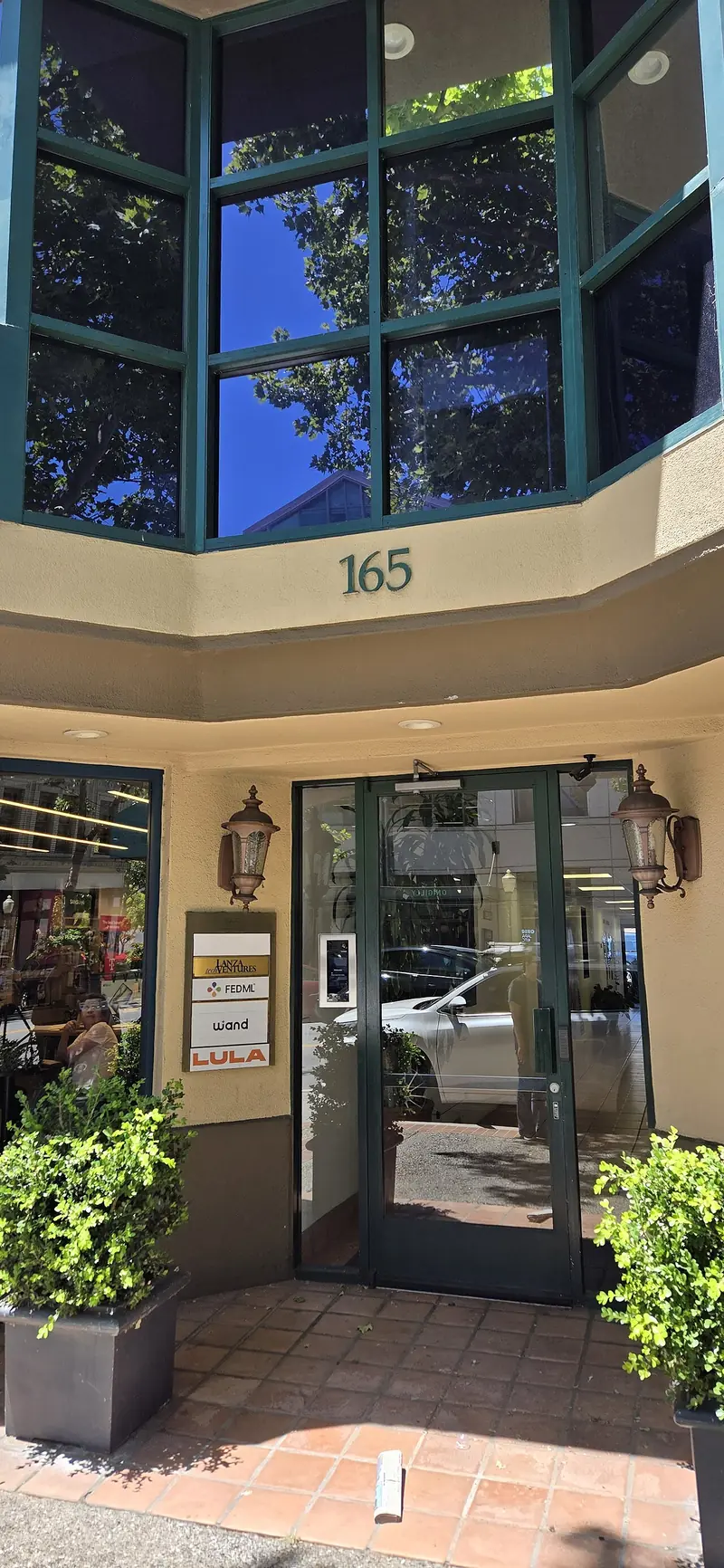
One building got a reputation for luck. 165 University Avenue had already housed Logitech. In 1999 Google moved in with fewer than ten employees, coming from a garage in Menlo Park. Within months it had grown too big and moved to Mountain View. Confinity, the startup behind PayPal, took space in the same building. Later tenants included Danger, which Microsoft bought in 2008. Locals started calling it the lucky building.
The bust of 2000 and 2001 emptied many offices. Rents fell. That made room for the next wave.

Facebook and the social web
In the summer of 2004 Mark Zuckerberg and a few Harvard classmates moved their young site, then called TheFacebook, to Palo Alto. In January 2005 the company leased its first office at 471 Emerson Street under the name "The Face Book." A marker there records the dates, January 2005 to July 2006. As the company grew it spread across several downtown buildings, including 156 University Avenue.
In 2009 Facebook consolidated at 1601 California Avenue in Stanford Research Park. Two years later it began moving to the former Sun Microsystems campus in Menlo Park, at 1 Hacker Way. The Palo Alto years shaped the company. A new generation of startups filled the downtown offices it left behind.
From Tesla to the AI era
Tesla, VMware and the 2010s
Tesla made its headquarters on Deer Creek Road in Stanford Research Park in the 2010s. It moved its corporate headquarters to Austin, Texas, in 2021. In February 2023 Elon Musk and Governor Gavin Newsom announced that Tesla's global engineering headquarters would be in Palo Alto, at 3000 Hanover Street on the former Hewlett Packard Enterprise campus.
VMware, founded in 1998, grew into a large campus on Hillview Avenue. After Broadcom bought VMware in 2023, it moved its own headquarters onto that campus. Palantir, founded in Palo Alto in 2003, moved its headquarters to Denver in 2020.
The AI era
Stanford has studied artificial intelligence since the 1960s. In March 2019 it launched the Stanford Institute for Human-Centered Artificial Intelligence, co-directed by John Etchemendy and Fei-Fei Li, to bring researchers together with industry and government.
The current boom has filled Stanford Research Park again. Humanoid robot maker 1X Technologies opened its headquarters there in 2025. In 2026 General Motors leased nearly 340,000 square feet on Hillview Avenue, aiming to recruit talent from Stanford. Stanford's TreeHacks, a 36 hour student hackathon, drew more than 1,000 participants in February 2026 with sponsors that included OpenAI, Google, Anthropic and NVIDIA. The cycle that Terman started still runs: students build things, companies form nearby and investors a few miles away fund them.
Timeline
- 1909: Cyril Elwell founds the Federal Telegraph Company in Palo Alto.
- 1911 to 1913: Lee de Forest develops the vacuum tube amplifier and oscillator.
- 1937: The Varian brothers build a prototype klystron at Stanford.
- 1939: Hewlett and Packard formalize their partnership on January 1.
- 1951: Stanford Industrial Park is created.
- 1953: Varian Associates moves into the park's first building.
- 1957: The traitorous eight found Fairchild Semiconductor in Palo Alto.
- 1959: Robert Noyce invents a practical integrated circuit at Fairchild.
- 1960: HP moves its headquarters to 1501 Page Mill Road.
- 1970: Xerox PARC opens.
- 1973: The Xerox Alto is introduced.
- 1999: Google works out of 165 University Avenue.
- 2005: Facebook opens its first office at 471 Emerson Street.
- 2019: Stanford launches its Institute for Human-Centered AI.
- 2023: Tesla names Palo Alto its global engineering headquarters. Xerox donates PARC to SRI.
Seeing this history in person
Most of these sites are private offices or homes. You can still see the outsides on a self-guided walk or bike ride. Start at the Palo Alto Caltrain station and walk up University Avenue past 165 and 156. Turn onto Emerson Street to find 471 Emerson and then walk south to the Channing Avenue plaque. Finish at the HP Garage on Addison Avenue. Visitors who prefer a guide can book a Silicon Valley tour from San Francisco. For the bigger picture of the region's companies today, see our startups hub.
Frequently asked questions
Where did Silicon Valley start?
The state of California named the HP Garage at 367 Addison Avenue in Palo Alto the birthplace of Silicon Valley. Earlier work at the Federal Telegraph Company lab at Channing Avenue and Emerson Street is also marked as a landmark of the electronics age.
Who were the traitorous eight?
They were eight scientists who left Shockley Semiconductor Laboratory in Mountain View in September 1957. They were Gordon Moore, Robert Noyce, Julius Blank, Victor Grinich, Jean Hoerni, Eugene Kleiner, Jay Last and Sheldon Roberts. They founded Fairchild Semiconductor in Palo Alto.
Who is called the father of Silicon Valley?
Stanford engineering dean and provost Frederick Terman is most often given the title. He encouraged students like Bill Hewlett and Dave Packard to start companies locally and led the creation of the Stanford Industrial Park in 1951. William Shockley is sometimes credited alongside him.
What was invented at Xerox PARC?
PARC researchers developed the Alto personal computer, Ethernet networking, laser printing and much of the graphical user interface. Xerox donated PARC to the nonprofit SRI International in 2023.
Was Google founded in Palo Alto?
Google started at Stanford and then in a Menlo Park garage. In 1999 it moved into a small office at 165 University Avenue in downtown Palo Alto with fewer than ten employees. Within months it outgrew the space and moved to Mountain View.