On this page
Stanford's more than 8,000 acres start where Palo Alto's streets end. For people who live here, the university is a park, a concert hall, a museum, a research hospital and an employer rolled into one. Yet many residents use only a sliver of it, often because the rules are scattered across hundreds of department websites. Some things are open to everyone, some need a Stanford sponsor and some are closed to outsiders entirely.
This guide pulls it together for neighbors. Each section links to a detailed page with hours, prices and sources. For the full set of visitor guides, start at our Stanford hub. For the long and sometimes tense relationship between the university and the town, read Stanford and the city.
What residents can use, at a glance
| Area | Open to the public? | Cost | Our guide |
|---|---|---|---|
| Art museums and sculpture gardens | Yes | Free | Free things to do |
| Libraries | Yes, with a day pass | Free for 7 days a year, then paid cards | Library access |
| Adult classes | Yes | Tuition per course | Continuing Studies |
| Lectures | Many | Mostly free | Public lectures |
| Gyms and pools | No general memberships | Guest passes need a sponsor | Community recreation |
| Concerts and games | Yes | Ticketed or free by event | Ticket offices |
| Volunteering | Yes, by application | Free | Volunteering |
| Research studies | Yes, if eligible | Often paid to you | Research studies |
| Walking dogs | Leashed on paths; banned on the Dish | Free | Dogs on campus |
| Riding bikes | Yes, with campus rules | Free | Biking on campus |
Learning: classes, talks and books
The most direct way to use Stanford's brainpower is Stanford Continuing Studies. Any adult with a high school diploma can enroll without applying. Courses run online, on campus and in hybrid formats, with a $35 registration fee once per quarter on top of tuition. Winter 2027 registration opens November 30, 2026, for a quarter that starts January 4. Continuing Studies also runs free events, such as this fall's Reimagining Democracy speaker series.
Free talks happen almost every weekday during the academic year. Our public lectures guide explains the long-running Humanities Center series and how to filter the Stanford Events calendar by General Public. Our campus events guide covers the other calendars. The Humanities Center and the Institute for Human-Centered AI both run seminar series billed as free and open to the public.
For research, a free day pass opens Green Library and most other branches for up to seven days a year. Paid cards cover longer projects. The library access guide explains the limits, including the four libraries that day passes do not cover.
Arts and culture
The two art museums are free: the Cantor Arts Center (closed Tuesday and Wednesday) and the Anderson Collection (open Thursday to Monday). The Rodin Sculpture Garden never closes. More than 85 outdoor works of public art are spread across campus.
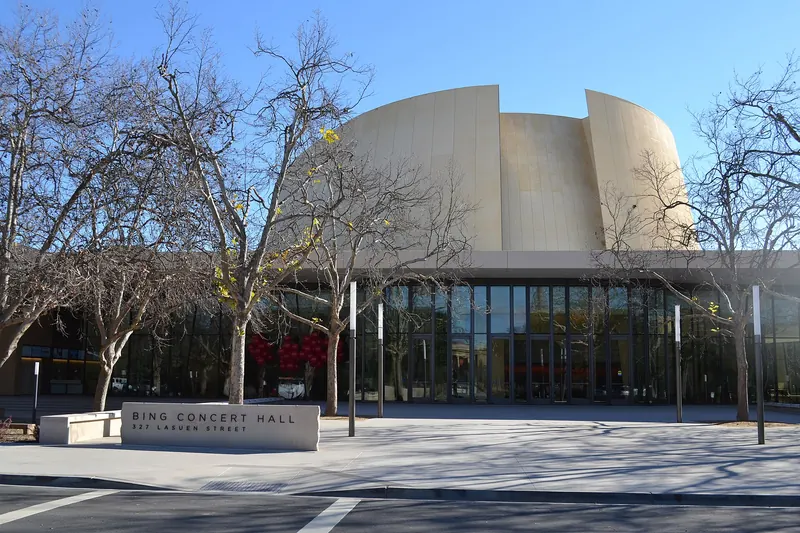
For performances, Stanford Live presents a full season at Bing Concert Hall and other venues. Youth under 18 get 25% off mainstage tickets and buying in person at the Bing box office avoids order fees. The Department of Music adds dozens of concerts a quarter, including free noon recitals; see our music concerts guide. Theater fans should read theater and dance at Stanford.

Outdoors
The Dish is the classic local workout: a 3.5 mile paved loop open from 6:30 a.m. to 5 p.m. in November and December. No dogs, bikes or off-trail walking. Lower-key options include the rim path around Lake Lagunita, the Arboretum and the Arizona Cactus Garden. Jasper Ridge Biological Preserve is open only on free docent-led tours by appointment; see our Jasper Ridge guide. The educational farm welcomes visitors during weekday and Saturday morning hours.
Sports and fitness
Watching Stanford sports can be free. Regular season swimming and diving, men's volleyball, tennis and track meets need no ticket. Football and basketball do; see Stanford sports and game days and our ticket office guide.
Working out is harder. Stanford Recreation and Wellness does not sell memberships to the general public. Alumni, hospital employees and certain approved affiliates can buy in at $152 a month and up. Residents with a Stanford friend can buy guest passes at $22 each. Anyone can join Stanford Masters Swimming and anyone can hit balls at the golf driving range. Details are in our community recreation guide.
Health care and research
Stanford Health Care and Lucile Packard Children's Hospital serve the whole region, not just the university. Our hospital visitor guide covers parking and visiting rules. If you want to contribute to medical science, Stanford lists clinical trials that include some for healthy volunteers. It also runs paid psychology and business school studies open to people with no Stanford tie. Our research studies guide explains where to look and what Stanford's review board says about consent.
Giving time
Residents fill many of Stanford's volunteer roles. The hospitals take volunteers from age 16 for a six-month weekly commitment. The Cantor and Anderson were recruiting information desk ambassadors in fall 2026, while their gallery guide program plans its next intake in autumn 2027. Jasper Ridge trains community docents through a two-quarter course next offered in 2028. The farm runs public volunteer shifts twice a week. See volunteering at Stanford for requirements.
Families
For a family day, our Stanford with kids guide strings together the museums, gardens and free sports. Older kids and teens can look at pre-collegiate and summer programs. Stanford Live's youth discount and free regular season sports keep outings affordable.
Getting there and around
From most of Palo Alto, a bike is the easiest way onto campus. Stanford enforces speed limits of 10 mph in pedestrian zones and 15 mph on the Oval, bans riding in the arcades and tickets riders who run stop signs; our biking guide has the rules. The free Marguerite shuttle runs weekdays from the Palo Alto Caltrain station with no ID required. Drivers pay by zone through ParkMobile on weekdays, while many central zones are free on weekends and after 4 p.m.; see parking and transit. Bringing a dog? Read dogs on campus first, since the Dish bans them.
Good to know
- Stanford's winter closure runs December 21, 2026 to January 1, 2027. Box offices, libraries and many programs close or cut hours.
- Memorial Church was closed to visitors for maintenance from June 15 to October 31, 2026. Confirm visitor hours have resumed before you go.
- Hoover Tower's observation deck is closed until January 25, 2027; the ground-floor galleries stay open on weekdays.
- Stanford's Office of Community Engagement at community.stanford.edu lists public events, favorite campus places and a contact form for neighbors.
Stanford's community office
Stanford runs an Office of Community Engagement for its neighbors. Its website gathers free and low-cost events, a searchable map of favorite places on campus, recommended running routes from a 0.9 mile Lagunita loop to an 8.3 mile course, learning programs for every age and a page of special athletics discounts for community nonprofits and neighbors. It also publishes notices about special events that affect noise and traffic. If you live near campus, it is worth bookmarking alongside the city's own resources in our living in Palo Alto section.
Frequently asked questions
Is the Stanford campus open to the public?
Yes. Anyone can walk, bike or drive onto the Stanford campus and visit its outdoor spaces, museums and many public events. Some buildings, offices, student housing and athletic facilities are limited to Stanford ID holders and some areas such as the Dish have posted hours and rules.
What can Palo Alto residents use at Stanford for free?
The Cantor Arts Center, Anderson Collection, Rodin Sculpture Garden, Arizona Cactus Garden, the Dish trail, outdoor public art, library exhibits, many public lectures, noon concerts and regular season swimming, tennis, track and men's volleyball are all free. Library day passes are free for up to seven days a year.
Can Palo Alto residents use Stanford's gym?
Not as members of the general public. Stanford Recreation and Wellness sells memberships to alumni, hospital employees, approved affiliates and recent graduates. A resident with a Stanford sponsor can buy a guest pass and anyone can join Stanford Masters Swimming.
Can I take a class at Stanford without being a student?
Yes. Stanford Continuing Studies offers open enrollment to any adult with a high school diploma or equivalent, online and on campus. There is no application. Winter 2027 registration opens November 30, 2026.
Who do I contact at Stanford with a community question?
Stanford's Office of Community Engagement runs community.stanford.edu, which lists public events, learning programs, favorite campus places and a contact form and FAQ for neighbors.