On this page
Every summer the Stanford campus fills with teenagers. Some are writing philosophy papers, some are proving theorems and some are pipetting in medical labs. Others are at jazz camp or sports camp. From the sidewalk it all looks like one big summer school. In practice these programs are run by many separate offices, each with its own grades, prices, deadlines and rules.
This page is a map, not a strategy guide. It describes what Stanford publishes about its pre-collegiate and summer programs and what they cost in 2026. It does not offer advice on college admissions. None of these programs should be read as a route into Stanford. For questions about fit, contact the program office directly. Most 2027 details were not yet posted in late October 2026, so treat the 2026 figures as a guide to scale.
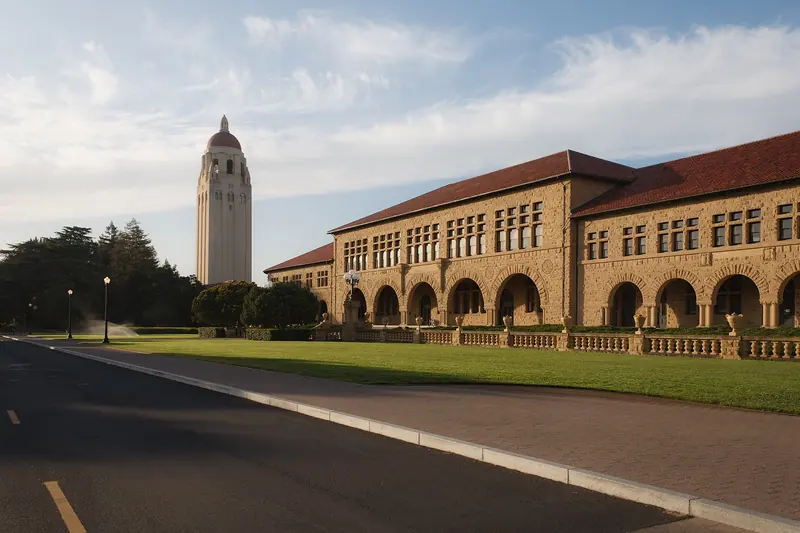

Stanford Pre-Collegiate Studies
Stanford Pre-Collegiate Studies, usually shortened to SPCS, is the university office dedicated to school-age students. It describes itself as offering five summer programs and two academic year programs for students from elementary through high school. Programs are non-credit enrichment unless noted. SPCS also runs Stanford Online High School, which it lists separately from these programs.
| Program | Grades | Format | Season |
|---|---|---|---|
| Pre-Collegiate Summer Institutes | 8 to 11 | Online, single-subject courses | Summer |
| Summer Humanities Institute | Rising juniors and seniors | Residential, three weeks | Summer |
| Stanford University Mathematics Camp (SUMaC) | Rising juniors and seniors | Online or residential | Summer |
| Stanford AI4ALL | Listed for grade 9 | Two weeks, residential or online | Summer |
| Middle School Scholars Program | 6 and 7 | Three-week online course plus weekly online meetings | Summer and school year |
| Stanford Math Circle | 1 to 12 | After-school classes | School year |
| University-Level Online Math and Physics | 9 to 12 | Online, earns Continuing Studies credit | School year and summer |
The Middle School Scholars Program is aimed at low-income students in grades 6 or 7 who live and attend school in the United States. The online math and physics courses are the only SPCS offering in this table that carries university credit, issued through Stanford Continuing Studies with a transcript.
The residential summer programs
Summer Humanities Institute
The Summer Humanities Institute is a three-week residential program for rising high school juniors and seniors. Students take a seminar on big questions in the humanities and live in Stanford residence halls. Its 2026 tuition of $8,850 covered:
- Housing in a residence hall, with linens and towels
- Meals in Stanford dining halls
- Daily activities and course supplies
- Academic field trips, including transport and admission
- Shuttles between Stanford and SFO at set times on arrival and departure days
Airfare, computers, toiletries, souvenirs and meals outside the program are extra. Families flying in can read our SFO arrival guide for travel outside the shuttle windows.
SUMaC
The Stanford University Mathematics Camp takes a select group of rising juniors and seniors from around the world. It runs both online and residential versions. Published tuition was $3,750 for the online program plus up to $100 in course materials. The residential program cost $8,950, which excludes airfare and personal costs.
AI4ALL
Stanford AI4ALL is an introduction to artificial intelligence that mixes lectures, hands-on research projects and mentoring. SPCS lists it as a two-week residential or online program. Stanford's community camps page lists it under the Stanford Institute for Human-Centered Artificial Intelligence, so check the program's own page for the current format and length.
Costs and financial aid
| Item (2026 cycle) | Summer Humanities Institute | SUMaC |
|---|---|---|
| Tuition | $8,850 residential | $3,750 online; $8,950 residential |
| Application fee | $60, waivers available | $60, waivers available |
| Aid application due | February 9, 2026 | February 9, 2026 |
| Aid documents due | February 16, 2026 | February 16, 2026 |
SPCS says aid is "granted based upon demonstrated financial need," is open to domestic and international applicants and does not affect the program's admission decision. The 2027 dates had not been posted in October 2026. If the pattern holds, applications and aid forms will be due in winter, months before summer starts. SPCS runs a mailing list for date announcements.
Stanford Summer Session for high schoolers
Summer Session is a different animal. It is not an enrichment camp but Stanford's regular summer quarter. High school students take actual university courses alongside undergraduates. Stanford's camps page says students must be 16 by the start of the program. They earn credit and an official Stanford transcript.
- Length: eight weeks. The 2025 session ran June 21 to August 17.
- Commuter option: from $8,091 in 2025, with at least 5 units.
- Residential option: from $18,443 in 2025, with at least 8 units, campus housing and a meal plan.
- Application: transcripts, two short essays and proof of English proficiency if needed. The program's regular decision deadline is listed as February 12 and it warns that residential space is limited.
Local teens who commute can combine Summer Session with a part-time job or other plans. Our guide to Stanford Continuing Studies covers the adult side of Stanford's open courses.
Research and medicine programs
Stanford's community page on summer camps lists a long run of research programs for high schoolers, many run by individual labs and departments. A few examples from that list:
- SIMR, the Stanford Institutes of Medicine Summer Research Program: a free eight-week day program for high school juniors and seniors with a $500 transportation stipend.
- Stanford Medical Youth Science Program: five weeks for low-income and first-generation juniors in Northern California. Students provide their own transport.
- IFSS, run by Stanford Chemistry: a free two-week day program for rising juniors and seniors at least 16 years old.
- SAGE Camp at SLAC: a one-week residential program for girls aged 14 to 17. Our SLAC visitor guide covers the lab.
Most of these are day programs, which favors students who live within commuting distance of campus. Each sets its own eligibility and deadlines and several are highly competitive.
Programs on campus that Stanford does not run
Not everything held at Stanford belongs to Stanford. The university's own list flags the Stanford Jazz Workshop as independent and not affiliated with the university, even though its camps fill campus practice rooms every summer. Stanford Conferences also hosts camps from approved outside groups and tells families to contact those organizers directly. Before you pay, confirm who runs a program, who handles refunds and who supervises students in the evening.
For younger children, Stanford Recreation's Camp Cardinal and the city's camps are covered in our summer camps guide.
For families visiting
- Drop-off days for residential programs fill campus roads and nearby hotels. Book rooms early if you plan to stay a night or two. Our guide to staying near Stanford lists the closest options.
- Summer weather is dry and warm in the afternoon and cool at night. Pack a layer.
- Free time. Our things to do with teens guide has ideas for weekends in Palo Alto.
- Families who stay longer for a commuter program may find a rental with a kitchen easier than a hotel. You can browse rentals near Palo Alto.
- Campus tours are run separately by undergraduate admission. Our page on visiting as a prospective student explains how they work.
For local students looking at year-round enrichment instead, see our guide to tutoring and enrichment in Palo Alto.
Frequently asked questions
What is Stanford Pre-Collegiate Studies?
Stanford Pre-Collegiate Studies, or SPCS, is the Stanford office that runs academic enrichment programs for students in grades 1 to 12. It lists five summer programs and two academic year programs in online and residential formats, plus Stanford Online High School.
How much does the Stanford Summer Humanities Institute cost?
Tuition for summer 2026 was $8,850. It covered campus housing, dining hall meals, activities, course supplies, academic field trips and shuttles between Stanford and SFO on set arrival and departure times. Airfare and personal spending were extra.
Does Stanford offer financial aid for its summer programs?
Several programs do. SPCS grants need-based aid for the Summer Humanities Institute and SUMaC and says applying for aid does not affect the program's admission decision. For summer 2026 the aid application was due February 9, with documents due February 16.
Can high school students take real Stanford courses in summer?
Yes, through Stanford Summer Session. Students must be 16 by the start of the program. They take regular summer quarter courses for credit and get an official Stanford transcript, as commuters or as residents living on campus.
Are all summer programs on the Stanford campus run by Stanford?
No. Stanford's own list of camps notes that the Stanford Jazz Workshop is independent and not affiliated with the university. Some conference camps on campus are run by approved outside groups, so check who operates a program before you apply.