On this page
Palo Alto has a lot of old houses and an active preservation program. That combination shapes what owners can change. A house on the city's historic inventory or inside a historic district gets closer review for exterior work, but it can also unlock extra floor area, code flexibility and other zoning relief. Many Eichler neighborhoods carry a different kind of limit, a single-story overlay that bars second stories.
This page explains the rules as the city publishes them so buyers and owners know what to ask. It is general information, not legal advice. Before you design anything, talk to the city's historic preservation planner and to licensed professionals. For the architecture itself, see our guide to historic homes and the historic inventory.
The three registers
A property can be historic at the local, state or federal level. The three overlap. According to the city's historic registers page:
- Palo Alto Historic Inventory. The city's own list. Local incentives apply only to buildings on it.
- California Register of Historical Resources. Properties on the National Register are listed automatically. Others can be added, but not over the owner's objection.
- National Register of Historic Places. The city counts 16 individually listed properties and 4 historic districts in Palo Alto, with hundreds of contributing buildings. Federal listing brings tax credits for commercial rehabilitation and review of federally funded projects. It does not by itself stop a private owner from remodeling.
Our landmarks guide covers the best-known listed buildings.
Inventory categories
The Palo Alto Historic Inventory sorts buildings into four categories. The city's definitions, in short:
| Category | City definition |
|---|---|
| 1 | An "Exceptional Building" of pre-eminent national or state importance |
| 2 | A "Major Building" of regional importance |
| 3 and 4 | A "Contributing Building," a good local example of a style that relates to the character of its neighborhood in scale, materials or proportion |
Anyone can propose adding a structure, site or district to the inventory under Municipal Code section 16.49.040. The Historic Resources Board makes a recommendation and the City Council decides. The city's 2023 reconnaissance survey looked at more properties that may be eligible, so a house not listed today could be flagged later.
The Historic Resources Board and project review
The Historic Resources Board, or HRB, is a volunteer board appointed by the council. With city staff it designates, reviews and promotes historic resources. Under the city's project review page, review applies to:
- Properties on the Palo Alto Historic Inventory or the California Register
- Properties inside local or national historic districts
- Properties found eligible for state or national listing
- Unevaluated older properties, which may need research to decide their status
The goal is that alterations do not harm a building's historic character. Routine upkeep, interior work and landscaping usually need no historic review if the exterior does not change. Larger discretionary projects, such as a new two-story house under Individual Review, are also checked under the California Environmental Quality Act, which can bring historic questions into play even for unlisted houses. The city's historic resources bulletin from September 2024 explains the process. Questions go to the historic preservation planner at (650) 329-2321 or the HRB at hrb@paloalto.gov.
Professorville and the other districts
Palo Alto's four National Register districts are Professorville, the Ramona Street Architectural District, Greenmeadow and Green Gables.
- Professorville, south of downtown, covers about 65 acres with 105 contributing houses, many built for early Stanford faculty. Brown-shingle, Craftsman and Colonial Revival homes dominate. Our Professorville walking tour shows the streets.
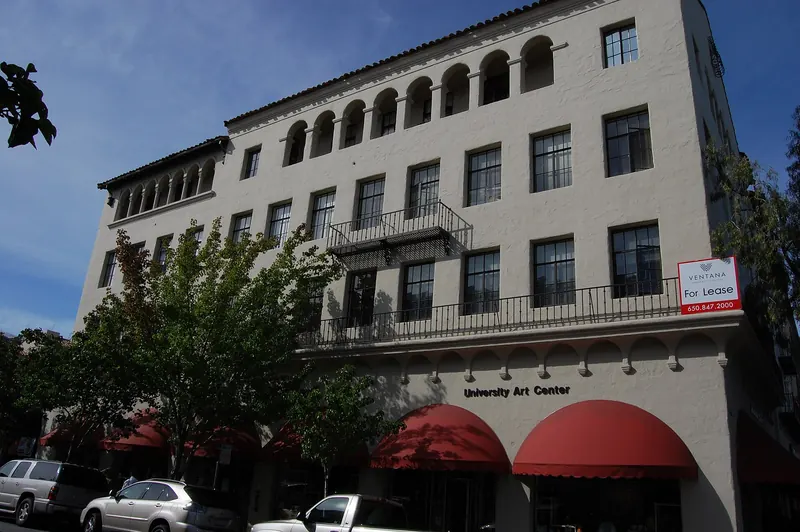
- Ramona Street is a downtown block of Spanish Colonial Revival commercial buildings.
- Greenmeadow is an Eichler tract built in 1954 and 1955, with a community center and pool still run by residents.
- Green Gables is an earlier Eichler tract from 1950 and 1951. Both Eichler districts were listed in 2005.
If you buy a contributing house in a district, expect exterior changes visible from the street to get the most attention. Additions at the rear and changes that keep original materials, rooflines and window patterns tend to move more smoothly.

Eichlers and single-story overlays
Palo Alto has about 2,700 Eichler homes. Most are not on the historic inventory, but many sit under two other layers.
- Single-story overlay zoning. Neighborhoods can ask the council to add a single-story overlay to their R-1 zoning. Once adopted, it limits new homes and additions to one story. Overlays cover parts of eleven Eichler tracts. The process starts with neighbors, so check whether a petition is under way where you are buying.
- Eichler design guidelines. The council adopted the Palo Alto Eichler Neighborhood Design Guidelines on April 2, 2018. They encourage low rooflines, glass walls and other original features. They are voluntary unless the council makes them zoning rules.
Our history of Eichler homes in Palo Alto explains which tracts are which.
Incentives for listed homes
Review comes with benefits. The city's preservation incentives page lists these for houses on the local inventory:
- Floor area exemptions. Category 1 and 2 houses can have an attic of up to 500 square feet that does not count toward floor area. Category 1 to 4 houses can have a basement that does not count.
- Extra floor area. Category 1 to 4 houses in low-density zones may have up to 250 square feet above the usual maximum.
- California Historical Building Code. Alternative ways to meet code, including engineered seismic solutions, without the usual triggers for full upgrades.
- Lot rules. Minimum lot size exceptions and, with a preservation covenant, the option of creating a flag lot.
The incentives page does not list Mills Act contracts, the state program some cities use to cut property taxes on historic homes in exchange for upkeep. Ask the planner whether that has changed. State SB 9 lot splits are not available for listed historic properties or district properties. Our ADU and SB 9 guide explains that rule.
Living with an older house
Historic status is only part of owning an old Palo Alto house. Many homes in Professorville, Crescent Park and Old Palo Alto were built before modern codes. Common projects include bolting the frame to the foundation, replacing knob-and-tube wiring, upgrading sewer laterals and adding insulation. The California Historical Building Code can help here by allowing alternatives that keep original fabric while improving safety.
Windows and siding cause the most friction in review. Original wood windows can often be repaired and weatherstripped rather than replaced. If replacement is needed, matching the original pattern and materials usually smooths the process. Keep records and photos of everything you do. They help with future reviews and with buyers when you sell.
A buyer's checklist
- Pull a Parcel Report and look up the address on the city's inventory list.
- Ask the seller for any survey form, HRB file or past historic review.
- Check for a single-story overlay before you plan a second story.
- Budget for older systems: foundations, wiring and seismic bracing.
- Talk to the historic preservation planner before you hire a designer. Our building permits guide covers the next steps.
Frequently asked questions
How do I find out if my Palo Alto house is historic?
Pull a Parcel Report for the address or ask Development Services at (650) 329-2496 or planner@paloalto.gov. The city publishes a list of properties on the Palo Alto Historic Inventory with survey forms. Houses in historic districts or found eligible for state or national listing can also need review.
What are the categories on the Palo Alto Historic Inventory?
Category 1 is an exceptional building of national or state importance. Category 2 is a major building of regional importance. Categories 3 and 4 are contributing buildings, good local examples of a style that relate to the character of their neighborhood.
Can I remodel a historic house in Palo Alto?
Yes, but exterior changes to listed, district or eligible properties get review to make sure they do not harm the building's historic character. Interior work, routine upkeep and landscaping usually need no historic review if the exterior does not change.
Does Palo Alto offer Mills Act property tax contracts?
The city's preservation incentives page does not list Mills Act contracts. It points owners to floor area exemptions, building code flexibility and zoning relief instead. Ask the historic preservation planner whether anything has changed.
Can I add a second story to an Eichler in Palo Alto?
It depends on the zoning. Parts of eleven Eichler tracts are in single-story overlay districts, which bar second stories. Elsewhere, a new second story goes through the city's Individual Review. The city's 2018 Eichler design guidelines are advisory.