On this page
Palo Alto has a lot of old houses, small lots and strong opinions about design, so remodeling here takes more paperwork than in many places. The good news is that the process is now almost entirely online, the city publishes its checklists and staff answer questions before you submit. Knowing which permit you need and who reviews it saves weeks.
This guide covers the city's Development Center, the permit portal, what typically needs a permit, accessory dwelling units, historic review and inspections. It describes the rules as the city publishes them. Codes and fees change, so confirm details with staff for your address. If you are still shopping for a house, our real estate guide covers the market. Our neighborhoods guide explains where the older districts are.
The Development Center
Most permit business runs through Planning and Development Services. The department's main page lists these basics in October 2026:
- Location. The Development Center is at 285 Hamilton Avenue, Suite 100, across from City Hall. Planning staff work on the fifth floor of City Hall at 250 Hamilton Avenue.
- Hours. Monday through Thursday from 8:30 a.m. to 4:30 p.m., closed from 12:30 to 1:30 p.m. Friday service is virtual only. In-person help is by appointment with limited walk-in service.
- Contact. Development Services is at (650) 329-2496 or Building@PaloAlto.gov. The planner on duty answers zoning questions at (650) 617-3117 or Planner@PaloAlto.gov.
The Development Center brings several departments together. Building handles plan check and inspections. The Fire Prevention Bureau reviews fire safety. Planning handles zoning, design review and entitlements. Public Works issues permits for work in the street or sidewalk and handles flood insurance questions and public trees. Utilities coordinates electric, gas and sewer connections. Green building compliance and the construction and demolition debris program are handled there too.
When you need a permit
The city's building permit page names new single-family homes, home remodels, accessory dwelling units, re-roofs, tenant improvements and mechanical, electrical and plumbing work. In practice that covers most jobs beyond painting, flooring and simple repairs. Typical homeowner projects that need a permit include:
- Kitchen and bathroom remodels that move plumbing or add circuits
- Replacing a water heater, furnace or air conditioner
- Rooftop solar and batteries
- New windows that change openings, additions and structural changes
- Electrical panel upgrades, often needed before switching to electric appliances
- Work in the street or sidewalk, which needs a separate Public Works permit
When in doubt, ask before you build. The city has a page for reporting unpermitted construction. Unpermitted work can complicate a sale later.
Faster routes for small jobs
Palo Alto offers several shortcuts for routine work:
- Instant Building Permits for qualifying projects, limited to licensed contractors with an active portal account.
- A heat pump instant permit for qualifying heating and cooling installations or replacements.
- An over-the-counter pilot program for qualifying residential mechanical, electrical and plumbing permits.
- SolarAPP+, an automated permit path for residential solar.
If you are switching a gas water heater or furnace to a heat pump, the city's Electrify My Home program can also handle permits for you. Our utilities guide explains the rebates.
How to apply
Palo Alto has moved to digital-only submittals and no longer accepts paper plans. The city lists four steps:
- Review the submittal requirements and gather documents in the required format. Applications that ignore the format guidelines take longer.
- Register or log in to Accela Citizen Access, the city's permit portal.
- Create a pre-application, upload your documents and note the pre-application number.
- Wait for a project coordinator. Complete applications become building permit records. Incomplete ones get a list of missing items.
The city says applicants should get a first response within 2 to 3 business days and that plan check begins once fees are paid. Fees depend on the project. School fees apply to some new floor area. All payments go through the official portal. The city warns about fraudulent invoices and says staff will never email a PDF invoice asking for payment through a separate link. To see permit activity at any address, use the city's Palo Alto Permit View tool, which replaced the older BuildingEye tool when it ended in late 2025. Our property records guide explains how to search it.
Accessory dwelling units
Backyard cottages and garage conversions are one of the most common projects in Palo Alto. State law requires cities to allow them and Palo Alto publishes its own rules in an ADU and JADU guidebook (2025). Highlights as published:
| Topic | What the 2025 guidebook says |
|---|---|
| How many | A single-family lot can have 2 ADUs and 1 junior ADU |
| Junior ADU | Up to 500 sq. ft. inside the main home; owner must live in the house or the JADU |
| Side and rear setbacks | At least 4 feet for ADUs |
| Detached height | 16 feet, or 18 feet within a half mile of transit |
| Attached height | 25 feet or the zone limit, whichever is lower |
| Parking | Not required for new ADUs |
| Renting | Rentals must be for 30 days or more |
| Selling | ADUs generally cannot be sold separately; JADUs never can |
Size limits depend on the type of unit and the number of bedrooms. The guidebook refers to an 800 square foot unit and to larger city standards for one-bedroom and two-bedroom units, so read the size section closely or ask a planner. The same guidebook estimates permit fees, school fees and impact fees and notes that some fees do not apply to smaller units. Treat those figures as estimates and get a quote for your project. Multifamily properties have their own ADU rules.
Owners renting out an ADU should also read our renting in Palo Alto guide. City rules on one-year lease offers and deposits apply to many rentals.
Design review and historic properties
Not every project is just a building permit. Larger or more visible projects can need a planning entitlement first. The Architectural Review Board reviews many commercial and multifamily projects. New two-story homes and second-story additions in single-family neighborhoods go through a separate design review the city calls Individual Review. Ask the planner on duty which applies to you.
Palo Alto's historic preservation program dates to 1979. According to the city's historic preservation page, the city and its Historic Resources Board designate, review and promote historic resources. The city has four National Register districts. Professorville is the best known. Changes to listed or eligible properties may need staff or board review. The city also offers preservation incentives. Questions go to the historic preservation planner at (650) 329-2321.
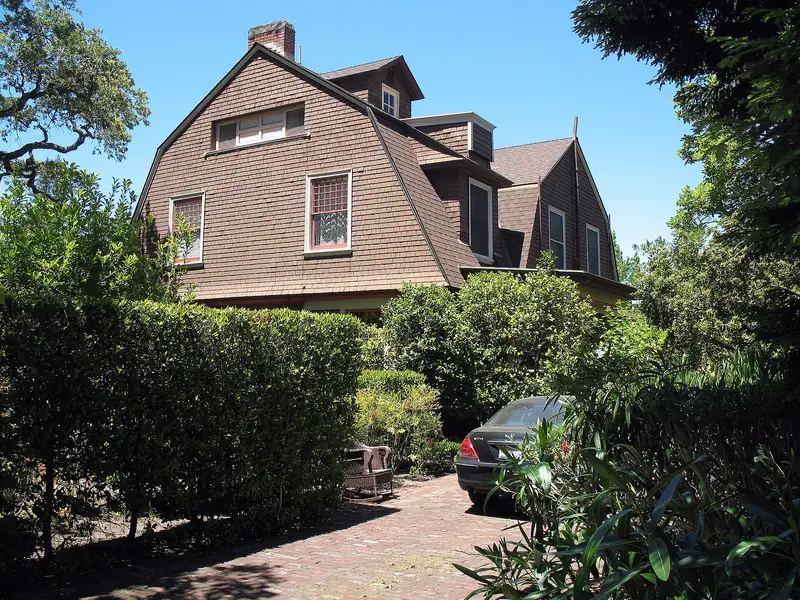
If your home is in Professorville, near downtown or in another older neighborhood, ask early whether it is on the city's historic inventory. Our guide to Palo Alto architecture explains the styles you will see. If you own an Eichler, our Eichler homes history explains what makes those houses distinctive before you plan changes.

Inspections
Once a permit is issued, work is inspected in stages. The city's building inspection page lists three ways to book:
- The Palo Alto iRequest app for iPhone and Android
- Accela Citizen Access, which does not require an account for scheduling
- The phone system at (650) 329-2496, option 2, to schedule, reschedule or cancel
Inspections run Monday through Friday from 6 a.m. to 4 p.m. Final inspections must be scheduled by phone. Inspections between 4 and 6 p.m. are billed at one and a half times the hourly rate. Evenings, nights and weekends cost double, need five days' notice and carry a two-hour minimum after 6 p.m. A whole house gas test is required before the gas meter is released on projects that involve gas work.
Good to know
- Ask the planner on duty about zoning before you hire a designer.
- Pay permit fees only through the city's portal. Ignore emailed PDF invoices.
- ADU rentals must be for 30 days or more, so short-term rental plans will not work.
- Book inspections early in the day. Final inspections are phone only.
Frequently asked questions
Do I need a permit to remodel in Palo Alto?
Most construction work does. The city lists new homes, home remodels, accessory dwelling units, re-roofs, tenant improvements and mechanical, electrical and plumbing work as projects that need a building permit. Some small jobs qualify for instant or over-the-counter permits. Ask the Development Center at (650) 329-2496 before you start.
How do I apply for a building permit in Palo Alto?
Palo Alto takes digital submittals only. Create an account in Accela Citizen Access, start a pre-application, upload plans that follow the city's format guidelines and wait for a project coordinator. The city says the first response usually comes within 2 to 3 business days. Plan check begins after fees are paid through the portal.
How many ADUs can I build in Palo Alto?
The city's 2025 ADU guidebook says a lot with a single-family home can have two accessory dwelling units and one junior ADU. A junior ADU is up to 500 square feet inside the main home and requires the owner to live on site. Any ADU or junior ADU rental must be for 30 days or more.
How do I schedule a building inspection in Palo Alto?
Use the Palo Alto iRequest app, the Accela Citizen Access portal or the phone system at (650) 329-2496, option 2. Inspections run Monday through Friday from 6 a.m. to 4 p.m. Final inspections must be scheduled by phone. After-hours inspections cost extra and need five days' notice.
Does my Palo Alto house need historic review?
Only some homes do. Palo Alto has run a historic preservation program since 1979 and has four National Register districts. Changes to listed or eligible historic properties can require review by staff or the Historic Resources Board. Ask the historic preservation planner before you design a project.