On this page
Palo Alto sits at the bottom of a giant wind funnel. On a warm afternoon from spring to early fall, cool ocean air pours through the gaps in the Santa Cruz Mountains and across the bay toward the hot inland valleys. Flags at the Baylands stand straight out. For sailors, windsurfers, kiteboarders and wingfoilers, that daily sea breeze is the main event.
The shoreline right in town is mostly marsh and mudflat, so most wind sports happen a short drive away. This guide covers the flat-water lake in Mountain View where most people learn, the classic bay launch at Coyote Point, the lagoon in Foster City, the sailing school and clubs in Redwood City and the safety rules that matter on cold, tidal water. Businesses are listed only when we confirmed them on their own websites in late 2026.
Where to go at a glance
| Spot | Water | Best for | Drive from downtown |
|---|---|---|---|
| Shoreline Lake, Mountain View | Enclosed saltwater lake | Lessons, rentals, first sails | About 15 minutes |
| Foster City lagoon | Sheltered lagoon | Beginner windsurfing, paddling | About 20 minutes |
| Port of Redwood City | Open bay via the channel | Keelboat classes and club sailing | About 20 minutes |
| Coyote Point, San Mateo | Open bay | Experienced windsurfers and kiteboarders | About 25 minutes |
| Berkeley Marina | Open bay | Low-cost club lessons | About 50 minutes |
Shoreline Lake: where most people start
The 50-acre saltwater lake inside Shoreline Park is the easiest place near Palo Alto to get on the water under sail. Our kayaking and paddling guide covers the lake in detail. For wind sports, three things make it work. The water is flat because the lake is enclosed. It is warmer than the bay. And the wind follows a reliable pattern: light in the morning, building in the afternoon.
The Shoreline Lake Boathouse at 3160 North Shoreline Boulevard teaches beginner to advanced classes in sailing, windsurfing and wingfoiling for adults, teens and kids, plus kayaking, stand-up paddleboarding and SUP yoga. Its sailing courses cover tacking and jibing, sail trim, knots and water safety, with an intro to racing at the higher levels. Private lessons can be scheduled one-on-one. Kids' camps cover sailing and windsurfing in summer and on school breaks. A counselor-in-training program builds teenagers toward US Sailing instructor certification.
The boathouse rents small sailboats, kayaks, SUP boards and pedal boats online. Sailing racing, outrigger and kayak polo clubs are based at the lake and the boathouse lists free community days and demos through the year. The lakeside bistro was closed for remodeling in fall 2026, though the boathouse espresso bar and snacks stayed open. No pets are allowed anywhere in Shoreline Park. Our Shoreline park guide covers trails and parking around the lake.
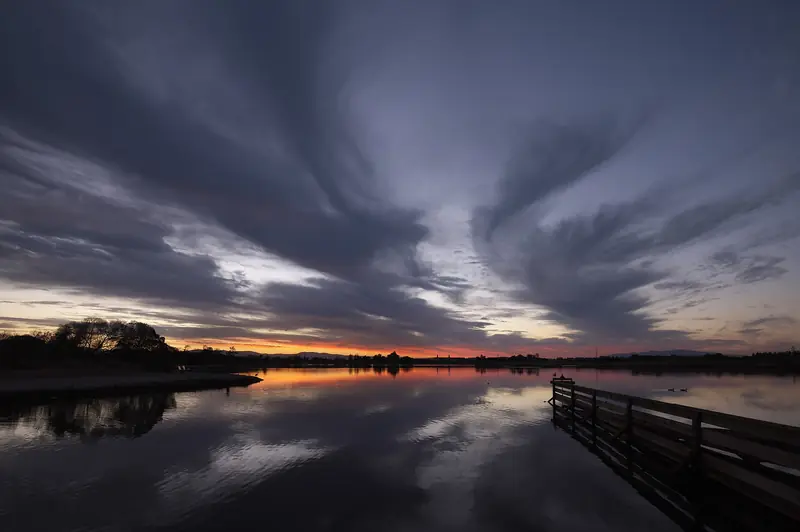

Coyote Point: the classic bay launch
When people say they windsurf the Peninsula, they usually mean Coyote Point in San Mateo. San Mateo County Parks describes the park as a place for swimming, windsurfing, boating and sailing, with a beach promenade, a marina and a breakwater. Our park guide notes three launch ramps that serve windsurfers, kiteboarders, sea kayakers and paddleboarders. Launching from the promenade is free once you have paid vehicle entry. Launching from the marina costs a fee.
Boardsports California, formerly Boardsports School, teaches and rents at Coyote Point. Its website lists kiteboarding, windsurfing, wing foiling and stand-up paddle lessons and rentals, plus e-foil sessions and kids' windsurf camps. It describes Coyote Point as an intermediate to advanced spot with thermal winds averaging about 20 knots from April through September. It sends true beginners to its Alameda location at Crown Beach, which it calls beginner-friendly with lighter wind and shallow water.
- Entry: $6 per vehicle, collected by San Mateo County Parks.
- Winter hours: 8 a.m. to 5 p.m. from November 2, 2026 into February 2027.
- Season: the reliable thermal wind runs spring to early fall. Winter sessions depend on storm fronts and are much less predictable.
- Planes: jets on approach to SFO pass close by. Kiteboarders should ask a local school about where kites may fly before launching here.
The Coyote Point Yacht Club, a private club of more than 300 boat owners, sits beside the marina.
Foster City lagoon and bay shore
Foster City is built around a 218-acre saltwater lagoon where boats must run on sail, electric power or muscle. Our Foster City guide lists a city concession at the Leo J. Ryan Park boathouse that rents kayaks, pedal boats, SUP boards and windsurf boards and teaches beginning windsurfing. The lagoon is sheltered, shallow in places and calmer than the open bay, which makes it a sensible next step after Shoreline Lake.
On the bay side of the city, the shore near Mariners Point and Baywinds Park is a known windsurfing and kitesurfing area. On a summer afternoon you can watch dozens of kites over the water. Bridge clearances on the lagoon are about 22 feet at most crossings and 15 feet under Rainbow Bridge, which matters if you sail a dinghy with a tall mast.
Redwood City: keelboats, school and clubs
For sailing bigger boats on the open bay, the Port of Redwood City is the nearest base. Two organizations we confirmed operate there:
- Spinnaker Sailing, 451 Seaport Court, began in 1980 and teaches courses as an American Sailing Association affiliate. It also runs a sailing club, charters, skippered sails and sailing vacations. The office lists hours of 9 a.m. to 5 p.m. seven days a week, except Thanksgiving, Christmas and New Year's Day.
- Sequoia Yacht Club, next door at 441 Seaport Court, is a member club with racing and social events on the South Bay.
The South Bay off Redwood City is shallower and more protected than the Central Bay near the Golden Gate. Afternoon wind still gets strong in summer and tidal currents run hard in the channels, so classes usually start in the morning. Learn more about the city in our Redwood City guide.
Farther afield
The Cal Sailing Club at the Berkeley Marina is a long-running volunteer club that teaches dinghy sailing, keelboat sailing and windsurfing to members. It sets its open hours each day from tide predictions and its site warned in fall 2026 that low tides were running about 1.4 feet higher than predicted. It is a long drive from Palo Alto and works as a membership club rather than a commercial school, so check its site for how to join.
Reading the wind and the seasons
The local pattern is simple once you see it. Inland heat drives the sea breeze, so the hotter the day in San Jose, the stronger the afternoon wind on the bay. Typical days look like this:
- Morning: light and variable wind, sometimes fog. Good for lessons and first sails.
- Midday: the breeze fills in from the northwest.
- Mid to late afternoon: peak wind. Shoreline Lake can see gusts up to about 25 miles per hour, the level where experienced windsurfers and sailors come out.
- Evening: the wind usually eases near sunset.
From April to September that pattern repeats most days. Fall can bring warm, calm spells. Winter wind comes mostly with storms and can arrive from the south. Check our weather guide for the seasonal picture and watch the tide too, because a falling tide against a strong breeze makes the bay choppy fast.
Safety on cold, tidal water
Good to know
- Wear a life jacket. California requires children under 13 to wear one on most moving boats. Bay water stays cold all year, so adults should wear one too.
- Dress for immersion. A wetsuit is standard for windsurfing and kiteboarding on the bay.
- Know the tide. Much of the South Bay turns to mud at low tide. A falling tide can strand a board or boat far from shore.
- Sail with a buddy and tell someone on shore your plan.
- Respect wildlife. Keep clear of harbor seal haul-outs and big flocks of birds on the water.
- Motorboats: the state Boater Card is required to operate boats with motors of 15 horsepower or more.
If you would rather ride along than learn, a charter cruise on the Central Bay is an easy way to feel the wind under the Golden Gate. You can compare San Francisco Bay sailing cruises and pair one with our San Francisco day trip guide. For gear, wetsuits and repairs, start with our guide to sporting goods stores.
Frequently asked questions
Where can I learn to sail near Palo Alto?
Shoreline Lake in Mountain View is the closest place, with beginner to advanced sailing classes on an enclosed saltwater lake. For keelboats on the open bay, Spinnaker Sailing at the Port of Redwood City runs American Sailing Association courses. Both are within about 20 minutes of downtown Palo Alto.
Is Coyote Point good for beginner windsurfers?
Not usually in summer. Boardsports California describes Coyote Point as suited to intermediate and advanced riders, with thermal winds averaging about 20 knots from April through September. Beginners do better on the flat water of Shoreline Lake or the Foster City lagoon before moving to the bay.
When is the wind best for windsurfing near Palo Alto?
Spring through early fall, in the afternoon. Mornings are often light, which suits lessons. As inland valleys heat up, the sea breeze pulls in across the bay and builds through the afternoon. Winter brings lighter and less reliable wind between storms.
Can I rent a sailboat in Palo Alto?
Not inside city limits. The closest rentals are at the Shoreline Lake Boathouse in Mountain View, which rents small sailboats, kayaks and paddleboards with online booking. Keelboat charters on the bay go through sailing clubs and schools that check your experience first.
Do I need a license to sail in California?
California requires a Boater Card to operate a boat with a motor of 15 horsepower or more. A small sailboat without a motor does not need one, but schools and clubs set their own skill checks before renting you a boat. Check the state Division of Boating and Waterways for current rules.