On this page
Russel Lee's name is on a building at the Palo Alto Medical Foundation and his clinic's old home is becoming the city's history museum. Our page on the Palo Alto Medical Clinic tells that institutional story: the 1930 partnership, the Birge Clark building and the road to Sutter Health. This page is about the man himself. He was a waiter, a hookworm tester, a colonel, a poker player, a book collector, a deep-sea fisherman and a lifelong provocateur.
The main sources are the Palo Alto Historical Association's biography, the register of his papers at Stanford's Lane Medical Library and a 2003 Almanac obituary of his eldest son. His first name has one L. The web address of this page uses two only because that is how most people search for him.
A Utah boyhood
Russel Van Arsdale Lee was born on May 10, 1895, in Spanish Fork, Utah. His father was a minister who had come west to convert Mormons to Calvinism. The historical association says the church later expelled the elder Lee for arguing that some Bible stories should be read as allegory. He supported the family by keeping bees.
Russel went to the Hungerford Academy in Utah. At 16 he came to Palo Alto with eight dollars. He paid his way through Stanford by waiting tables at a Japanese restaurant. The association lists odd jobs that make a lively résumé: testing Mother Lode miners for hookworm and, as a teenager, working as a bellboy in a brothel.
Training and the first practice
His papers give the path. He studied at Stanford from 1913 to 1916 and took a B.S. at the University of California in 1916 and 1917. He served as an Army private in 1917 and 1918. He earned his M.D. from Stanford's medical school in 1920. He was on the Stanford medical faculty from 1918 to 1960 and later held the title of clinical professor of medicine emeritus.
After marrying and spending a few years in San Francisco, he moved to Palo Alto in 1924 to practice with Dr. Thomas Williams at Bryant Street and Hamilton Avenue. The group practice grew out of that partnership around 1929 or 1930. One early partner was Blake Wilbur, son of Stanford president Ray Lyman Wilbur, who chaired a national committee that studied the costs of medical care in the same years. Our clinic page covers the partners and the frescoed 1932 building, now being turned into the Palo Alto History Museum.
A family of doctors
Lee married Dorothy, who died in 1972. His papers say all five of their children became physicians. The Almanac's 2003 obituary of his eldest son names them:
- Richard (Dick) Lee, an obstetrician and gynecologist at the clinic, also known for racing Porsches and pushing for racing safety. He died in 2003 at 85.
- Peter Lee, later a professor of medicine at USC.
- Philip R. Lee, who served under Presidents Johnson and Clinton and later led health policy research at UCSF.
- Hewlett Lee, a surgeon and later executive director of the clinic.
- Margo Paulsen, a physician and the only daughter. She died in 1973.
The family home was on Gerona Road on the Stanford campus. Lee later built a family compound off Los Trancos Road in the hills. He was also a pilot. The Almanac says his Air Coupe flew from Palo Alto Airport and that Dick and Margo flew too. By the end of his life he had 21 grandchildren.
War service
Lee was an early critic of Nazi Germany and sometimes sheltered refugees in his home, the historical association says. After Pearl Harbor he joined the Army medical corps as a major and rose to colonel. His papers list his posts: chief of internal medicine for the Flying Training Command in 1943, consultant to the Air Transport Command and chief of preventive medicine for the Air Forces from 1944 to 1945. The association adds that he served as personal physician to the Secretary of War and visited every fighting front. He received the Legion of Merit in 1944 and again in 1955.

Ideas that got him in trouble
Lee enjoyed a fight. The American Medical Association called his support for group practice heresy and prepaid care socialist. He served on President Truman's Commission on the Health Needs of the Nation in 1951 and argued for national health insurance. The historical association credits him with a plan that became Medicare. Other accounts give credit more widely, so treat that as the association's view.
His other causes went further than most doctors dared:
- He wrote California's law creating a venereal disease program and, by the association's account, paid to lobby for it with $8,000 he won at poker.
- He backed legal abortion, birth control and the right to die.
- In the 1960s he argued for giving addicts the narcotics they needed instead of jailing them.
- After questioning monogamous marriage in print, he said he received more than 2,500 letters.
He also served on boards across the Peninsula. His papers list Hewlett-Packard, the Stanford Bank, the National Council on the Aging and the Linus Pauling Institute. Our page on Hewlett and Packard tells that company's story.
Channing House and Foothills Park
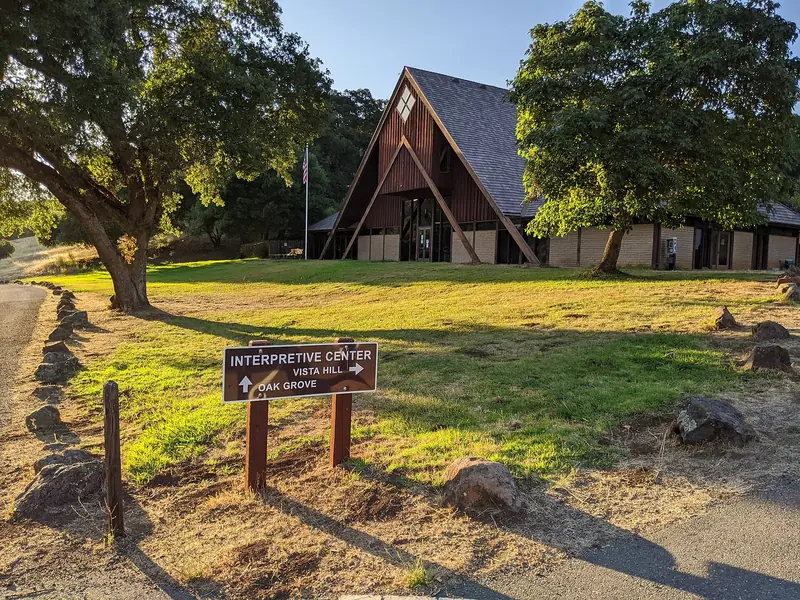
Lee led the founding of Channing House, the downtown retirement community that opened in 1962, where residents buy into lifetime medical care. He also bought land around Palo Alto and Portola Valley and grew rich as prices rose. In 1958 he offered the city about 1,294 acres in the hills at $1,000 an acre, turning down developers. The historical association describes the total as 1,400 acres donated and sold. It became Foothills Park, now Foothills Nature Preserve.
Books, fish and old age
Lee wrote steadily. His papers list a Manual of Coccidioidomycosis (1945), The Physician (1968, with Sarel Eimerl and the editors of Life) and two books dated 1976: The Menace of Madness in High Places and No Gravy on the Vest: The Art of Growing Old in Style. One article in his list is a 1970 look back at the 1918 flu, a subject covered on our 1918 flu page. He received the Gold-Headed Cane award in 1968 and the Herbert Hoover Medal for Distinguished Service in 1975.
His hobbies ran large. He held a world record for a 435-pound tuna caught off Peru in 1957. His house held a 15,000-volume library, more than 150 chess sets and a basement winery for grapes from his own vineyards. At 83 he crashed a new sports car into an oak tree. At 84 he said his greatest ambition was "to lose a paternity suit."
Near the end he told a colleague, Dr. Robert Jamplis, "Bobby, I'm tired." He added that he could no longer get around well and that his memory was failing. He died on January 27, 1982, at 86. About 600 friends came to his memorial. Our Palo Alto Medical Foundation guide covers the medical group he started as it runs today.
Frequently asked questions
Who was Russel Lee?
Dr. Russel Van Arsdale Lee (1895 to 1982) was a Palo Alto internist who founded the Palo Alto Medical Clinic, one of the country's early group practices. He taught at Stanford's medical school for decades, served as a colonel in World War II, sat on President Truman's health commission and led the founding of Channing House.
Is it Russel or Russell Lee?
Russel, with one L. His papers at Stanford's Lane Medical Library and the Palo Alto Historical Association both use that spelling. This page's web address uses the more common double L only so readers can find it.
Were Russel Lee's children doctors?
Yes. His papers say all five of his children became physicians. They were Richard (Dick), an obstetrician at the clinic; Peter, a USC medicine professor; Philip R. Lee, who served in the Johnson and Clinton administrations; Hewlett, a surgeon who ran the clinic; and Margo Paulsen, who died in 1973.
Did Russel Lee give Palo Alto Foothills Park?
He sold and gave the city the land for it. In 1958 he offered about 1,294 acres at $1,000 an acre after turning down developers. The Palo Alto Historical Association describes the total as 1,400 acres donated and sold.
What did Russel Lee write?
His books include a Manual of Coccidioidomycosis (1945), The Physician (1968, with Sarel Eimerl and the editors of Life) and, in his 80s, No Gravy on the Vest: The Art of Growing Old in Style. He also published articles on group practice, aging and the 1918 flu.