On this page
Drive up Page Mill Road past Interstate 280 and the road starts to twist. About 2.5 miles past the freeway, a gate on the right leads into a quiet valley of oaks, lawns and a small lake. This is Foothills Nature Preserve. For more than 50 years most Bay Area residents were not allowed in. Today anyone can visit. The park repays the effort with some of the best hiking close to Palo Alto.
The preserve covers about 1,400 acres, close to a tenth of all the land in the city. It borders Pearson-Arastradero Preserve, the Los Trancos Open Space Preserve run by the Midpeninsula Regional Open Space District, Portola Valley and Los Altos Hills. About 90 acres are developed with picnic areas, a lake, an interpretive center and a small campground. The rest is chaparral, oak and bay woodland, creeks and open grassland crossed by about 15 miles of trail.
From Foothills Park to Foothills Nature Preserve
In 1958 Dr. Russel V. Lee, a co-founder of the Palo Alto Medical Clinic, offered the city 1,294 acres of his land in the hills for $1,000 an acre. That was a bargain even then. Voters approved the purchase in 1959 with 62 percent support. Foothills Park opened on June 19, 1965.
The city restricted the park to Palo Alto residents and their accompanied guests. From 1969 until 2020 that rule held. Rangers checked for proof of residency at the gate. Critics argued that the rule shut a large and diverse region out of a public park. Supporters argued that it protected a fragile place from crowds. In 2005 a county grant helped buy 13 more acres. In return, hikers from Arastradero gained the right to walk in on the trails.
The debate came to a head in 2020. Activists painted "DESEGREGATE" outside the gate in July. In September the ACLU sued on behalf of the local NAACP chapter. On November 3, 2020, the City Council voted 5 to 2 to end the residents-only rule. The park opened to everyone on December 17, 2020. In January 2021 a federal judge issued a permanent injunction that bars the city from bringing the restriction back.
Crowds arrived quickly. In early 2021 the council set a daily vehicle fee, approved annual passes and created a cap on visitors. It also renamed the park Foothills Nature Preserve. For the longer story of how Palo Alto grew and protected its open space, see our history of Palo Alto.

Entry, fees and the capacity limit
The preserve opens at 8 a.m. and closes at sunset. The last car is admitted 30 minutes before closing. The vehicle fee is $6 per day for cars with nine or fewer passengers. Annual passes cover up to two vehicles and the city offers discounts and free passes to some groups, including veterans and active military. Details are on the city's annual pass page.
The cap is the rule that catches people out. Palo Alto's municipal code says no more than 600 people may be in the preserve at one time. It also lets the city manager set a lower limit between 400 and 600 for safety, resource protection or parking. Campers, picnic reservations, sanctioned volunteers and visitors with disabled parking placards do not count toward it. When the preserve fills, the gate closes until enough people leave. A digital sign on Page Mill Road shows the status.
Parking is banned along most of Page Mill Road near the entrance and stopping in traffic to wait is not allowed. If the gate is closed, go elsewhere. The Dish and Pearson-Arastradero are both close.
Good to know
- Arrive before 10 a.m. on weekends and holidays to avoid the cap.
- Weekdays are much quieter and the only days dogs are allowed.
- Bikes may use the paved park roads but not the trails. Helmets are required.
- The speed limit on park roads is 20 miles per hour.
- Smoking is banned on trails. Wood fires are allowed only in the Towle campfire ring with a permit.
Boronda Lake
Boronda Lake is the first big sight inside the gate. It was made by damming a tributary of Buckeye Creek. On a clear day Windy Hill rises behind it. Two docks reach out over the water. Early mornings often bring coots and ducks gliding across the surface.
You can fish with a valid California fishing license. Hand-launched boats without motors, such as canoes and kayaks, are allowed if everyone wears a life jacket. Inner tubes and inflatable rafts are not allowed. Swimming and wading are prohibited. The lake closes 30 minutes before the park does. Feeding the ducks is also against the rules.
The lawns near the lake make an easy picnic spot. This area is the best part of the park for small children or anyone who wants scenery without a climb. More family outings are in our guide to Palo Alto with kids.
Trails and loops
About 15 miles of trail spread out from the valley floor. Most climb, some steeply. The regional Bay-to-Ridge Trail passes through the preserve and links Arastradero to Los Trancos. Here are good choices by length:
- Highlights loop, about 3 miles. Combine the Toyon, Woodrat and Chamise trails to reach Boronda Lake, Vista Hill and Arbolejo Overlook. Vista Hill gives a wide view of the bay and, in clear weather, Mount Diablo and Mount Tamalpais. Arbolejo Overlook looks down on the Dish and Hoover Tower.
- Coyote and Chamise loop. A good starter climb through bay laurel and oak woodland up to Vista Hill and back down to Las Trampas Valley.
- Los Trancos shortcut loop, about 5 miles. Use Trappers Fire Road to cut the big loop short. Expect about 1,000 feet of climbing and wide views of the Coast Range and Diablo Range.
- Full Los Trancos Trail loop, roughly 7 to 8 miles. The classic long hike in the park. It loops through the quieter western side of the park, mixing shady woodland with open views below Los Trancos Open Space Preserve.
Stay on marked trails and do not cut switchbacks. Download the city's preserve map before you go, since cell service in the canyons can be patchy.

Wildlife and plants
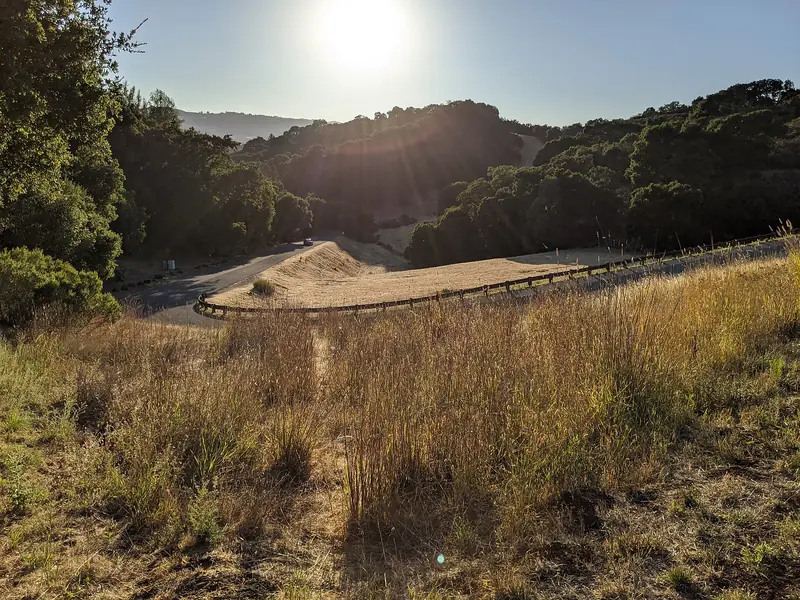
The preserve holds a full range of foothill wildlife. Black-tailed deer and wild turkeys graze the lawns in the early morning. Red-tailed hawks hunt over the meadows. Less often you may spot a bobcat, a gray fox or a long-tailed weasel. Mountain lions, coyotes, badgers and skunks also live here. Rough-skinned newts appear along Buckeye Creek in the wet season and tarantulas turn up near Vista Hill.
The plant life is just as varied. Look for madrone, blue oaks and spring poppies. Western leatherwood, a rare shrub found only in the Bay Area, blooms yellow in late winter before its leaves come out. Volunteers with local groups have spent years pulling invasive French broom so the native plants can recover.
Poison oak is common on trail edges. Rattlesnakes and ticks are part of life in these hills. Long pants and a quick check after your hike are good habits.
Camping, picnics and the interpretive center
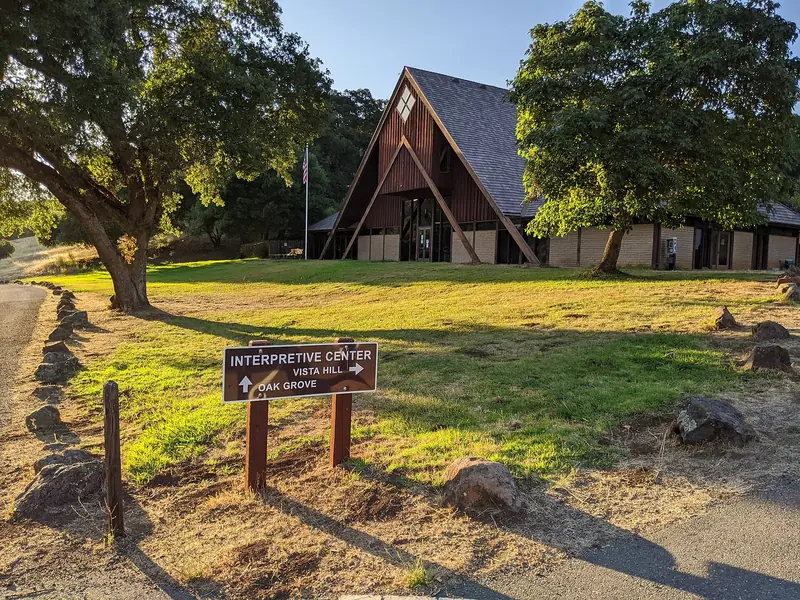
The Foothills Nature Interpretive Center has exhibits on the plants, animals and people of the hills. Ranger programs and nature walks run through the year.
Towle Campground is a small tent-only campground with eight sites. It is open seasonally, roughly May through October. Sites need a reservation. Each site has a picnic table, barbecue, food locker and water. The Oak Grove picnic area can be reserved for groups. Groups of 25 or more need a permit or reservation. Smaller groups can use the open lawns first come, first served.
Nearby: Arastradero and beyond
Pearson-Arastradero Preserve lies just downhill to the east. Its 622 acres of grassland and oaks are easier going, with about 10 miles of trail open to hikers, cyclists and horses. Trails connect the two preserves, so a strong hiker can link them in one long day. Note that bikes and horses are not allowed on the Foothills section of the Arastradero Creek Trail.
For a flat contrast, the Baylands Nature Preserve on the bay shore offers marsh trails and birding. Uphill to the west, Los Trancos Open Space Preserve and other Midpeninsula parks continue toward Skyline Boulevard. On the way back to town, the Stanford Dish makes a shorter outing for another day. Our outdoors guide compares all of the city's parks and preserves. Check the weather guide before a summer hike, since the hills often run warmer than downtown. A car makes the trip much easier, since no public transit reaches the gate. If you need one, compare rental cars in the Bay Area.
Frequently asked questions
Can non-residents visit Foothills Nature Preserve?
Yes. The park admitted only Palo Alto residents and their guests for about half a century. It opened to the general public on December 17, 2020. A federal court order in 2021 barred the city from bringing back the residents-only rule.
How much does it cost to enter Foothills Nature Preserve?
The city charges $6 per vehicle per day for vehicles with nine or fewer passengers. Annual passes are sold for up to two vehicles. Walk-in and bike-in visitors do not need a vehicle pass, but they count toward the capacity limit.
Why is Foothills Nature Preserve closed when I arrive?
The city limits how many people can be in the preserve at one time. City code sets the maximum at 600 and lets the city manager set a lower limit. When the cap is reached the gate closes until enough visitors leave.
Are dogs allowed at Foothills Nature Preserve?
Only on weekdays and only on leash. Dogs are not allowed on Saturdays, Sundays or holidays. Visitors arriving with dogs on those days are turned away at the gate.
Can you swim in Boronda Lake?
No. Swimming and wading are prohibited. Fishing with a valid California fishing license is allowed. Hand-launched boats without motors, such as canoes and kayaks, are allowed with a life jacket for each person.