On this page
Palo Alto protects thousands of trees through its tree ordinance, but only a handful carry the title of heritage tree. The list is short on purpose. Each tree on it was singled out by the City Council for its size, age, form or history and each is protected at any size for as long as it stands. The first tree on the list is the obvious one: El Palo Alto, the redwood the city is named for.
This page explains how the heritage program works, lists the trees the city publishes without giving private addresses and points out other historic trees you can visit, including several on the Stanford campus. Sources include the city's heritage tree list, a 2017 city staff report on the program, our urban forest guide and Wikipedia's history of El Palo Alto.
How the program works
Palo Alto's Tree Preservation Ordinance was enacted in 1996 as Chapter 8.10 of the municipal code. It protects specified native oaks, redwoods and heritage trees on private property from removal or disfigurement except in limited cases. The city widened its tree protections in an update that took effect on May 1, 2024. Heritage trees remain their own category, protected regardless of trunk size or species.
A 2017 staff report describes the process under Section 8.10.090:
- Nomination. A person may nominate a tree on their own property. The owner must give written consent.
- Criteria. The tree must meet at least one test: an outstanding specimen of a desirable species, one of the largest and oldest trees in Palo Alto, or a tree with distinctive form, size, age and location. Historic significance can also support a nomination.
- Council decision. The City Council designates the tree by resolution.
- Listing. Public Works adds it to the heritage tree list with its location, overall size and canopy spread and posts the list on the city's urban forestry website.
Owners take on duties in return. They agree to maintain the tree to the standards of the city's Tree Technical Manual, disclose the designation to future buyers and allow the tree to appear on city lists, maps and websites. Taking a tree off the list requires another council action at the owner's request. For the permit side of things, see our guide to tree permits and protected trees.
The heritage tree list
The city's published list shows eight trees. We give locations only for the two on public land. The other six stand on private property and the owners agreed to be listed, not to receive visitors.
| No. | Tree | Species | Where | Designated |
|---|---|---|---|---|
| 1 | El Palo Alto | Coast redwood | El Palo Alto Park, Alma Street (public) | Not stated on the list |
| 2 | Rinconada Oak | Coast live oak | Rinconada Park, along Embarcadero Road (public) | Dedicated 1994 by Mayor Liz Kniss |
| 3 | Coast redwood | Coast redwood | Private property | Not stated |
| 4 | Dawn redwood | Metasequoia | Private property | Not stated |
| 5 | Coast redwood | Coast redwood, Los Altos cultivar | Private property | 2022 |
| 6 | American elm | American elm | Private homeowners association land | Not stated |
| 7 | Aleppo pine | Aleppo pine | Private property | 2004 |
| 8 | Aleppo pine | Aleppo pine | Private property | Nominated in late 2017 |
The 2004 date for No. 7 and the 2017 nomination of No. 8 come from the city staff report, which noted that the newer Aleppo pine was much larger than the 2004 tree in height, spread and trunk diameter. The city's web list itself is sparse on dates and has a few inconsistent addresses, which is one more reason we leave the private ones out.
The mix is telling. Four of the eight are native species: three coast redwoods and the oak. The others, an Asian dawn redwood, a pair of Mediterranean pines and an American elm, are reminders that much of Palo Alto's canopy was planted by residents rather than inherited from the valley floor.
No. 1: El Palo Alto
El Palo Alto is a coast redwood that sprouted around A.D. 940, based on age estimates. Members of the Portolá expedition camped near it in November 1769. Father Pedro Font measured it at about 137 feet in 1776. Wikipedia's account gives 162 feet in 1930, 135 feet in 1950 and about 110 feet in 2021, as smoke, drought and a failing top took their toll. A twin trunk fell sometime between about 1875 and the 1880s.
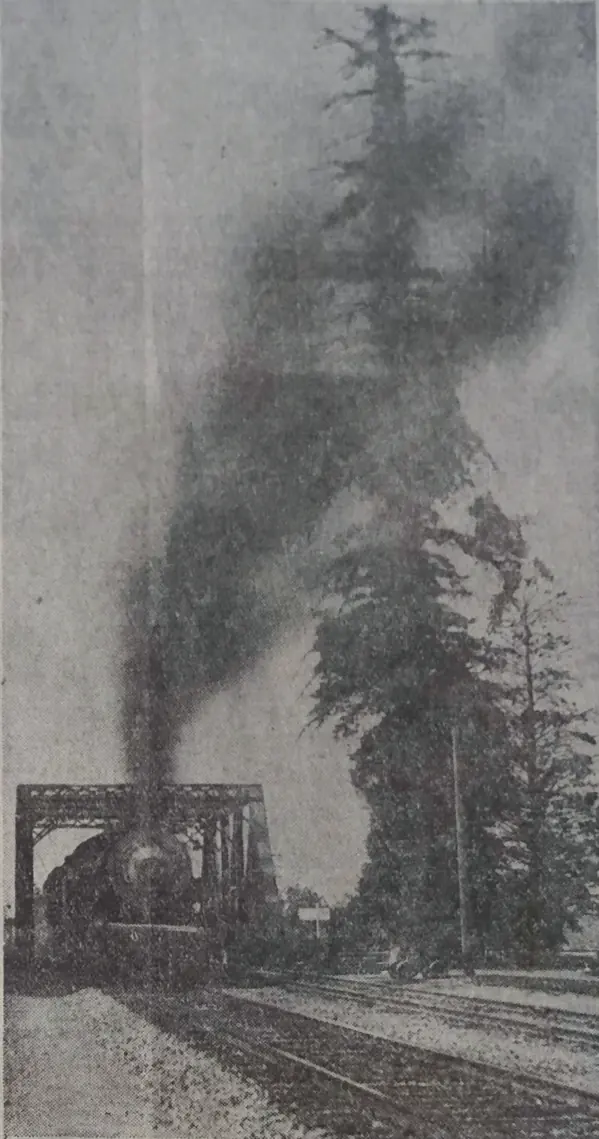

Few trees have had more care. After the first trunk fell, Leland Stanford had a wooden bulkhead built on the creek bank. In 1904 Jane Stanford ordered a cement wall, later reinforced. The Native Sons of the Golden West took over stewardship in 1920 and set their plaque in 1926. In 1955 a watering system was set up to mimic coastal moisture and wash soot from the foliage, fed by a pump on a Jeep twice a month. Modern crews use ground-penetrating radar and drone surveys. The railroad's electrification in 2024 finally ended the locomotive smoke. Visit it in El Palo Alto Park at Alma Street and Palo Alto Avenue. Our El Palo Alto page has tips and our page on the city seal and symbols explains how it became the city's emblem.
No. 2: the Rinconada Oak
The second tree on the list is a coast live oak in Rinconada Park, along Embarcadero Road. Mayor Liz Kniss dedicated it in 1994, the year of Palo Alto's centennial. Coast live oaks were among the original trees of the valley floor, scattered across the grassland before the town was built. The park's redwoods and big shade trees make it one of the coolest places in town on a hot afternoon. See our Rinconada Park guide.
Historic trees at Stanford
Stanford land is outside the city's heritage program, but the campus holds some of the most storied trees in the area.
- El Palo Alto's understudies. In 1915 botany professor George James Peirce planted seven redwoods on university grounds so that one could someday succeed El Palo Alto. Six remain. One was crushed by a lawnmower, according to Wikipedia.
- The Arboretum. Leland Stanford wanted an arboretum on his farm before the university opened. Plantings in the 1880s and 1890s brought trees from around the world. See our Arboretum guide.
- The oaks. Stanford asked that no healthy oak be cut on the farm and the coast live oak is now the most common tree on university land.
- Palm Drive. Stanford's tree guide counts 166 palms on Palm Drive and 194 including the segments around the Oval, mostly Canary Island date palms. The tree guide credits David Starr Jordan with the palm idea in 1893. Our page on the Oval and Palm Drive covers the debate.
- The Tree of 40 Fruit. Artist Sam Van Aken's grafted tree near the Rodin garden was planted in 2022, according to the Almanac.
El Palo Alto also has descendants beyond California. In 2004 seedlings from the tree were planted at the American Forests Historic Tree Nursery in Jacksonville, Florida.
A tree that was lost
Not every celebrated tree survived. When Pedro de Lemos built the Gotham Shop at 520 Ramona Street in 1925, the first building in what became the Ramona Street Architectural District, he bought the property in part to save an old oak on it. The oak was removed in the 1980s. Stories like that one are part of why the city adopted protections in 1996 and why the heritage list exists at all.
Seeing the trees respectfully
Good to know
- El Palo Alto and the Rinconada Oak are on public parkland and free to visit during park hours.
- The six private heritage trees are on homeowners' land. Do not seek them out, enter yards or photograph homes.
- Every street and park tree is city property. Report concerns to the Urban Forestry Section rather than pruning yourself.
- The nonprofit Canopy, founded in 1996, runs planting and tree care volunteer days if you want to help grow the next generation.
For a guided look at the campus trees and the Main Quad, a Stanford campus tour covers the Arboretum edge and Palm Drive.
Frequently asked questions
What is a heritage tree in Palo Alto?
It is an individual tree that the City Council has designated for its size, age, form, location or historical significance. Once designated, it is protected under the city's tree rules at any size and cannot be removed without city approval. Designation requires the property owner's written consent.
How many heritage trees does Palo Alto have?
The city's published heritage tree list shows eight trees. Two stand on public land, El Palo Alto and the Rinconada Oak. The other six are on private property and should be viewed only from the street, if at all.
Which tree is Heritage Tree No. 1?
El Palo Alto, the coast redwood beside San Francisquito Creek at Alma Street that gave the city its name. It sprouted around A.D. 940 and stands about 110 feet tall. It is also a California Point of Historical Interest.
How do I nominate a heritage tree?
Under the municipal code a property owner can nominate a tree on their own land. The tree must meet at least one test: an outstanding specimen of a desirable species, one of the largest and oldest in Palo Alto or a tree of distinctive form, size, age and location. The City Council decides. Contact the Urban Forestry Section at Public Works to start.