On this page
Caltrain is the Peninsula's commuter railroad. It runs between San Francisco and San Jose, with a diesel connection south to Gilroy. For Palo Alto it is the single most useful piece of transportation. The main station sits at the foot of University Avenue, a few minutes on foot from downtown and a shuttle ride from the Stanford campus. Express trains reach San Francisco in well under an hour.
This page goes deeper than our overview of getting around Palo Alto. It covers the local stations, fares, bikes, weekends and accessibility, with links to the official pages for anything that changes.
The electric railroad
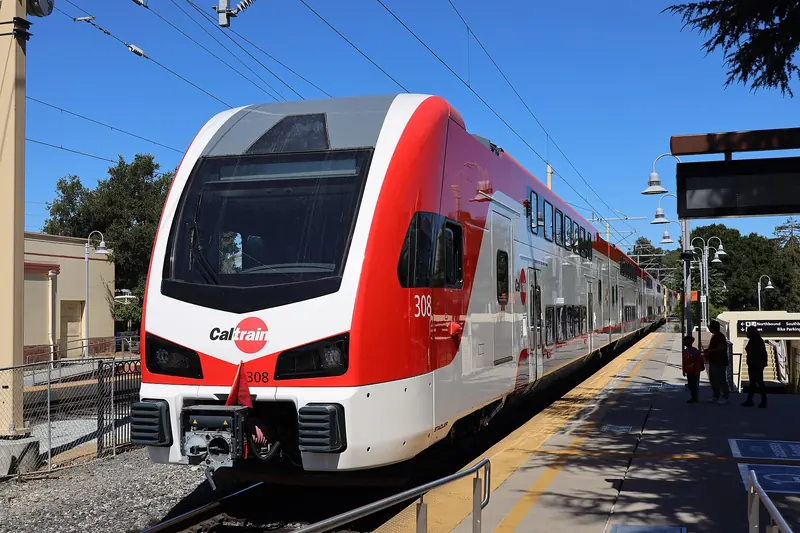
Caltrain ran diesel trains for decades. Its first electric trains carried passengers on August 11, 2024. Full electric service between San Francisco and Tamien in San Jose began on September 21, 2024. The new trains accelerate faster, run quieter and cut local travel times. Caltrain says local trains are about 23 to 24 minutes faster end to end than before electrification.
Each seven car electric trainset has 675 seats, two bike cars and one restroom. The restroom car is always the second car from the north end. Diesel trains still run the South County Connector between San Jose Diridon and Gilroy, with a cross-platform transfer at Diridon.
Train types and numbers
Electric service uses a clockface schedule, so trains leave at the same minutes past each hour. There are three main patterns:
- Express trains serve 11 of the busiest stations and run San Francisco to San Jose in about an hour. Palo Alto is an express stop. California Avenue is not.
- Limited trains serve 16 stations, including both Palo Alto stations.
- Local trains stop everywhere.
The first digit of the train number tells you the type. The 100s are weekday locals, 400s weekday limiteds, 500s weekday expresses and 600s weekend locals. The 800s are South County Connector trains and the 900s special trains. Odd numbers run northbound toward San Francisco and even numbers run southbound. Check the number on the train before you board.
The stations in Palo Alto
| Station | Address | Served by | Good for |
|---|---|---|---|
| Palo Alto | 95 University Ave. | Local, limited and express | Downtown, Stanford, buses and shuttles |
| California Avenue | 101 California Ave. | Local and limited | Midtown, Cal Ave shops, Stanford Research Park |
| Stanford | 100 Embarcadero Rd. | Select events only | Stanford Stadium on football days |
Palo Alto station
The main station is one of the busiest on the line. Wikipedia, citing Caltrain counts, ranks it second only to San Francisco. The Streamline Moderne building opened on January 25, 1941, designed by Southern Pacific architect John H. Christie in a style inspired by the railroad's Daylight streamliners. It was added to the National Register of Historic Places in 1996.
The bus plaza next to the station is the Palo Alto Transit Center. Caltrain lists connections there to VTA routes 21, 22 and 522, SamTrans ECR, 280, 281, 296 Owl and 397, the Dumbarton Express and several Stanford Marguerite lines. The station has 178 bike racks, on-demand e-lockers and six ticket machines. Caltrain is piloting a smart restroom here that opens with a QR code scan or a text message. The El Palo Alto redwood, the tree that gave the city its name, stands beside the tracks a short walk north. Read about it in our guide to El Palo Alto.

California Avenue
One stop south, California Avenue station serves the Midtown side of the city. Walk out of the station and you are on California Avenue itself, with restaurants and the Sunday farmers market. Express trains pass through without stopping, so check the train type. VTA Route 89 connects the station with Stanford Research Park and the Palo Alto VA Hospital on weekdays. See our California Avenue guide for what to do nearby. Staying within walking distance of either station makes a car optional, so compare hotels near the Caltrain stations if you have not booked yet.
The Stanford stadium stop
Stanford station is a small platform off Embarcadero Road next to Stanford Stadium. Trains stop there only for select events, traditionally football game days. Caltrain said the station would not open for the 2026 football season. It is also listed as not wheelchair accessible. Fans should use Palo Alto station and walk, which takes a little over 20 minutes. Our Stanford sports guide covers game day logistics.
Fares, zones and Clipper
Caltrain fares depend on how many zones you travel through. Both Palo Alto stations are in Zone 3. San Francisco is Zone 1, Millbrae and Redwood City are Zone 2 and San Jose Diridon is Zone 4. These were the adult fares listed in October 2026 on the Caltrain fares page:
| Zones traveled | Adult one way | Adult day pass | Example from Palo Alto |
|---|---|---|---|
| 1 | $4.00 | $8.00 | Mountain View or Menlo Park |
| 2 | $6.25 | $12.50 | Millbrae or San Jose Diridon |
| 3 | $8.50 | $17.00 | San Francisco |
| 4 | $10.75 | $21.50 | Gilroy |
The same page lists higher adult fares from January 1, 2027, for example $9.00 one way for three zones. Youth riders pay $1.00 one way for any distance. Eligible Discount fares are roughly half the adult price. Caltrain says seniors and people with disabilities qualify with a Regional Transit Connection Discount card, a Medicare card or a DMV Disabled Person Placard ID card.
How to pay
- Clipper card. The Bay Area's transit card, as a plastic card or in Apple Pay or Google Pay.
- Contactless bank card or phone. Tap it on the Clipper validator. Remove other cards from your wallet first so the reader picks the right one.
- Ticket machines. Sell one-way tickets and day passes. Day passes are sold only from machines.
Tap on before you board and tap off when you get off, every ride. One-way tickets are valid for four hours in one direction. Caltrain ended its Clipper discount on January 1, 2026, so every payment method pays the same fare. Caltrain uses proof of payment. Conductors check tickets on board.
Bikes on board
Bikes are part of Caltrain culture. Each electric train has two bike cars, each limited to 36 bikes, for 72 in total. The rules on the bikes on the train page are simple:
- Riders with bikes board the bike cars first and move as far in as they can.
- Stack bikes by destination and display a destination tag so others know when you get off. Conductors hand out tags, or you can print one.
- Lift your bike onto the train yourself. Each bike must fit its 71 inch stall without blocking the aisle.
- Gas-powered, tandem and three-wheel bikes are not allowed.
- Folding bikes up to 32 inches wide can ride in any car if folded and kept under a seat or out of the aisle.
Caltrain has paused enforcement of its bike attachment rules while it reviews its bike policy. Caltrain also states that scooters are allowed on board. Conductors can limit bikes when trains are crowded. Palo Alto has no bike share, so bringing your own on the train is the way to cycle here. Our guide to biking in Palo Alto suggests routes once you arrive.
Weekend service
On Saturdays and Sundays every train is a local in the 600 series. Trains stop at all stations about every 30 minutes. Caltrain says it has no plans for weekend express or limited trains. Weekend locals also serve Broadway station in Burlingame, which is closed on weekdays.
Plan around track work. Caltrain posts weekend closures and schedule changes on its service status page. In the summer of 2026, for example, some weekend trains did not run between San Jose Diridon and Tamien because of bridge construction. A weekend train to San Francisco from Palo Alto takes longer than a weekday express, but it is still a comfortable way to reach the city. See our San Francisco day trip for ideas.
The Baby Bullet years
Before electrification, Palo Alto's fast trains had a nickname. In June 2004 Caltrain launched Baby Bullet express service after a project that added passing tracks and modern signals along the line. Bypass tracks went in at Brisbane and Sunnyvale. New passing loops near Bayshore and Lawrence stations let express trains overtake locals.
The Baby Bullets stopped at only four or five stations between San Francisco and San Jose. Scheduled run times were 57 to 61 minutes, compared with about an hour and a half on a local. Palo Alto was one of the core stops and the service turned it into a practical commute to the city. The trains were suspended in March 2020 during the pandemic and came back in August 2021. When electric service began in 2024, the Baby Bullet name was retired. Today's 500 series express trains do the same job with a few more stops.
Parking at the stations
Caltrain requires a permit in its lots at all hours. In October 2026 a daily permit cost $5.50, bought from a station ticket machine or through the ParkMobile app, per Caltrain's parking page. Palo Alto station lists 389 spaces under ParkMobile zone 99614. California Avenue lists 185 spaces under zone 99615. The fee is waived for cars displaying a California disabled person plate or placard. For city garages nearby, read our guide to parking in Palo Alto.
Good to know
- All electric trains are accessible by ramp or lift. Wait at the blue boarding assistance area at the north end of the platform if you need help. Our accessible travel guide has more.
- A regional transit funding measure is on the November 2026 ballot. Caltrain has warned of deep service cuts if new funding does not pass, so check the timetable before you plan around it.
- From SFO, take BART to Millbrae and change to Caltrain. Our SFO guide explains the transfer.
Frequently asked questions
How much is Caltrain from Palo Alto to San Francisco?
Palo Alto is in Zone 3 and San Francisco is in Zone 1, so it is a three zone trip. In October 2026 the adult one-way fare was $8.50 and a day pass was $17.00. Caltrain's fare tables list a rise to $9.00 one way from January 1, 2027.
Does Caltrain run on weekends?
Yes. Weekend service is local only, with trains stopping at every station about every 30 minutes. Caltrain says there are no plans for weekend express or limited trains at this time.
Can I bring a bike on Caltrain?
Yes. Electric trains have two bike cars that each hold up to 36 bikes. Riders with bikes board the bike cars first, stack bikes by destination and display a destination tag. Folding bikes no wider than 32 inches can go in any car if folded. Caltrain states that scooters are allowed on board too.
Is the Stanford Caltrain station open?
Only for select events, mainly Stanford football games. Caltrain said it would not open for the 2026 football season. Use Palo Alto station instead, about a 20 minute walk from the stadium.
Do I need a Clipper card to ride Caltrain?
No. You can tap a contactless debit or credit card or a phone wallet on the Clipper validators, or buy a paper ticket from a station machine. Since January 1, 2026, Clipper and contactless payments pay the same fare.