On this page
Palo Alto has a lot going for it as a destination for travelers with disabilities. The city is flat and its main districts are close together. Caltrain's two Palo Alto stations are both accessible. Stanford's free shuttles are wheelchair accessible. The city is also home to Magical Bridge, one of the best known inclusive playgrounds in the country.
There are gaps too. The city's on-demand shuttle has ended, the foothill parks are steep and ride apps rarely have accessible vehicles on hand. This guide gathers what we could confirm from official sources so you can plan with confidence. It complements our overview of getting around Palo Alto.
Caltrain
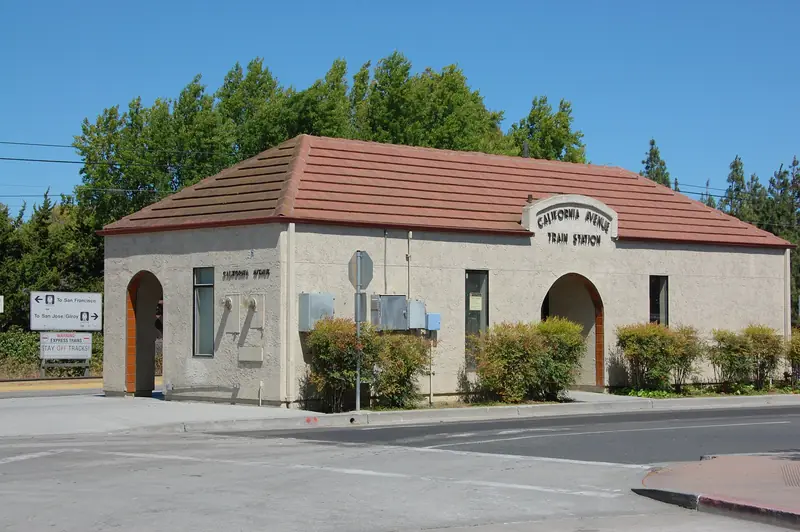
All Caltrain trains can carry passengers who use wheelchairs or other mobility devices, by ramp or by a conductor-operated mobile lift. Caltrain's accessibility page lists both Palo Alto and California Avenue stations as wheelchair accessible. The Stanford stadium platform is listed as not accessible. It only opens for select events anyway.
Boarding
- Go to the north end of the platform. Use the ramp up to the raised mini-high platform if there is one.
- Wait on the blue boarding assistance square or the assistance bench in the same area. Conductors look there for riders who need help.
- The conductor will ask your destination to confirm that station is accessible, then lay down a bridge plate or operate the lift.
- Once on board, move to the wheelchair area. Each electric car has signed wheelchair spaces and priority seats.
If you can fold your wheelchair and transfer to a seat, you may board even when the wheelchair spaces are full. Electric trains line up with the mini-high platforms at most stations, though full level boarding is still a future goal that needs more funding.
On the train
- Every electric train has one accessible restroom, always in the second car from the north end.
- Audio and visual announcements play on board and at stations. Onboard signs show the next stop.
- Directional tiles on platforms lead to ticket machines and the boarding assistance area. Clipper readers beep when you tap.
- Caltrain offers free one-on-one travel training for adults. Call 650-508-6362 to arrange it.
Fares and parking
Seniors and people with disabilities ride at roughly half the adult one-way fare. Caltrain accepts a Regional Transit Connection Discount card, a Medicare card or a DMV Disabled Person Placard ID card as proof. The station parking fee is waived for cars showing a California disabled person plate or placard, even outside the accessible spaces. Our Caltrain guide lists the full fare table.

Buses and the Marguerite
VTA and SamTrans buses on El Camino Real and at the Palo Alto Transit Center offer reduced fares for seniors and riders with disabilities. VTA listed $1.25 for a single ride and $3.75 for a day pass in October 2026 on its fare page. Stanford's free Marguerite shuttle is open to the public. All its buses are wheelchair accessible with bike racks. The main Marguerite lines run on weekdays only. Our guide to buses and shuttles explains the routes.
Paratransit: VTA ACCESS
For riders who cannot use regular buses or light rail because of a disability, VTA runs ACCESS paratransit across Santa Clara County, including Palo Alto. It operates in the same area and during the same hours as VTA's fixed routes. Details below come from VTA's ACCESS page in October 2026.
Getting certified
- Request an eligibility data card by calling (408) 321-2381, or download it. Return it by mail, in person or by fax.
- Complete a phone interview of about 30 minutes.
- VTA may contact your doctor or another licensed professional.
- You receive a decision letter by mail within 21 days of the interview.
Eligibility depends on your functional ability to use fixed-route transit. Age, income or not having a license do not qualify you by themselves. You can appeal in writing within 60 days of the letter.
Booking and fares
- Book one to three days ahead by calling (408) 321-2380 between 8 a.m. and 5 p.m., or online.
- Book before 5 p.m. the day before. Later requests count as same-day trips.
- A standard one-way trip cost $4. Premium trips, including same-day requests and trips outside the standard area, cost $16.
- Pickup windows are 30 minutes. Cancel at least two hours before your window to avoid a no-show.
Visitors and San Mateo County
Federal ADA rules require paratransit systems to serve eligible visitors for up to 21 days in a year, so call VTA ACCESS before your trip. North of San Francisquito Creek, in Menlo Park and the rest of San Mateo County, paratransit is SamTrans Redi-Wheels. SFO lists its number as 1-800-660-4287.
After Palo Alto Link
The city's on-demand Palo Alto Link shuttle ended on October 30, 2026. In its place the city has expanded programs through the Palo Alto Transportation Management Association, including free accessible rides and free transit passes for qualifying seniors, people with disabilities and low-income residents and workers. Through a city partnership, Avenidas offers rides within Palo Alto and Stanford to residents 65 and older and to people with disabilities. Our page on resources for older adults has more on Avenidas.
Airports and ride services
- SFO: wheelchair accessible rideshare vehicles can pick up at the domestic terminal curb. Wheelchair accessible taxis are available through the taxi coordinator or by dialing *1107 from a courtesy phone.
- SJC: taxis carry folding wheelchairs at no extra charge. Accessible vans cost nothing extra, with advance notice recommended. All airport shuttle buses are wheelchair accessible.
- Waymo: we could not confirm wheelchair accessible Waymo vehicles in the Bay Area. Waymo works with groups including LightHouse for the Blind on rider access.
For an assured ride after a long flight, a prebooked airport pickup lets you state your needs in advance. Our page on robotaxis and rideshare covers pickup zones at each airport.
Accessible parking
Blue disability spaces and their striped access aisles require a valid disabled person placard or plate from the California DMV. Placards from other states are generally recognized. In the city, short-term parking downtown and on California Avenue is free anyway. California law also generally lets placard holders park beyond posted time limits on public streets. Our guide to parking in Palo Alto covers the garages.
At Stanford, the rules are specific. Stanford's Diversity and Access Office says holders of a state-issued placard or plate, from any state, may park in blue disability spaces, in service vehicle spaces where a posted limit may apply, in A, C and residential permit spaces and in visitor pay parking, except at the Li Ka Shing Center lot where pay by space is enforced. Stanford does not issue disability permits of its own.
Stanford resources
Stanford's Diversity and Access Office is the starting point for access questions on campus. Reach it at (650) 723-0755 or disabilityaccess@stanford.edu. Two maps help with planning:
- The Campus Access Guide shows accessible entrances and features building by building.
- The campus map has a disability parking layer and a Suggested Travel Routes layer showing paved, lit paths.
The Main Quad and most museums sit on flat ground. Distances on campus are long, though, so the Marguerite helps. Visiting a patient? Our Stanford Hospital visitor guide covers medical center parking.
Parks, playgrounds and trails
Magical Bridge Playground
Magical Bridge in Mitchell Park, 600 East Meadow Drive, opened in April 2015. It was designed so that children and adults of every ability can play side by side, including wheelchair users and people with sensory or cognitive disabilities. The city calls it the nation's most innovative and inclusive playground. Retreat areas give a quiet break when the noise gets too much. The Mitchell Park Library and Community Center next door has accessible indoor restrooms. Read more in our Mitchell Park guide.

The Baylands
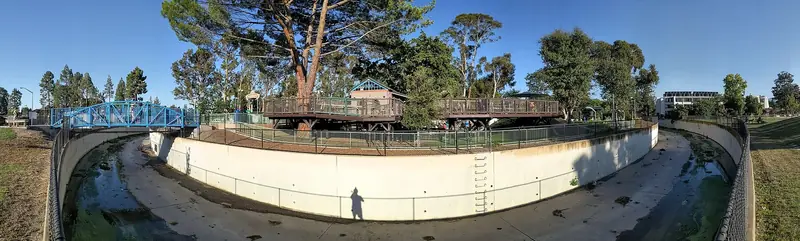
The Palo Alto Baylands is the flattest big open space in town. The levee trails are wide and mostly packed dirt or gravel, with no hills to speak of. The Santa Clara Valley Audubon Society has run walks there billed as wheelchair accessible, describing flat, wide, dirt-packed trails and paved parking with accessible spaces. The boardwalk across the marsh was rebuilt and reopened in 2019. We could not confirm an official accessibility rating for the boardwalk or for each trail surface. Conditions also change after winter rain. Call the city's Baylands staff before you go. Our Baylands guide covers parking and the nature center.
The foothills
Foothills Nature Preserve and Pearson-Arastradero Preserve are hilly, with dirt trails. Most routes involve real climbs, so check trail descriptions on the city's preserve pages before you go.
Good to know
- Caltrain's ADA coordinator can be reached at 650-508-6462. Customer service is 1-800-660-4287, or dial 711 for the California Relay Service.
- When booking a hotel, ask for the exact features of an accessible room, such as a roll-in shower. You can compare Palo Alto hotels and then confirm details with the hotel.
- Bring your placard if you rent a car. It works in any California blue space.
Frequently asked questions
Is Caltrain wheelchair accessible in Palo Alto?
Yes. Palo Alto and California Avenue stations are both listed as wheelchair accessible. Every train can be boarded by ramp or mobile lift. Wait at the blue boarding assistance area at the north end of the platform and the conductor will help. Stanford station is not accessible.
How do I qualify for VTA ACCESS paratransit?
Eligibility depends on whether a disability prevents you from using regular buses and light rail, not on age or income. You submit a data card, complete a phone interview of about 30 minutes and receive a decision letter within 21 days of the interview.
Can visitors use paratransit in Palo Alto?
Federal rules require ADA paratransit systems to serve visitors who are certified elsewhere or who have a qualifying disability for up to 21 days a year. Call VTA ACCESS before your trip to arrange service in Santa Clara County.
Is Magical Bridge Playground accessible?
Yes. It was designed so children and adults of all abilities, including wheelchair users and people with sensory or cognitive disabilities, can play together. It opened in Mitchell Park in April 2015 and is free.
Where can I get disability access help at Stanford?
Stanford's Diversity and Access Office handles disability access questions at (650) 723-0755 or disabilityaccess@stanford.edu. The Campus Access Guide and the campus map show accessible routes, entrances and disability parking.