On this page
Venture capital did not start on the Peninsula. The first modern firms appeared in Boston and New York after World War II. What happened here was different. Within about 15 years, a handful of bankers, engineers and retired generals turned the money side of startups into a local craft. They worked a few miles from the labs and garages they funded. This page tells that story in order, from the 1950s to the AI rounds of the 2020s.
It is written as background for founders, students and curious visitors. For a practical overview of how funds work today, start with our venture capital guide. For the engineering side of the same story, read our Silicon Valley history.
Before venture capital had a name
In the 1930s and 1940s, money for young technology companies came mostly from wealthy families and from founders' own savings. Stanford engineering professor Frederick Terman made introductions and sometimes put in his own money. Bill Hewlett and Dave Packard started their company in a Palo Alto garage in 1939 with very little outside cash.
The first professional firms appeared on the East Coast in 1946. American Research and Development Corporation, co-founded by Harvard professor Georges Doriot, was the first institutional firm to raise money from sources other than rich families. Its 1957 investment in Digital Equipment Corporation became the model for what a single great bet could do. In 1958 Congress passed the Small Business Investment Act. It let licensed private investment companies borrow federal money to invest in small firms. Several early West Coast investors used that structure.
Arthur Rock and the Traitorous Eight
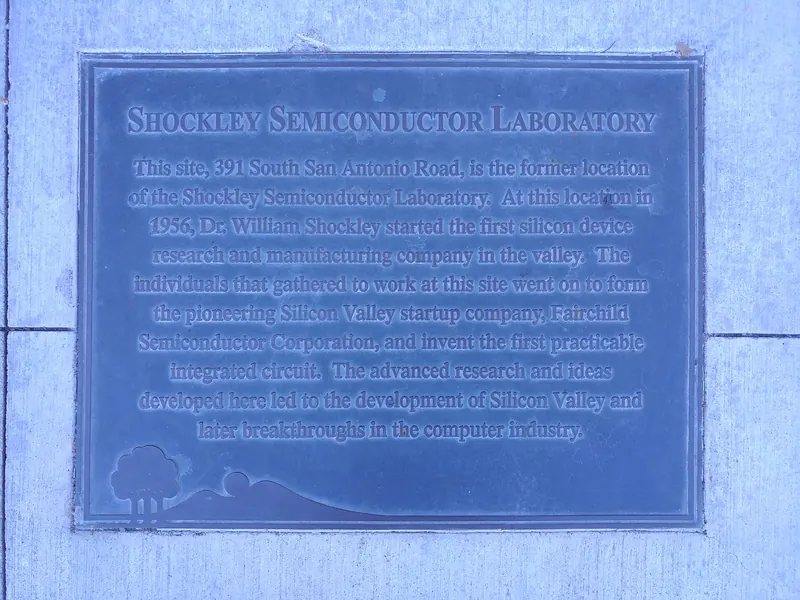
The moment most historians point to came in 1957. Eight young scientists at Shockley Semiconductor Laboratory in Mountain View wanted to leave and stay together as a team. Eugene Kleiner's father had an account at the New York investment bank Hayden, Stone and Company. The group wrote to the firm for help. The letter reached Arthur Rock, a young analyst who focused on raising money for small technology companies.
Rock and his colleague Alfred Coyle flew west. They could not find a backer willing to fund a group of employees rather than a company. Rock eventually convinced Sherman Fairchild, an inventor and investor who ran Fairchild Camera and Instrument, to fund the new venture. Fairchild Semiconductor opened in Palo Alto later that year. Its success and the dozens of companies its alumni founded showed that backing technical teams could pay off on a large scale. Our page on Shockley and the semiconductor boom covers the engineering story.

Draper, Gaither & Anderson
The first firm built to do this full time on the West Coast opened in Palo Alto in 1959. The Computer History Museum dates it to 1958. Its founders were General William H. Draper Jr., who had overseen parts of the Marshall Plan; H. Rowan Gaither, a founder of the RAND Corporation; and retired Air Force general Frederick Anderson. Draper, Gaither & Anderson is reported to be the first venture firm to use the limited partnership format that nearly every fund uses today.
That structure matters. A small group of general partners runs the fund and makes the investments. Outside investors become limited partners who put in money but do not manage it. The fund has a fixed life and distributes its holdings at the end. Draper, Gaither & Anderson distributed its fund's holdings to investors at the end of 1966. The structure outlived the firm.
Davis & Rock and the Draper firms
The 1960s produced the first generation of local firms that look familiar today.
- Davis & Rock (1961). Arthur Rock moved to California in 1961 and teamed up with Thomas J. Davis Jr. to form Davis & Rock in San Francisco. Early investments included Teledyne and Scientific Data Systems.
- Draper and Johnson (1962). Bill Draper III, son of the general, started this firm with his friend Franklin "Pitch" Johnson.
- Sutter Hill Ventures (1964). Draper and Paul Wythes founded Sutter Hill in Palo Alto as an offshoot of a real estate firm. It is still active and still based in Palo Alto. Its later investments include Snowflake, which it incubated.
- Mayfield (1969). Tommy Davis went on to start Mayfield, which still invests in early stage companies and sponsors a Stanford fellowship program.
The defining deal of the decade came in 1968. When Robert Noyce and Gordon Moore left Fairchild to start Intel, Rock raised $2.5 million in convertible debentures from private investors in a single day. He became Intel's first chairman. Ten years later Mike Markkula introduced him to Steve Jobs and Steve Wozniak. Rock bought Apple stock and joined its board.
1972: the move to Sand Hill Road
Two firms founded in 1972 set the pattern for the next half century. Eugene Kleiner, one of the Fairchild eight, joined former Hewlett-Packard executive Tom Perkins to raise an $8 million first fund. Kleiner Perkins is credited as the first venture firm to open an office on Sand Hill Road. That same year Don Valentine, a former Fairchild and National Semiconductor sales leader, founded Sequoia Capital. Sequoia says its first fund was $3 million and that it backed Atari and Apple.
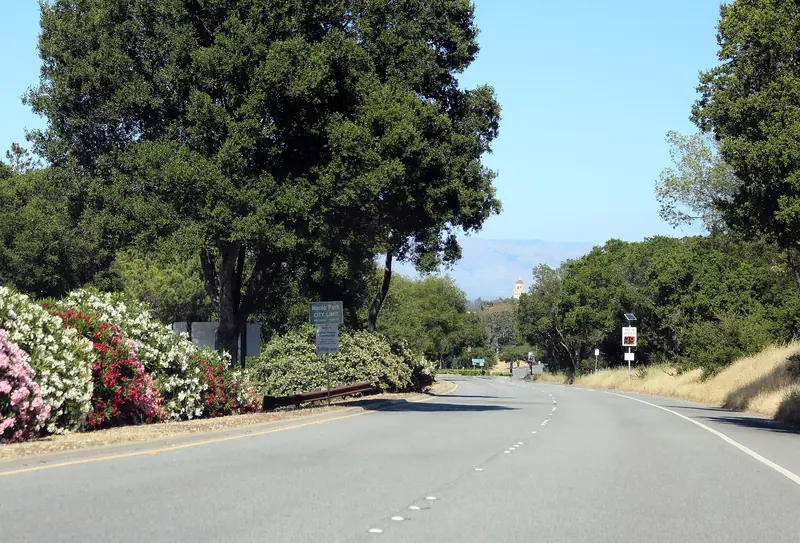
The offices came from a developer with Stanford roots. Tom Ford had worked as Stanford's legal counsel and director of land development before founding the Ford Land Company in 1966. He built the office campus at 3000 Sand Hill Road in phases between 1971 and 1986, near where Interstate 280 was still being finished. Low rents compared with San Francisco, easy freeway access and proximity to Stanford drew firm after firm. In 1973 the industry formed a trade group, the National Venture Capital Association.

The 1979 prudent man rule
For its first decades venture capital was a small business. Funds were raised from wealthy individuals, insurance companies and a few endowments. The big pools of money, corporate pension funds, mostly stayed out. The Employee Retirement Income Security Act of 1974, known as ERISA, required pension managers to act as a "prudent man" would. Many read that as a ban on risky assets such as startups.
In 1979 the Department of Labor restated the prudence standard. Under the new reading a manager's choices were judged across the whole portfolio rather than one investment at a time. A small slice in a risky asset could be prudent if the portfolio as a whole was sound. Pension money began to flow into venture funds and grew sharply over the following decade. A cut in the top capital gains tax rate in 1981, from 28 to 20 percent, added fuel. Through the 1980s the number of firms grew from a few dozen to more than 650. Returns then fell late in the decade and some firms posted losses for the first time.
The dot-com era
The 1990s brought the internet and a new wave of local winners. Kleiner Perkins put $5 million into Netscape in 1994 for about a quarter of the company. Sequoia backed Yahoo and later Google. Palo Alto itself became a startup address again, with companies such as PayPal's predecessor and later Google working out of small offices on University Avenue. Our famous tech addresses tour walks past several of them.
Money poured in. By mid 2000, office rents on Sand Hill Road peaked at around $144 per square foot a year, above Manhattan and London's West End. Then the Nasdaq crash began in March 2000. Many funds ended up holding stakes worth far less than they paid. By mid 2003 the industry had shrunk to roughly half its 2001 size. Firms that survived learned to reserve more money for follow-on rounds and to be wary of valuations set by momentum alone.
Mega-funds, the 2010s and AI
The decade after the financial crisis changed the shape of the business. Andreessen Horowitz launched in 2009 and built a large in-house team to help founders with hiring, marketing and sales. Many firms copied the idea. Accelerators such as Y Combinator made seed investing a high-volume business and popularized the SAFE, a simple financing contract explained in our term sheet guide.
Fund sizes grew. SoftBank's first Vision Fund closed in 2018 with close to $100 billion, far larger than any traditional venture fund. It wrote very large checks into late stage companies. Crossover investors from public markets also joined private rounds. In 2021 Sequoia announced an evergreen structure for its U.S. and European business, meaning money could stay invested in companies long after they went public. Two years later Sequoia split into three separately branded firms: one for the United States and Europe, one for China and one for India and Southeast Asia.
The geography shifted too. More founders lived in San Francisco and many firms opened offices there. Sand Hill Road vacancies reached about 15 percent at the end of 2020 as remote work took hold. Even so, the road kept its symbolic role. Several firms renewed or expanded leases there in the years that followed.
The AI era
Since about 2022 the biggest story has been artificial intelligence. Training large models takes huge amounts of computing power, so the leading AI labs raised money in rounds far larger than earlier software startups ever needed. A lot of that money came from big technology companies investing directly or through their venture arms, which our corporate venture capital guide describes. Traditional firms responded by raising dedicated AI funds and by backing smaller companies that build products on top of those models.
Locally, AI and robotics startups have filled office space in Palo Alto and Stanford Research Park. Seed investors and angels remain as busy as ever because the cost of building a first product has fallen. The pattern Terman and Rock helped start still holds: talent, research and capital within a short drive of each other.
Quick timeline
| Year | Event |
|---|---|
| 1946 | American Research and Development Corporation founded in Boston |
| 1957 | Arthur Rock helps the Traitorous Eight start Fairchild Semiconductor |
| 1958 | Small Business Investment Act passes |
| 1959 | Draper, Gaither & Anderson opens in Palo Alto |
| 1961 | Davis & Rock forms in San Francisco |
| 1964 | Sutter Hill Ventures founded in Palo Alto |
| 1968 | Rock raises Intel's first $2.5 million |
| 1969 | Mayfield founded |
| 1972 | Kleiner Perkins and Sequoia Capital founded; Kleiner Perkins opens on Sand Hill Road |
| 1973 | National Venture Capital Association formed |
| 1979 | Labor Department restates the ERISA prudence standard |
| 2000 | Nasdaq crash begins in March |
| 2009 | Andreessen Horowitz launches |
| 2023 | Sequoia splits into three firms |
Where to see this history today
There is no museum of venture capital, but you can trace the story in an afternoon. Start at the HP Garage on Addison Avenue, then drive to the Shockley marker on San Antonio Road in Mountain View. Head north on Interstate 280 to Sand Hill Road and take the Sand Hill exit. The office parks are private, so look from the road and do not walk into lobbies. The Computer History Museum in Mountain View holds oral histories with many of the people on this page. If you would rather have a guide, a Silicon Valley tour from San Francisco usually covers Palo Alto and Stanford.
Frequently asked questions
Who started venture capital in Silicon Valley?
No single person did. Arthur Rock helped the Traitorous Eight find backing for Fairchild Semiconductor in 1957 and later co-founded Davis & Rock in San Francisco. Draper, Gaither & Anderson opened in Palo Alto in 1959 and is often called the first venture capital firm on the West Coast.
When did venture capital firms move to Sand Hill Road?
Kleiner Perkins is credited as the first venture firm to open an office on Sand Hill Road, in 1972. Sequoia Capital was founded the same year. Developer Tom Ford built the office campus at 3000 Sand Hill Road in phases between 1971 and 1986.
What was the 1979 prudent man rule change?
In 1979 the U.S. Department of Labor restated the prudence standard under ERISA, the federal pension law. The new reading judged risk across a whole portfolio instead of one investment at a time. That let pension funds put a slice of their money into venture funds and commitments grew sharply over the next decade.
What was Arthur Rock's role in Intel and Apple?
Rock raised $2.5 million in convertible debentures for Intel in 1968 and became its first chairman. In 1978 Mike Markkula introduced him to Steve Jobs and Steve Wozniak. He bought Apple shares and served on its board for years.
Is venture capital still centered on Sand Hill Road?
It is still the symbolic home and many firms keep offices there. Since the 2010s, though, a lot of investing activity has moved to San Francisco. Many firms now split time between Menlo Park and the city.