On this page
Look for 844 East Charleston Road on a map and you will find an ordinary low commercial building near the Mountain View line. In November 1957 it became the home of Fairchild Semiconductor, a startup formed by eight scientists who had just walked out of William Shockley's lab. Within three years they had worked out how to make silicon transistors reliably in batches and how to put a whole circuit on one chip.
Much of what followed in Silicon Valley grew out of that building, through the products it made and the people who left it. This profile focuses on the company's Palo Alto years and the site today. Our history page on Shockley, Fairchild and the semiconductor boom tells the wider story in more depth.
The eight who left Shockley
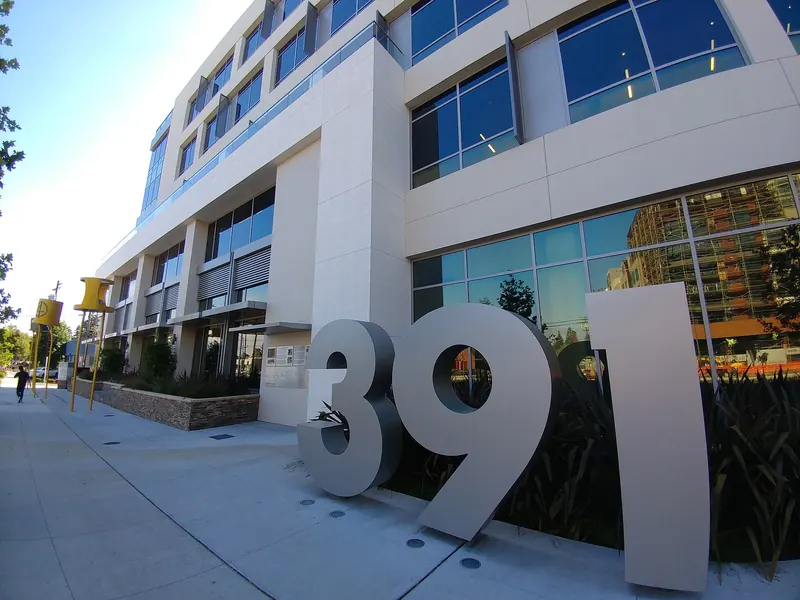
William Shockley, a co-inventor of the transistor, opened Shockley Semiconductor Laboratory at 391 San Antonio Road in Mountain View in 1956. He hired brilliant young scientists but managed them badly. On September 18, 1957, eight of them quit. They were Julius Blank, Victor Grinich, Jean Hoerni, Eugene Kleiner, Jay Last, Gordon Moore, Robert Noyce and Sheldon Roberts. Shockley's camp called them the traitorous eight.

The group wanted to stay together and make silicon transistors. With help from Arthur Rock, then a young New York investment banker, they found a backer in Sherman Fairchild's Fairchild Camera and Instrument, an East Coast company with large military contracts. Fairchild Semiconductor was set up as its division. According to Sherman Fairchild, Noyce's pitch for silicon persuaded him. Silicon, Noyce argued, was made from sand, so the main cost would be in the process.
Moving into 844 East Charleston Road
The new company began in Victor Grinich's garage. In November 1957 it moved into the building at 844 East Charleston Road, which sits on the Palo Alto side of the border with Mountain View. That location is why Palo Alto can claim Fairchild as its own during its most inventive years.
Our page on south Palo Alto describes how the area filled in during the following decades.
Mesa transistors and the planar process
Fairchild's first product to market was the 2N697, a silicon mesa transistor developed under Gordon Moore and introduced in 1958. The first batch of 100 went to IBM at $150 apiece for a computer aboard the B-70 bomber. Autonetics bought more for the Minuteman missile guidance system.
Mesa transistors had reliability problems. Jean Hoerni solved them with the planar process, which built transistors in flat layers protected by a coat of silicon dioxide. It made transistors cheaper, more reliable and easier to manufacture. Within a few years nearly every transistor maker had copied or licensed it.
The integrated circuit
In 1959 Robert Noyce saw that the planar process could do more. If transistors were flat and protected, many of them could be formed side by side on one piece of silicon and wired together with a thin metal film laid on top. That was a practical integrated circuit. Fairchild produced its first working planar ICs in May 1960.
Jack Kilby at Texas Instruments had built an integrated circuit from germanium in September 1958. Kilby's version used fine wires to connect its parts, which was hard to scale. The industry adopted Fairchild's approach. The two companies fought over patents for years before agreeing to cross-license.
Good to know
- The plaque outside 844 East Charleston Road marks California Historical Landmark No. 1000, the "Site of the Invention of the First Commercially Practicable Integrated Circuit."
- An IEEE plaque sits beside it near the front door.
- Fairchild Semiconductor began as a division of Fairchild Camera and Instrument, not as an independent startup.
Growth and the Fairchildren
The company grew from a dozen people to about twelve thousand and reached sales of around $130 million a year, according to Wikipedia. By the mid 1960s its semiconductor division brought in two thirds of the parent company's sales. Its operations spread across Mountain View and Palo Alto. Fairchild introduced some of the first integrated circuit operational amplifiers, including Bob Widlar's designs and the popular μA741 of 1968.
Management in Syosset, New York, kept tight control and limited stock options. The California engineers grew frustrated. People began leaving to start their own companies. Charles Sporck left for National Semiconductor in 1967. In the summer of 1968 Noyce and Moore left to found Intel in Mountain View. Eugene Kleiner co-founded the venture firm Kleiner Perkins. The departing engineers and their companies became known as the Fairchildren. A Fairchild advertisement of the era showed a collage of their logos with the line "We started it all." Our Kleiner Perkins profile and venture capital history follow that thread.
The name Silicon Valley itself caught on after journalist Don Hoefler used it in a 1971 series in Electronic News about chip companies, most of which traced back to Fairchild.
Later owners
Fairchild's later decades were a string of new parents:
| Year | Event |
|---|---|
| 1979 | Oil field services firm Schlumberger buys Fairchild Camera and Instrument for $425 million. |
| 1980 | Fairchild starts an artificial intelligence lab, which became Schlumberger Palo Alto Research in 1985. |
| 1987 | Schlumberger sells Fairchild to National Semiconductor for $200 million. |
| 1997 | National sells a rebuilt Fairchild to management and investors for $550 million; it is based in South Portland, Maine. |
| 2016 | ON Semiconductor buys Fairchild. |
By then the company had long since left East Charleston Road. We could not confirm the exact year Fairchild moved out of the Palo Alto building, so we do not give one.
The building today
844 East Charleston Road is a private commercial building in a mid-century style. Visitors in 2016 found a design and staging company there. In 2018 the property was advertised for lease as "a historically relevant commercial building in Palo Alto," and a writer for the EE Journal found it freshly refurbished. We could not confirm the tenant in 2026.
- Getting there. The building is on East Charleston Road in the southeast corner of Palo Alto, close to the Mountain View border. It is easiest to reach by bike or car.
- What to see. The two plaques near the front door. Stay on the sidewalk.
- Pair it with. The Shockley monument area at 391 San Antonio Road in Mountain View, a short ride away. The Computer History Museum covers the chip industry in depth.
Palo Alto has two other technology sites on the state landmark list. The HP Garage at 367 Addison Avenue is No. 976. The site of the Federal Telegraph Company lab, where Lee de Forest worked on the vacuum tube amplifier from 1911 to 1913, is No. 836. A bike loop can take in all three.
For a route that adds the HP Garage and downtown startup addresses, use our famous tech addresses tour. The historic landmarks guide lists Palo Alto's other state landmarks. For more company histories, see the companies guide.
Frequently asked questions
Where was Fairchild Semiconductor founded?
The founders first met in Victor Grinich's garage. In November 1957 the company moved into a building at 844 East Charleston Road, on the Palo Alto side of the line with Mountain View. That building is California Historical Landmark No. 1000.
Was the integrated circuit invented in Palo Alto?
The practical planar integrated circuit was. Robert Noyce conceived it at Fairchild's Charleston Road building in 1959, building on Jean Hoerni's planar process. Fairchild made its first working planar ICs in May 1960. Jack Kilby at Texas Instruments had built an earlier germanium circuit in 1958.
Can you visit the Fairchild building?
You can see it from the sidewalk. Two plaques sit near the front door, one from the State of California and one from the IEEE. The building is a private commercial property, so do not go inside unless the current tenant invites you.
Who were the Fairchild founders?
Julius Blank, Victor Grinich, Jean Hoerni, Eugene Kleiner, Jay Last, Gordon Moore, Robert Noyce and Sheldon Roberts. They had worked for William Shockley in Mountain View and became known as the traitorous eight after they left in September 1957.
What happened to Fairchild Semiconductor?
Noyce and Moore left in 1968 to found Intel. Schlumberger bought the parent company in 1979, then sold Fairchild to National Semiconductor in 1987. National spun it off again in 1997 as a company based in South Portland, Maine. ON Semiconductor bought it in 2016.