On this page
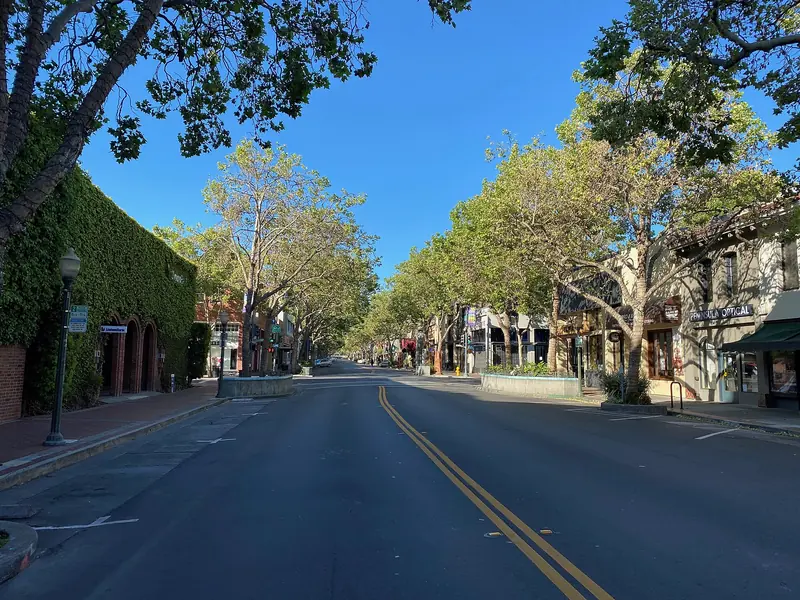
Palo Alto surprises first-time visitors in two ways. It is smaller than its fame suggests, a city of about 68,000 people with tree-lined streets and low buildings. It is also more spread out than it looks on a map. The places people come to see are scattered between the bay marshes in the east and the oak-covered foothills in the west, with Stanford's huge campus taking up much of the middle.
This page is the orientation we would give a friend before their first trip. It explains how the city fits together, which way to travel, what to see first and the small habits that locals notice. For sample schedules, follow it with our 24 hours in Palo Alto or three days in Palo Alto plans.
How the city is laid out
Think of Palo Alto as a long rectangle running northwest to southeast along the bay. Three lines cross it lengthwise and help you keep your bearings. Highway 101 runs along the bay side. The Caltrain tracks and Alma Street run through the middle. El Camino Real, the old mission road, runs just west of the tracks and marks the edge of Stanford land for much of its length.
Streets are not on a single grid. Downtown has its own grid tilted toward the station. Older neighborhoods bend around San Francisquito Creek, which is also the border with Menlo Park and East Palo Alto. When locals say "north" and "south" Palo Alto, they usually mean the older neighborhoods near downtown and the newer postwar tracts toward Mountain View.
The districts that matter to visitors
| District | What it is | Go for |
|---|---|---|
| Downtown and University Avenue | The main street, next to the Caltrain station | Restaurants, cafes, the Stanford Theatre, hotels |
| Stanford campus | The university, west of El Camino Real | The Main Quad, free museums, the Dish |
| California Avenue | The second main street, one train stop south | Sunday farmers market, casual food |
| Professorville | Shingled houses a few blocks south of downtown | The HP Garage and historic homes |
| Midtown and south Palo Alto | Postwar neighborhoods along Middlefield Road | Mitchell Park and its library, Eichler homes |
| Stanford Research Park | Offices along Page Mill Road and Hanover Street | Business visits, tech history |
| The Baylands | Marshes at the end of Embarcadero Road | Birdwatching and sunset walks |
| The foothills | Open space west of Interstate 280 | Hikes at Foothills Nature Preserve and Arastradero |
Most first-time visitors spend nearly all their time in the first four. Stanford Shopping Center and Town & Country Village sit on El Camino Real between downtown and the campus, so they fit easily into a Stanford day.

How to get around
You can see the center without a car. Downtown, the station and the Main Quad lie within about a mile of each other and Palm Drive links them in a straight line. Beyond that core, plan each trip.
- Caltrain. The electric trains, running since 2024, stop at Palo Alto station on University Avenue and at California Avenue. They are the easiest way to reach San Francisco, San Jose or Mountain View. Our Caltrain guide covers fares and the Clipper card.
- The Marguerite shuttle. Stanford's free shuttle leaves from the transit center beside Palo Alto station. Anyone can ride. Its main lines run Monday to Friday only.
- Robotaxis and rideshare. Waymo serves Palo Alto, alongside Uber and Lyft. They are the simplest way to reach the Baylands or the Dish. The city's on-demand Palo Alto Link service ended on October 30, 2026.
- Bikes. The city is flat and has quiet bike boulevards, but there is no bike share program. Rent from a local shop or bring your own.
- Driving. A car helps for the foothills, the coast and day trips. Downtown has paid garages and time limits. Weekday traffic peaks roughly 7 to 10 a.m. and 3 to 7 p.m.
If you fly in, San Jose airport is about 15 miles away and SFO about 20. A prebooked car saves the guesswork after a long flight. You can book a fixed-price airport pickup to your hotel.
What to see first
With limited time, put these in order. Each one explains something about the city.
- The Main Quad and Palm Drive. Stanford is the reason Palo Alto exists. Walk up Palm Drive to the Oval and into the sandstone arcades. Memorial Church was closed to visitors for maintenance from June 15 to October 31, 2026, so check Stanford's site for its visiting hours before you plan to go inside.
- The Cantor Arts Center. Free, with a Rodin garden outside that never closes. The museum is closed Tuesday and Wednesday.
- University Avenue. The downtown main street, with the 1925 Stanford Theatre and the station at its foot.
- The HP Garage. At 367 Addison Avenue in Professorville, where Silicon Valley's founding story starts. It is a private property owned by HP, so view it from the sidewalk.
- The Baylands at sunset. Free marsh trails at the end of Embarcadero Road, open until sunset.
Two big sights are partly closed this season. Hoover Tower's observation deck is closed until January 25, 2027 and the tower is closed on weekends until then. The Palo Alto History Museum postponed its opening in January 2026 after water leaks and has no new date. For the full list, see our top attractions. If you prefer a guide, you can browse Bay Area tours that include Stanford and Silicon Valley stops.
When to come and how long to stay
Two days covers the essentials at a relaxed pace. Late spring and early fall are usually dry and mild. Winter brings most of the year's rain but stays mild by national standards. Check the Stanford calendar before booking. Commencement weekend in June, new student move-in in September and home football Saturdays fill hotels across the Peninsula. Our Stanford event weekends page lists the dates.
Weekday or weekend makes a real difference here. Weekdays bring the free shuttle and open offices but busier hotels. Weekends bring free parking in many central Stanford lots and the farmers markets, downtown on Saturday and California Avenue on Sunday, both year-round.
Local etiquette
Palo Alto is relaxed, but a few habits mark you as a considerate guest.
- Watch for bikes. Thousands of students ride on campus. Look both ways before stepping off a curb and keep to the walking side of shared paths.
- Respect private homes. Professorville, the HP Garage and the famous founders' houses are on residential streets. Stay on the sidewalk, keep voices low and do not block driveways.
- Keep quiet in sacred spaces. Memorial Church holds services, weddings and memorials. Personal photos are allowed when it is open to visitors.
- Leave the drone at home. Stanford bans visitor drones and the city bans them in its parks and open space.
- Tip as you would elsewhere in the US. Sit-down restaurants expect a tip on top of the bill. Check the receipt first, since some add service charges.
- Expect early evenings. Many downtown kitchens close by 9 or 10 p.m. Book dinner on weekends.
Safety and health
Palo Alto is a calm city and most visits pass without incident. The common problem is theft from cars, so never leave bags, laptops or shopping in sight in a parked car, even for a few minutes. Lock bikes with a sturdy lock, especially at the Caltrain stations.
The Caltrain tracks run through the middle of town at street level in several places. Cross only at marked crossings and never go around lowered gates. Outdoors, the Dish and the foothill trails have little shade, so carry water. The Pacific coast over the hills has cold water and strong currents, so enjoy it from the sand. California is earthquake country. If you feel shaking, drop, cover and hold on. In an emergency, call 911. For urgent but minor problems, our urgent care guide lists clinics and emergency rooms.
Money and costs
Palo Alto is expensive to sleep in and cheap to explore. Hotel rooms are the big cost, especially midweek, when business travelers fill them. Weekend rates are often lower. Many of the best sights cost nothing: the Stanford campus, the Cantor and Anderson museums, the Baylands, the Dish and the HP Garage from the sidewalk.
- Taxes. Sales tax is 9.75% from October 1, 2026. Hotel stays of 30 days or less add a 15.5% city hotel tax.
- Payment. Cards and phone payments work almost everywhere. A few places are cashless. Keep a little cash for farmers market stalls.
- Parking. Stanford visitor parking is paid on weekdays through ParkMobile. Downtown garages and lots have their own rules.
- Transit. A Caltrain ride between Palo Alto and San Francisco is a three-zone trip. The adult fare was $8.50 in October 2026 and rises to $9.00 on January 1, 2027.
Our budget trip guide has more ways to save.
Where to stay on a first visit
Stay downtown or along El Camino Real near Palm Drive. Both put you within walking distance of University Avenue, the station and the campus, which keeps the trip car-free for the first day or two. Our where to stay guide compares the areas and hotels. Book early around Stanford events, then compare hotels in Palo Alto for your dates.
Good to know
- Clocks went back an hour on November 1, 2026. Sunset now comes around 5 p.m., so plan outdoor stops earlier.
- The Marguerite shuttle does not run on weekends or university holidays.
- Bring layers. Mornings, the Baylands and the coast are cooler than town in the afternoon.
- Rain is most likely from November to March. The museums make good backups.
Frequently asked questions
Is Palo Alto walkable for visitors?
The core is. Downtown, the Palo Alto Caltrain station and the Stanford Main Quad sit within about a mile of each other. California Avenue is one train stop south. The Baylands, the foothills and the Computer History Museum need a car, a bike or a ride.
What should I see first in Palo Alto?
Start with the Stanford campus: Palm Drive, the Main Quad and the free Cantor Arts Center. Then walk University Avenue downtown and the Professorville streets around the HP Garage. Add a sunset at the Baylands if you have a ride.
Is Palo Alto safe for tourists?
It is a calm, residential city and most visits pass without trouble. The common problem is car break-ins, so never leave bags or electronics visible in a parked car. Watch for fast bikes on campus paths and cross the Caltrain tracks only at marked crossings.
Do I need cash in Palo Alto?
Rarely. Cards and phone payments work almost everywhere and some places, such as Stanford Stadium concessions, are cashless. Stanford visitor parking is paid through the ParkMobile app or website. A little cash helps at farmers market stalls.
How much is sales tax in Palo Alto?
The sales tax rate in Palo Alto is 9.75% from October 1, 2026, according to the California Department of Tax and Fee Administration. Hotel stays of 30 days or less also carry a 15.5% city hotel tax on top of the room rate.