On this page
Most people who picture venture capital in Palo Alto think of Sand Hill Road or University Avenue. Tenaya Capital works from neither. Its office is on Park Boulevard in the Ventura neighborhood, south of the California Avenue business district. The firm also has an unusual origin story. It started life inside an investment bank and became independent when that bank collapsed.
This profile is a neutral explainer. It draws on Tenaya's own website and published reporting, with sources named where figures appear. If you are new to the terms used here, our venture capital guide covers the basics.
From Lehman Brothers to independence
Tenaya began in 1995 as Lehman Brothers Venture Partners, the venture investing arm of the Wall Street bank. Several of today's partners worked there for years. Partner bios on Tenaya's site say Brian Paul joined the Lehman venture team in 1999 and Tom Banahan has been part of the investment team since 1999.
On September 15, 2008, Lehman Brothers filed for bankruptcy. Its private investment units, including the venture group, were put up for sale. According to Wall Street Journal reporting from early 2009, HarbourVest Partners, a Boston fund-of-funds firm, financed the spinout. It took over Lehman's existing investments and unfunded commitments so the team could continue as an independent firm under the Tenaya name.
The partner bios describe Ben Boyer, Stewart Gollmer, Brian Melton and Brian Paul as co-founders of Tenaya Capital, all former partners at Lehman Brothers Venture Partners. The firm describes itself as an equal partnership built on the idea that partners should like, trust and respect each other. It says it looks for entrepreneurs who share those values.
The Park Boulevard office
Tenaya's contact page gives one address: 3101 Park Blvd, Palo Alto, CA 94306. Its vision page adds that the firm has offices in the Bay Area and in Wellesley, Massachusetts. Brian Paul's bio notes that he lives in Boston.
Older reference listings place Tenaya in Portola Valley or Woodside. The firm's own contact page now lists Palo Alto, so we use that. The building is in the Ventura neighborhood, which our Ventura guide covers. It is less than half a mile from the California Avenue Caltrain station, which makes it one of the easier venture offices in town to reach by train.
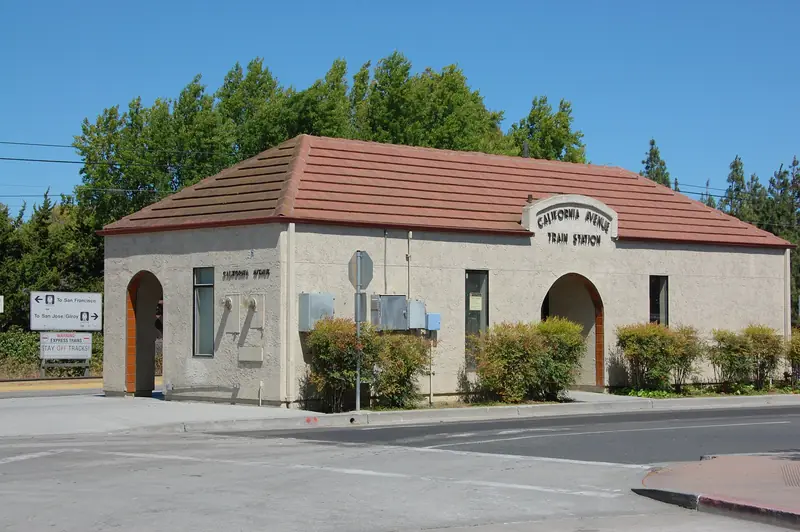

The office is private and meetings are by appointment. For coffee or lunch nearby, the restaurants on California Avenue are a few minutes away on foot. Our California Avenue guide lists the area's main streets. Stanford Research Park is also close by, across El Camino Real.
Stage and strategy
Tenaya calls itself a provider of early-growth capital. Its vision page lays out the model in specific terms:
- Stage. It typically partners with companies in their second institutional round or later, usually the Series B or Series C.
- Check size. Flexible, from $5 million to $20 million, with support through a company's life.
- Role. It typically leads financings and is often active on the board, but says it is willing to follow.
- Sectors. Consumer and enterprise technology, with more than 100 investments to date.
- Co-investors. It says it partners with top early-stage investors.
That positions Tenaya between early-stage firms and the large growth investors. A company usually raises a seed round and a Series A from other firms first. Tenaya then comes in when the business has early traction and needs money to scale. Our profile of IVP describes a larger growth investor that works a stage later still.
The partners split their attention by sector. Ben Boyer focuses on consumer companies, especially vertical applications and businesses with network effects. Brian Paul covers SaaS, cloud infrastructure and security. Stewart Gollmer covers enterprise and healthcare IT. Brian Melton focuses on enterprise infrastructure and application software.
Notable investments
Tenaya's partner bios list current and past investments, often with the month and year of an IPO or sale. Combined, they include:
| Company | Outcome listed by Tenaya |
|---|---|
| Endeca Technologies | Acquired by Oracle, December 2011 |
| Palo Alto Networks | IPO, July 2012 |
| Kayak | IPO July 2012, acquired by Priceline May 2013 |
| HubSpot | IPO, October 2014 |
| New Relic | IPO, December 2014 |
| Hortonworks | IPO, December 2014 |
| Tenor | Acquired by Google, March 2018 |
| Zuora | IPO, April 2018 |
| Eventbrite | IPO, September 2018 |
| Lyft | IPO, March 2019 |
| PlanGrid | Acquired by Autodesk, November 2019 |
Current investments named in the bios include Apartment List, OfferUp, Included Health, Lyra Health, Acquia, Clari, Druva, Fireblocks, Salt Security, Tealium and Valimail. Some of the older names were backed while the team was still part of Lehman Brothers. The bios do not always say which deals came before and after the 2009 spinout.
Palo Alto Networks is a neat local connection. The cybersecurity company carries the city's name, though its headquarters is in Santa Clara.
Funds
Tenaya's fund history is short on public detail:
- Fund VI, its first fund after the spinout, closed at $372 million, as reported by Forbes.
- Fund VII, a $450 million fund, began investing in 2015, as reported by the Wall Street Journal in May 2015.
Tenaya's vision page still says it is investing from its seventh fund, the $450 million vehicle raised in 2015. We could not find a newer fund announcement. Founders who are considering Tenaya should ask directly about the firm's current fund and its capacity for new investments and follow-on rounds.
What it means for founders
An early-growth investor asks different questions than a seed fund. Tenaya's model assumes there is already a product, paying customers and an experienced early-stage investor on the board. The conversation turns to growth rate, sales efficiency, retention and how a $5 million to $20 million check will change the company's path. Because Tenaya often leads, it will usually set the terms of the round and may take a board seat. Our term sheet basics and glossary explain lead investors, board seats and liquidation preferences.
How founders reach Tenaya
Tenaya's website lists an address and no pitch form, email or application. Its own description of how it works offers the clearest hint. It says it partners with the very best entrepreneurs and top-tier early-stage investors. In practice that means introductions usually come through a company's existing investors.
- Ask your seed or Series A lead whether they know the Tenaya partners and would make an introduction.
- Match your company to the partner who covers your sector, using the team bios on the firm's site.
- Have your growth metrics ready before the first call. An early-growth investor will ask for them early.
Our guide to pitching investors covers how to prepare.
Good to know
- The Park Boulevard office is private. Visit only for a confirmed meeting.
- Caltrain to California Avenue is often quicker than driving at commute hours.
- One partner is based near Boston. Ask whether a meeting will be in person or on video.
- Nothing here is investment advice or a statement about returns.
Frequently asked questions
Where is Tenaya Capital's office?
Tenaya's contact page lists 3101 Park Blvd, Palo Alto, CA 94306. That is in the Ventura neighborhood, less than half a mile from the California Avenue Caltrain station. Its vision page says it also has an office in Wellesley, Massachusetts.
Is Tenaya Capital part of Lehman Brothers?
Not anymore. The firm began in 1995 as Lehman Brothers Venture Partners. After Lehman filed for bankruptcy in September 2008, the team spun out as an independent firm in 2009 with financing from HarbourVest Partners, according to Wall Street Journal reporting.
What stage does Tenaya invest in?
Tenaya describes itself as an early-growth investor. It says it typically partners with companies at the Series B and Series C stage, in their second institutional round or later, with checks of $5 million to $20 million.
What companies has Tenaya backed?
Partner bios on Tenaya's site list past investments including Palo Alto Networks (IPO July 2012), Kayak (IPO July 2012), HubSpot (IPO October 2014), New Relic (IPO December 2014), Eventbrite (IPO September 2018) and Lyft (IPO March 2019).
How do I get a meeting with Tenaya Capital?
Tenaya does not publish a pitch form or email on its website. It says it likes to partner with top early-stage investors, so the usual route is an introduction from a company's existing seed or Series A investors.