On this page
Eclipse is a downtown Palo Alto venture firm that has spent a decade arguing that the most important startups will be built in factories, warehouses, power plants and construction sites rather than in software alone. It calls this territory the physical economy. Its portfolio runs from AI chips to battery recycling to self-driving trucks and autonomous excavators.
This page is a neutral profile for founders and readers interested in the local venture scene. It draws on the firm's own website and blog, plus reporting from Bloomberg and The Next Web, with dates where figures appear. For background on how venture funds work, see our venture capital guide.
Founding: from factory floors to venture
Lior Susan founded Eclipse in 2015. He tells the origin story himself in "Made in Eclipse," a December 2025 essay on the firm's blog that marked its first decade. In 2013 he was working for Flex, the electronics manufacturer. He stood in an empty field in Zhuhai, China, while officials promised a working factory within nine months. Nine months later the factory was running.
Susan writes that the speed of that build worried him. So did the other builds he saw across China. He returned to the United States in 2014 convinced that American technology and talent should be pointed at the country's largest physical industries. "This is why we started Eclipse in 2015," he wrote. The firm long used the name Eclipse Ventures. Its website and recent materials now say simply Eclipse.
Susan is listed on the team page as founder and CEO. The page shows a large team of partners with operating backgrounds in manufacturing, hardware, supply chains and policy, plus a partner emeritus, Pierre Lamond. In October 2026 the firm promoted Ryan Gibson and Michael Laser to partner. Both are former founders.
The High Street office
Eclipse lists its Bay Area office at 514 High Street, Palo Alto, CA 94301. High Street runs between Alma and Emerson streets and crosses University Avenue. The 500 block sits south of University, between Hamilton and Forest avenues. The address is in the University South area, which our University South guide describes.
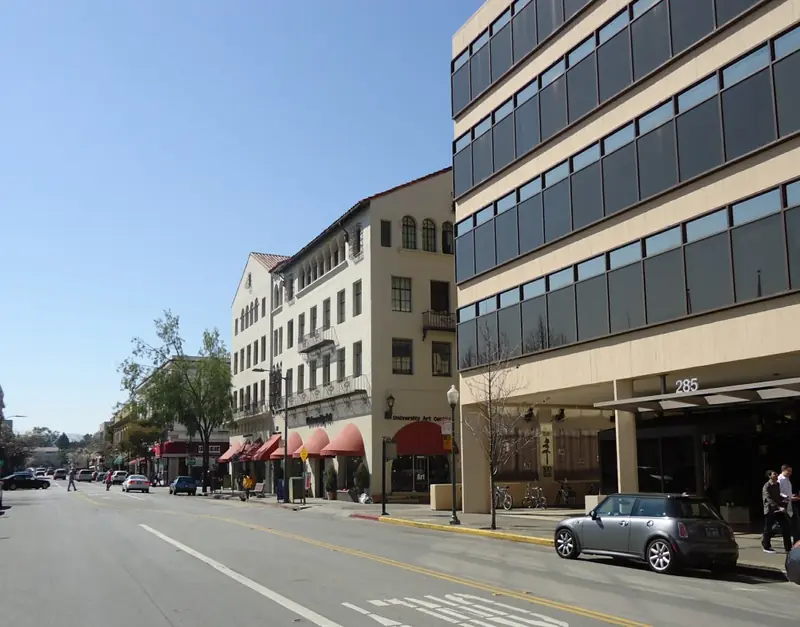

The block has become a small venture row. True Ventures lists its office a short walk away at 575 High Street. For visiting founders the location is practical. The Palo Alto Caltrain station is within walking distance, so a trip from San Francisco does not require a car. The office is private and meetings are by appointment.
Focus and stage
Eclipse's about page says it invests in entrepreneurs building the next generation of companies in the physical economy. It defines those as the industries that decide a country's resilience, competitiveness and security. Its portfolio filters break that down into sectors:
- Advanced compute, including AI chips, servers and processor design.
- Manufacturing, from digital metal printing to automated factories.
- Logistics and supply chain, including warehouse robotics.
- Transportation and mobility, such as autonomous driving and light electric vehicles.
- Construction and real estate, including autonomous heavy equipment.
- Defense and security, from space systems to rocket engines.
- Energy and electrification, including battery materials and storage.
- Healthcare, such as surgical robotics.
The portfolio is tagged by two stages, early stage and early growth. The firm also runs a company-building practice. Its October 2026 announcement said Gibson's practice had built nearly 20 companies from inception, including Bedrock Robotics. The firm says it takes on only a few such builds each year. Our page on climate tech investors covers other local firms with energy and industrial interests.
Notable investments
Eclipse's companies page features a handful of names and lists many more. The table below sticks to companies the firm names, with dated news from its own press page where available.
| Company | Area | Recent news the firm highlights |
|---|---|---|
| Cerebras Systems | AI chips and systems | New server chip launched, August 2026 |
| Wayve | Autonomous driving | Hired a former Waymo CFO, September 2026 |
| Redwood Materials | Battery materials and storage | $350 million Series E led by Eclipse, October 2025 (The Next Web) |
| Bedrock Robotics | Autonomous construction equipment | Built with Eclipse from inception |
| Ursa Major | Rocket propulsion | Announced a SPAC deal to go public, August 2026 |
| Muon Space | Satellites | Raised $250 million, August 2026 |
| Oxide | Cloud servers | Listed in the advanced compute portfolio |
| Mytra | Warehouse robotics | Listed in the logistics portfolio |
Other listed companies include VulcanForms, True Anomaly, Capstan Medical, Bright Machines and Blue Water Autonomy. The firm attaches a standard caution to its list: the companies shown are not representative of all its investments and past results do not predict future ones. That caution applies to every portfolio list on this site, which our venture capital glossary explains in plain terms.
Funds and size
Eclipse's largest reported raise came in April 2026. Bloomberg reported on April 7 that the firm had raised $1.3 billion for robotics and AI infrastructure. The Next Web broke that total into two funds the next day:
- Eclipse Fund VI, $720 million, for early-stage companies at the point of their first institutional capital.
- Early Growth Fund III, $591 million, for companies moving from a proven product to commercial scale.
The same report put Eclipse's total assets under management at about $10 billion. These are reported fund sizes, not performance figures. This page makes no claims about returns.
How founders reach Eclipse
Eclipse is one of the few firms in town that puts a submission link in plain view. Its site footer includes a "Submit a Business Plan" link next to a general admin email address. That is the channel the firm offers. It is the right place to start. Do not try to reach individual partners through personal accounts.
Some practical points:
- Read the companies page and a few portfolio announcements to see how the firm describes the problems it likes.
- Be ready to talk about manufacturing, supply chains and customers in detail. The partners have run factories and hardware programs.
- Expect questions about capital needs. Physical companies often need more money and more time than software startups.
- If you know an Eclipse founder, an introduction with context on the fit is still valuable.
Our guide to pitching investors covers meeting etiquette and follow-up.
Eclipse in the Palo Alto ecosystem
Palo Alto's tech story began with hardware. Hewlett-Packard started in a garage on Addison Avenue. Later, much of Stanford Research Park was built for electronics labs. A firm focused on factories, chips and machines fits that older thread better than many software investors do. Eclipse's essays return often to domestic manufacturing and supply chain security. Those themes also run through Stanford engineering and the region's aerospace and defense employers. For founders, the practical upshot is that a hardware startup in Palo Alto can find an investor within walking distance that does not flinch at long build cycles or factory budgets.
Good to know
- The High Street office is private. Visit only for a confirmed meeting.
- Downtown parking is mostly in city garages with time limits. Caltrain is often easier.
- Eclipse is unrelated to the Eclipse open source software foundation.
- Nothing on this page is investment advice. Portfolio and fund figures come from the firm and named press reports.
Frequently asked questions
Where is Eclipse located?
Eclipse lists its Bay Area office at 514 High Street, Palo Alto, CA 94301 on its website. That is in downtown Palo Alto, a short walk south of University Avenue and close to the Palo Alto Caltrain station. Meetings are by appointment only.
Who founded Eclipse?
Lior Susan founded Eclipse in 2015. In a December 2025 essay on the firm's blog he wrote that he started it after working at Flex, the contract manufacturer, where trips to Chinese factories convinced him that physical industries were ripe for new technology. He is listed today as founder and CEO.
What does Eclipse invest in?
Eclipse says it backs entrepreneurs building companies in the physical economy. Its portfolio filters include advanced compute, manufacturing, logistics, transportation, construction, defense, energy and healthcare. Named companies include Cerebras, Wayve, Redwood Materials and Bedrock Robotics.
How much money does Eclipse manage?
In April 2026 Eclipse announced $1.3 billion across two funds: a $720 million Fund VI for early-stage companies and a $591 million Early Growth Fund III, according to The Next Web. That report put the firm's assets under management at about $10 billion.
How do I pitch Eclipse?
The firm's website has a "Submit a Business Plan" link in its footer, alongside a general admin email address. That is the route the firm itself offers. Founders who know an Eclipse portfolio company can also ask for an introduction.