On this page
Klein Field at Sunken Diamond is the kind of ballpark people describe to friends. You walk down into it. The field sits below the level of the surrounding ground, the outfield is backed by tall trees and fans spread blankets on grass berms along both baselines. Stanford Athletics calls it one of the most beautiful college baseball facilities in the country and a spring afternoon here is one of the most relaxed outings on campus.
This guide covers how the sunken bowl came to be, Stanford's baseball history, how the park has changed and how to buy tickets and park. For the other venues nearby, see our Stanford athletics guide.

How the diamond got sunken
Stanford Stadium opened in 1921 with seats built into a ring of earth. To make that berm, crews dug soil from the site just to the south. The hole they left behind was large and level. About a decade later, in 1931, Stanford put its baseball field in it and the name Sunken Diamond stuck.
The setting still shapes the park. Seats rise on low slopes behind home plate, the berms down the lines make natural grandstands and the trees beyond the outfield frame the view. One quirk: the field faces an unusual direction. Wikipedia notes that the batter and catcher face south, while the recommended orientation for a diamond is east-northeast. On sunny afternoons that affects which seats get the glare, so bring a hat.
Stanford baseball history
Stanford has fielded baseball teams since the 1890s. The program's peak came under Mark Marquess, who coached the team from 1977 to 2017 and won more than 1,600 games. His teams won back-to-back College World Series titles in 1987 and 1988 and finished second in 2000, 2001 and 2003. David Esquer took over in 2018 and led the Cardinal to Omaha three straight years, from 2021 to 2023.
Sunken Diamond has been part of that run. Stanford Athletics says the park has hosted 16 NCAA regional tournaments and 4 NCAA super regionals. Its record crowd, 4,172 fans, came for the 1997 NCAA West Regional final against Fresno State.
Since 2024 Stanford has played in the Atlantic Coast Conference, which brings East Coast and Southern programs to Palo Alto for weekend series. Clemson visited in April 2026, for example.
How the park has changed
| Year | Change |
|---|---|
| 1931 | Baseball moves into the sunken field |
| 1966 | A portable inner fence shortens the original huge outfield |
| 1978 | A permanent 7-foot fence sets the field at 335 feet down the lines and 400 to center |
| 1988 | The Bud D. Klein Varsity Clubhouse opens before the season |
| 1995 | The outfield fence rises to 10 feet |
| 2001 | New dugouts, a three-tier press box and stadium-style seating bring fixed seats to 2,113 |
| 2008 | Renamed Klein Field at Sunken Diamond on April 26 |
The original field was enormous by modern standards: 360 feet to left, 500 to center and 350 to right, according to Stanford Athletics. The renaming honored Bud Klein, a Stanford athlete and donor, for his love of baseball and his memories of games at the park. His children Tom, Dick, Steve and Kathy dedicated the field in 2008, two decades after the family funded the clubhouse.
The clubhouse and its supporters
Behind the scenes, the Bud D. Klein Varsity Clubhouse holds the team's locker room, coaches' offices, training room and equipment room, plus an alumni reception room called the Diamond Suite. It opened before the 1988 season, the year Stanford won its second straight national title. Stanford Athletics also credits the Diamond Club booster group and the late developer John Arrillaga for their long support of the program and the ballpark.
Outside observers have noticed the setting too. Wikipedia cites college baseball writer Eric Sorenson, who in 2012 ranked Sunken Diamond the fourth best setting in Division I baseball. Crowds are usually relaxed rather than packed. In 2013, for example, Stanford averaged 1,747 fans per home game, which leaves plenty of room on the berms for most regular season games.
Tickets
Stanford sells baseball tickets three ways:
- Online through the baseball schedule on gostanford.com.
- In advance at the Stanford Athletics Ticket Office at Gate 2 of Stanford Stadium, open weekdays and closed on holidays.
- On game day at the Sunken Diamond ticket office on the north side of the ballpark. It sells game-day tickets only and the windows open one hour before first pitch.
Children under two get in free if they share a seat with a guardian. Ticket prices vary by opponent and seat type, so check the listing for each game. Lost and found items are handled at the ticket office.
Where to sit
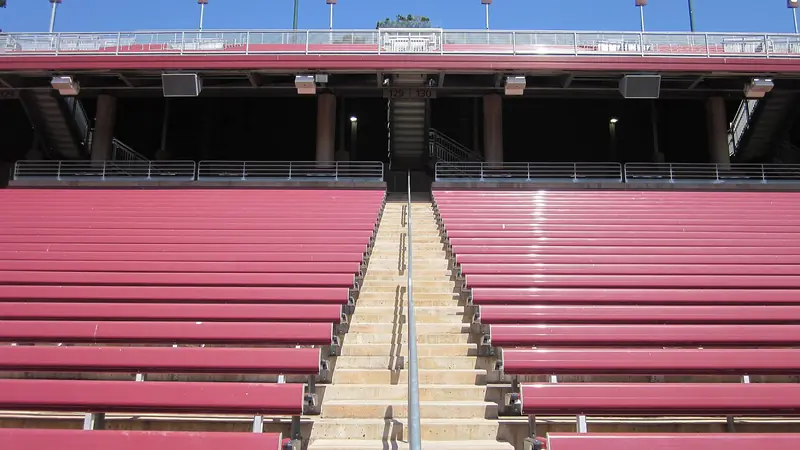
- Fixed seats: The 2,113 fixed seats are individual theater-style seats, 20 to 22 inches wide, behind home plate and along the lines.
- The berms: General admission lawn seating on the first and third base sides brings capacity to 4,000. Bring a blanket and arrive early on busy weekends.
- Accessible seating: Reserved seats for guests with disabilities are along the upper and lower walkways. General admission accessible spots are next to the first and third base lawns.
The main concession stand is behind the press box, with smaller stands along the lower walkway. Restrooms are also behind the press box. Guest services is at the marketing table in the main plaza.
Parking and getting there
Parking for baseball is free, according to Stanford Athletics. Use the Varsity Parking Lot, reached from Nelson Road off Galvez Street north of Stanford Stadium, or Lot 2, also called El Camino Grove, just north of Cagan Stadium and also reached from Nelson Road. Disabled parking with a valid state placard is in Lot 1 beside the ballpark and in the H-Lot at Nelson Road and Galvez Street.
By train, the Palo Alto Caltrain station is within walking distance, roughly 20 minutes through the athletics area. That makes Sunken Diamond one of the easiest Stanford venues to reach without a car. Our Stanford parking and transit guide has more detail. In the fall the Sunken Diamond lot serves football fans instead, with a bag drop for Stanford Stadium.
When to go
College baseball season usually opens in mid-February and the regular season runs through May. NCAA regionals and super regionals follow in June and Stanford hosts some years. Most conference games come in weekend series, so check the schedule for start times. The 2027 schedule will be posted on gostanford.com once it is released.
- February and March: Evenings get cold. Bring layers for night games. See Palo Alto in March.
- April: Often the sweet spot for weather and conference series. See Palo Alto in April.
- May: Warm afternoons and the push for the postseason. The sun can be strong on the berms.
A simple game day plan
- Take Caltrain to Palo Alto or park free in the Varsity Lot.
- Buy a ticket at the north side window when it opens an hour before first pitch, or bring your mobile ticket.
- Claim a spot on the berm with a blanket, or take a fixed seat behind the plate.
- After the last out, head downtown to University Avenue for dinner.
Good to know
- The ballpark's permitted items list allows small cameras under 6 inches without cases. Tripods are not allowed.
- Foul balls reach the berms. Keep an eye on the batter, especially with kids.
- Pair a game with dinner downtown or a stroll on the Main Quad.
- Indoor sports in the same area are covered in our Maples Pavilion guide.
Frequently asked questions
Why is it called Sunken Diamond?
When Stanford Stadium was built in 1921, dirt was dug out of the neighboring site to build the stadium's earthen berm. That left a large sunken field, which became the baseball diamond about a decade later.
How much is parking at Sunken Diamond?
Stanford Athletics says parking for baseball is free in the Varsity Parking Lot and Lot 2, the El Camino Grove lot. Disabled parking is in Lot 1 next to the ballpark and in the H-Lot at Nelson Road and Galvez Street.
How do I buy Stanford baseball tickets?
Buy online through gostanford.com, in advance at the Stanford Athletics Ticket Office at Gate 2 of Stanford Stadium or on game day at the ballpark ticket office on the north side, which opens an hour before first pitch.
How many people does Sunken Diamond hold?
There are 2,113 fixed seats. With general admission lawn seating on the berms and disabled seating, total capacity is 4,000. The record crowd of 4,172 came for the 1997 NCAA West Regional final against Fresno State.
Has Stanford won the College World Series?
Yes, twice. Stanford won back-to-back national titles in 1987 and 1988 under coach Mark Marquess and has made many trips to Omaha since, including three in a row from 2021 to 2023.