On this page
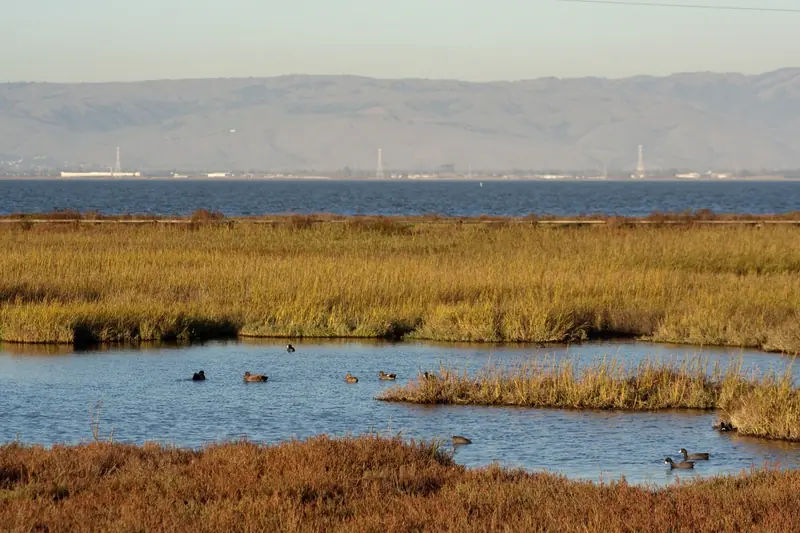
At the end of Embarcadero Road, past the golf course and the airport, a low wooden building stands on pilings over the pickleweed. This is the Lucy Evans Baylands Nature Interpretive Center, the city's front door to the salt marsh. Inside are exhibits on the plants and animals of the bay edge. Outside, a deck and a long boardwalk put you over the marsh itself.
The center is small and its hours are limited, but it punches above its size. The city says it serves about 130 classes and camps, 3,000 elementary students and 80,000 visitors a year. This page covers the building, the woman it honors, the boardwalk, the programs and how to plan a visit. For the wider preserve, start with our Baylands Nature Preserve guide.

Who was Lucy Evans?
Lucy Evans graduated from Stanford in 1929 and taught at Mayfield School for 23 years. She spent years pressing the city to protect the marsh rather than fill and develop it. Her persistence earned her the nickname "Baylands Lucy."
She died suddenly in 1978. That December the Baylands Nature Interpretive Center was rededicated in her memory. She was not the only one who fought for the shoreline. The Harriet Mundy Marsh, which stretches from the nature center to Sand Point, was dedicated on October 23, 1982, to honor another resident whose petition helped stop a large commercial and industrial plan for the Baylands. Our history of the Baylands tells the full story of how the marsh was saved.
The building
The center sits on pilings at the edge of the salt marsh, so the marsh runs right up to the building. It is a modest structure built for school groups and short visits rather than long museum days.
The city completed a round of facility improvements in April 2017. A separate exhibit project has been replacing worn outdoor exhibits, signs and graphics. The city's project page describes eight interpretive stations built into the deck, three of them with glass viewing windows. It also says current funding covers only the exterior signs and that staff are seeking grants for new boardwalk signage, so some panels may look newer than others.
Exhibits inside cover the plants and animals of the marsh. Naturalists also use the space for classes, so it may be busy with a school group on a weekday.
The boardwalk
The boardwalk is the reason many people come. It runs about a quarter mile from the center straight across the marsh to the edge of open water. At the end you look out over mudflats, channels and on clear days the hills on the far side of the bay.
The first boardwalk went up in 1969. By 2014 all but the first 200 feet had to be closed for safety. The city rebuilt it on the original line with new supports, railings, decking and overlooks. The city lists Alaskan yellow cedar beams with redwood railing posts, railings and decking. It was designed with sea level rise in mind, with an expected life of 50 to 75 years. The new boardwalk reopened in 2019. It is wider than the old one and meets accessibility standards, so it works for wheelchairs and strollers.
Time it with the tide if you can. At high tide water fills the channels and birds move close. At low tide the mud is exposed and shorebirds spread out to feed. Our birdwatching guide explains what to look for in each season.
Classes, camps and school programs
Most of the center's work is teaching. City naturalists run:
- School field trips. About 3,000 elementary students a year, according to the city.
- Classes and family programs. Listed in the city's seasonal Enjoy! catalog. Some are free and some charge a fee.
- Bay Camp. A summer program for young people based at the Baylands. Dates and grades are posted with the city's summer camp listings.
The city also notes that the Cooley Landing education center in East Palo Alto continues its Baylands Open Space Education Program, so some programs may meet across the creek. Our Cooley Landing guide covers that park. For a wider list of options, see nature programs for kids and our summer camps guide.
Hours and visiting
The center is open far fewer hours than the preserve around it. Its schedule has also shifted over the years. The city's engineering project page has listed open hours of Wednesday and Thursday from 1 to 4 p.m. and Saturday from noon to 4 p.m. That page does not say which year those hours began, so treat them as a guide rather than a promise. Call the center at 650-329-2506 or check the city's nature center page before you drive out for it.
The preserve itself is open every day from 8 a.m. to sunset. Even when the building is closed you can walk the boardwalk, read the deck panels and watch birds. The city also lists the center among its rentable facilities, which can mean a private event or class on some days.
Good to know
- Parking in the preserve lots is free. There is no public transit to the door.
- There is little shade and the afternoon wind can be cold. Bring a layer.
- Feeding wildlife and flying drones are banned across the preserve.
- Bring binoculars. The deck and the end of the boardwalk are the best viewpoints.
When to go
Late fall through early spring is the peak season. Ducks and shorebirds arrive in big numbers from roughly November to February and the highest winter tides push secretive marsh birds into view. That is the best chance to see the endangered Ridgway's rail from the boardwalk. Spring brings migrants and breeding colors. Summer is quieter, with pelicans on the ponds and egrets in the sloughs.
Mornings are usually calmer than afternoons. Wind tends to build after lunch, which makes birds harder to find. If the center's open hours fall in the afternoon, walk the boardwalk first thing and come back to the exhibits later.
A one-hour visit
- Park and check the tide. Use the lots near the end of Embarcadero Road. A tide table on your phone tells you whether the channels will be full or the mud exposed.
- Walk the boardwalk first. Allow 20 to 30 minutes out and back, with stops at the overlooks.
- Read the deck stations. The interpretive panels and viewing windows on the deck explain what you just saw.
- Step inside if it is open. Ask staff what birds have been around that week.
- Finish at the Duck Pond. It is a short walk and an easy win with small children.
Nearby
The center is a short walk from the Duck Pond, the old saltwater pool turned bird pond. South of Embarcadero Road, Byxbee Park has low hills, land art and wide views. Plane fans can watch small aircraft land at Palo Alto Airport just to the south. Cyclists can link the center into a longer ride on the San Francisco Bay Trail. Families can find more ideas in our guide to Palo Alto with kids.
Frequently asked questions
What are the Lucy Evans nature center's hours?
The center keeps short afternoon hours that change with the season. A city project page has listed Wednesday and Thursday from 1 to 4 p.m. and Saturday from noon to 4 p.m., but it does not say which year those hours apply to. Call 650-329-2506 or check the city's Baylands pages before you go.
Who was Lucy Evans?
Lucy Evans graduated from Stanford in 1929 and taught at Mayfield School for 23 years. She fought so hard to protect the marsh that people called her Baylands Lucy. After she died suddenly in 1978, the nature center was rededicated to her memory in December of that year.
Is the Baylands nature center free?
Yes. There is no entry fee for the preserve and parking in the preserve lots is free. Classes, camps and some programs run by the center charge fees and are listed in the city's Enjoy! catalog.
How long is the Baylands boardwalk?
The boardwalk runs about a quarter mile from the nature center across the marsh to open water, so the round trip is about half a mile. The city rebuilt it on the original 1969 line and it reopened in 2019. It is wider than the old one and meets accessibility standards.
Can kids take classes at the Baylands nature center?
Yes. The city says the center serves about 130 classes and camps and 3,000 elementary students a year, including school field trips and a summer program called Bay Camp. Registration runs through the city's Enjoy! catalog.