On this page
Wing Venture Capital is an early-stage firm that gives Palo Alto as its home on every page of its website. It leads seed and Series A rounds. Today it describes nearly all of its work in terms of artificial intelligence. Its two founders came from two of the oldest names in local venture capital, Accel and Sequoia. That lineage shows up in the companies they backed before and after starting Wing.
This profile is a neutral guide for founders, job seekers and anyone curious about the local venture scene. It relies on Wing's own website and announcements, plus reporting from TechCrunch and Business Wire, with dates given where figures appear. For the basics of how venture funds work, start with our venture capital guide.
Founding and founders
Gaurav Garg and Peter Wagner launched the firm on July 3, 2013, under the name Wing Venture Partners. The launch release said the two had raised a $111 million first fund to build what they called consequential business technology companies. Today the firm uses the name Wing Venture Capital and the short form Wing VC.
Garg came from Sequoia Capital. The launch release said he spent ten years there as a venture partner. His current Wing bio says he was a partner at Sequoia from 2001 to 2012 and helped build FireEye and Jasper. Before investing he founded companies himself, including Redback Networks (public in 1999) and Ruckus Wireless (public in 2012).
Wagner came from Accel, where the launch release said he spent fifteen years and rose to managing partner. Companies he helped finance there included Arrowpoint Communications, Fusion-io, Infinera, Nimble Storage, Opower and Riverbed Technology. The two men first met at Redback Networks, where Garg was a founder and Wagner was an investor. Our Accel profile and Sequoia Capital profile cover the firms they left.
Where Wing is based
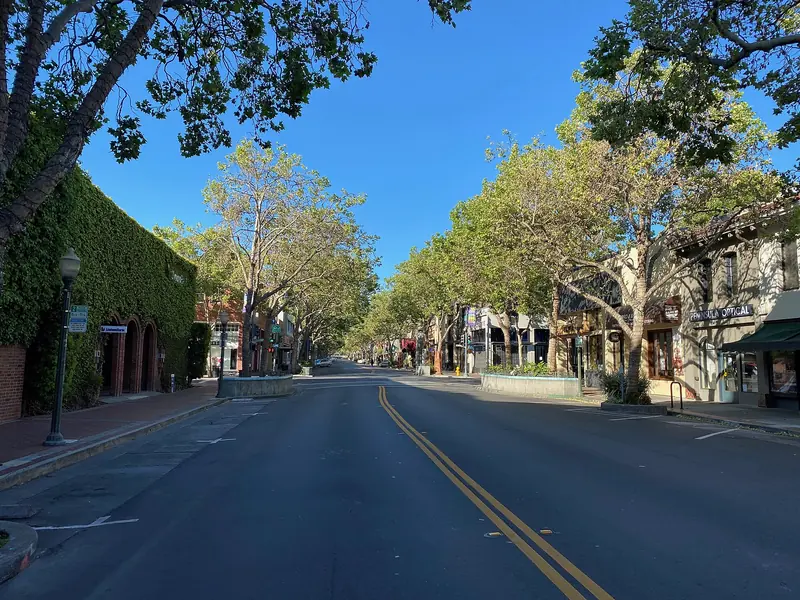
Wing's website footer reads "Wing VC, Palo Alto CA." The pages we read do not list a street address, so we do not publish one here. The firm's history shows a small move. Its 2013 launch release and its 2016 release for Wing Two both carried a Menlo Park dateline. The July 2023 release for Wing Four was datelined Palo Alto.
That shift mirrors a broader pattern. Many newer firms have chosen downtown Palo Alto over the office parks on Sand Hill Road, partly because founders can reach them by train and on foot. Like every venture office, Wing's is a private workplace, so visit only for a confirmed meeting.

Stage and focus
Wing's about page says the firm leads seed and Series A investments, backing founders who are building the AI-first economy. It traces that focus back to its start. The firm says it was founded in 2013 on the bet that data and cloud computing would reshape the enterprise. It argues that this bet is what made today's AI practical.
The homepage breaks its interests into several areas:
- Agents and AI-native industries, meaning companies that rebuild whole industries around AI.
- AI infrastructure, the hardware and software that let AI run at scale.
- Enterprise AI enablement, the tools companies use to put AI to work.
- Physical AI, including robotics.
- Domain-specific AI, such as new foundation models built for one field.
- AI security, both securing AI systems and using AI for security.
- Healthcare AI, from care delivery to biology.
The firm also says every partner has built companies, not just funded them. It adds that it helps with recruiting, customer introductions and go-to-market strategy after it invests. Our page on AI investors near Palo Alto puts Wing alongside other firms chasing the same wave.
Notable investments
Wing's portfolio page separates "Wing Companies" from "Prior Work," which covers companies its partners founded or backed before Wing existed. That split is useful, because a founder's bio and a firm's portfolio are not the same thing. The table below sticks to companies the firm itself names, with the source of each claim.
| Company | What Wing says | Source |
|---|---|---|
| Snowflake | Named among Wing portfolio companies | Wing Four release, July 2023 |
| Cohesity | Named in the Wing Two release as a portfolio company | Wing release, December 2016 |
| Shape Security | Portfolio company; Garg's bio says it sold in 2020 for $1 billion | Wing releases and team page |
| Gong | Named in the Wing Four release and on the homepage | Wing website |
| Pinecone | Named in the Wing Four release | Wing release, July 2023 |
| Classiq | Acquired by Intel, announced by Wing | Wing news, October 2026 |
| Dream Labs | Raised a $90 million seed round for robot intelligence | Wing news, October 2026 |
| Northstar | Wing-led seed round in agentic security | Wing news, October 2026 |
The homepage also quotes founders of Deepgram, Rula and Jellyfish. It says Wing has helped build more than 25 companies worth a billion dollars or more. That is the firm's own count. It describes outcomes, not investor returns. It also leaves out the many companies in any venture portfolio that do not succeed.
Funds and size
Wing has announced four main funds. Each was larger than the last:
- First fund, 2013. $111 million, per the launch release.
- Wing Two, December 2016. $250 million, per the firm's announcement.
- Wing Three, June 2020. $450 million, as TechCrunch reported at the time.
- Wing Four, July 2023. $600 million, per the firm's Business Wire release. Wing said the fund would follow its thesis of the AI-first transformation of business.
We searched for a fifth fund and found no announcement as of November 2026, so Wing Four is the latest one we can confirm. Fund sizes say how much the firm manages. They say nothing about how those funds perform. This page makes no claims about returns.
How founders reach Wing
Wing's homepage ends with a simple line: tell us what you're building. It pairs that line with a general email inbox for the firm, which is the channel the firm itself puts forward. We do not list individual partners' contact details. Founders should not treat a partner's personal inbox as a pitch line.
A practical approach looks like this:
- Read the firm's thesis page and recent investment posts to see whether your company fits one of its areas.
- Send a short note to the firm's general inbox: what you build, who buys it and why now.
- If you know a founder Wing has backed, ask for a brief introduction that explains the fit.
- Expect questions about technical depth. Wing says it reaches conviction early and tells founders what it thinks.
Our guides to pitching investors and term sheet basics cover what happens before and after a first meeting.
Wing in the local ecosystem
Wing belongs to a cluster of seed and Series A firms that call Palo Alto home, alongside True Ventures and Costanoa. Its founders' careers also tie it to the area's networking and chip history. Redback, Ruckus, Aruba and Riverbed were all Silicon Valley hardware and networking companies. That background explains why Wing still writes about GPUs, data centers and infrastructure costs.
The firm publishes research too. Its insights page posts work on topics such as GPU depreciation and AI infrastructure debt. A banner on its site points to the 2026 edition of the ET30, the firm's annual Enterprise Tech 30 list of private companies. Lists like these are a common way for firms to stay visible to founders and other investors.
Good to know
- Wing VC is unrelated to Wing, the drone delivery company owned by Alphabet.
- The firm lists only "Palo Alto" as its location. Confirm the meeting place before you travel.
- Downtown Palo Alto parking is mostly in city garages with time limits. The Palo Alto Caltrain station is often easier.
- Nothing on this page is investment advice. Portfolio claims are the firm's own.
Frequently asked questions
Where is Wing Venture Capital located?
Wing gives its location as Palo Alto, California, on every page of its website. It does not print a street address on the pages we read. Its early fund announcements in 2013 and 2016 carried a Menlo Park dateline, while the 2023 Wing Four release was datelined Palo Alto.
Who founded Wing?
Gaurav Garg and Peter Wagner launched the firm in July 2013 as Wing Venture Partners. Garg had spent about a decade at Sequoia Capital. Wagner had spent fifteen years at Accel, where he was a managing partner. Both are still listed as partners.
What does Wing invest in?
Wing says it leads seed and Series A rounds for founders building what it calls the AI-first economy. Its site lists areas such as AI infrastructure, enterprise AI tools, physical AI and robotics, AI security, domain-specific models and healthcare AI.
How big are Wing's funds?
Reported fund sizes have grown with each vehicle: $111 million for the first fund in 2013, $250 million for Wing Two in December 2016, $450 million for Wing Three in June 2020 and $600 million for Wing Four in July 2023. We found no announced fifth fund as of November 2026.
How do founders pitch Wing?
The homepage invites founders to tell the firm what they are building and lists a general email inbox for that purpose. A warm introduction from a founder Wing already backs also helps, as it does at most early-stage firms.