On this page
Pear VC is the rare venture firm whose origin story starts in a Palo Alto rug shop. Co-founder Pejman Nozad began investing in startups while selling rugs in town, long before he ran a fund. Today Pear is a pre-seed and seed firm with offices in Menlo Park and San Francisco, a team of more than 20 and a program called PearX that founders can apply to directly.
This profile is a neutral explainer for founders. It draws on Pear's website and published reporting, with sources noted where figures appear. For the basics of how venture funds work, see our venture capital guide.
Founding and founders
Pear says it was founded in 2013 with the goal of building a firm that puts founders first. Pejman Nozad, then an active angel investor, recruited Mar Hershenson to join him. The two launched the firm as Pejman Mar Ventures in August 2013. About three years later they renamed it Pear. The firm says the name nods to pear trees, which are strong but need support. It adds that its founders said the name evoked "pairing up."
The founders' paths are part of the firm's identity. According to Pear, Nozad immigrated to the United States from Iran with $700 and began investing while working as a rug dealer in Palo Alto. Hershenson is from Barcelona, holds a PhD in electrical engineering from Stanford and is a three-time founder. Both have appeared on the Forbes Midas List of top investors, the firm notes.
That Palo Alto and Stanford background still shows. One PearX example on the firm's site describes two founders who left Stanford to build their company together. Our page on Stanford entrepreneurship programs covers the campus side of that pipeline.
Offices in Menlo Park and San Francisco
Pear's contact page lists 241 El Camino Real, Menlo Park, CA 94025 and 600 Townsend Street in San Francisco. The Menlo Park address is on the southern stretch of El Camino Real, close to the Palo Alto city line and a short drive from Stanford and Stanford Shopping Center. The Stanford Park Hotel is on the same road a little to the south.
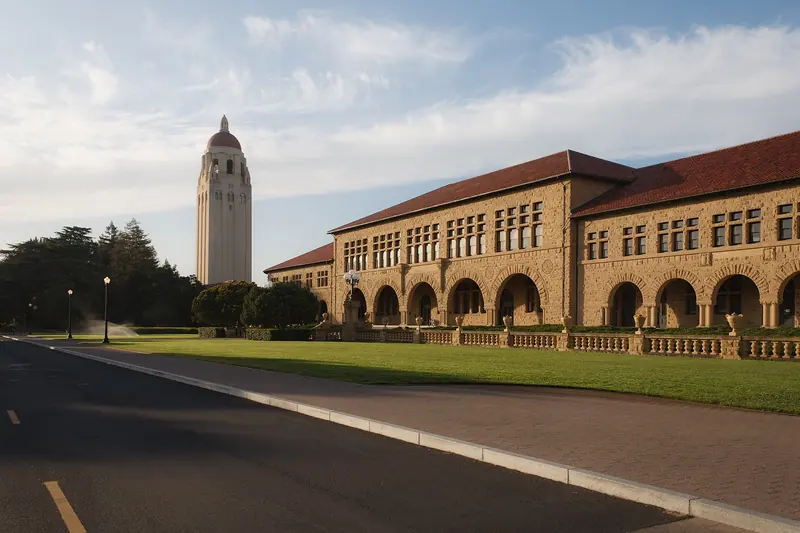

The offices are private workplaces. PearX companies may get free desk space in what Pear calls Pear Studio for up to six months, but outside visitors come only by appointment.
PearX, the pre-seed program
PearX is the main way Pear invests at pre-seed. The firm describes it as a 12-week program. Its key terms, as listed on Pear's website:
- Checks: $500,000 to $2 million per company, tailored to each team. Pear says it typically targets about 7 percent ownership at pre-seed.
- Cohorts: twice a year, with no more than 25 teams in each.
- Support: a senior Pear partner for each founder, plus talent, go-to-market and fundraising help and a dedicated recruiter.
- Perks: about $4.5 million in credits and deals from cloud and AI providers and free office space for up to six months.
- Community: each cohort starts with Camp Pear, a three-day retreat.
- Demo Day: founders pitch other investors at the end of the program.
Pear says 80 percent of PearX teams raise from institutional investors, compared with what it calls an industry average of about 60 percent. It also says 16 PearX companies are valued at $100 million or more. Those are the firm's own figures. Our accelerators guide compares PearX with other programs in the area.
Seed and early-stage investing
Beyond PearX, Pear says it leads and co-leads early-stage rounds with checks of up to $10 million. It lists eight areas: AI applications, AI infrastructure, B2B software, biotech, consumer, deep tech, fintech and healthcare. The firm also runs community programs, including a Female Founders Circle, a Persian Founders Circle and Pear Fellows.
The difference between a pre-seed and a seed round is informal. Our seed and pre-seed funds page explains the labels and how dedicated early-stage firms compare with large multi-stage firms.
Notable investments
Pear says its portfolio includes multiple companies valued at more than $1 billion and four IPOs. Its story page names DoorDash, Gusto, Vanta, Cognition, Listen Labs, Forus, Guardant Health and Gravis Robotics. Founders quoted on its site include Tony Xu of DoorDash and Josh Reeves of Gusto.
Guardant Health, the cancer blood test company, has a local link. It is headquartered on Hanover Street in Stanford Research Park. Our Guardant Health profile covers its history.
Recent PearX examples on the firm's site include Vals AI from the summer 2023 cohort, which Pear says raised a $40 million Series A. Another is Andera from summer 2024, which Pear says raised a $37 million Series A. Like every portfolio list, these are highlights. Many pre-seed companies never raise again.
Funds
Pear's funds have grown quickly:
- 2016: StrictlyVC reported that Pejman Mar raised $75 million for its second fund and rebranded as Pear.
- 2023: Bloomberg reported in May 2023 that Pear raised $432 million for a seed venture fund.
- 2026: Pear announced a $333 million Fund V on October 14, 2026, alongside the promotion of three partners to general partner, according to news reports.
Fund sizes describe the money a firm can invest, not its results.
Pear in the local ecosystem
Pear fills a specific gap on the Peninsula. Large Sand Hill Road firms increasingly write seed checks, but few offer a structured program with a published application. Y Combinator does, but it is based in San Francisco and works at a much larger scale. Pear's small cohorts and its office near the Stanford end of El Camino Real make it a natural first stop for student and recent graduate founders in Palo Alto and Menlo Park.
Its founders' story also echoes an old Palo Alto pattern. Angels who made their first bets locally, often from outside the traditional finance world, later built institutional firms.
How founders reach Pear
Pear is one of the most accessible firms in the area because it publishes a direct route in. Its PearX FAQ says the firm accepts applications year round and that a Pear investor reviews every one. Any founder starting a company is eligible. Pear notes that most PearX founders have not raised money before.
- Apply to PearX through the firm's website if you are at pre-seed.
- For a larger seed or early-stage round, look at the team page and the eight focus areas to find the right partner, then seek an introduction from a founder Pear has backed.
- Prepare a short explanation of the problem, why your team is the one to solve it and what the first check will let you prove.
Our guides to pitching investors and term sheet basics cover what to expect after a first conversation.
Good to know
- Pear's offices are private. Visit only for a scheduled meeting.
- Earlier write-ups describe PearX as a 14 week program. Pear's website now says 12 weeks.
- Pear also works from San Francisco. Confirm the meeting location before you travel.
- This page is not investment advice and makes no claims about returns.
Frequently asked questions
Where is Pear VC located?
Pear's contact page lists two offices: 241 El Camino Real, Menlo Park and 600 Townsend Street in San Francisco. The Menlo Park office is near the Palo Alto line, a short drive from Stanford and downtown Palo Alto.
What is PearX?
PearX is Pear's 12-week program for pre-seed founders. Pear runs it twice a year with no more than 25 teams per cohort and invests $500,000 to $2 million per company. It ends with a Demo Day where founders pitch other investors.
How do I apply to PearX?
Pear says it accepts PearX applications year round through its website and that a Pear investor reviews every application. Any founder starting a company is eligible. Pear notes that most founders who join have not raised money before.
Who founded Pear VC?
Pejman Nozad and Mar Hershenson launched the firm as Pejman Mar Ventures in August 2013 and renamed it Pear about three years later. Nozad began investing while working as a rug dealer in Palo Alto. Hershenson holds a Stanford PhD in electrical engineering and founded three companies.
How big is Pear's latest fund?
Pear announced a $333 million Fund V on October 14, 2026, as reported by several outlets. Bloomberg reported in May 2023 that Pear had raised $432 million for its previous seed fund.