On this page
Joan Baez belongs to the whole folk revival, from the coffeehouses of Cambridge to the March on Washington. But a good part of her story starts in Palo Alto. She went to high school here. She found her teacher in nonviolence at a bookstore just over the Menlo Park line. And through the 1960s she kept coming back to the Peninsula's peace movement, its draft resisters and its hills.
This page sticks to public, documented facts about those years. It draws on her Wikipedia biography, Stanford Libraries' archival records and the published history of Kepler's Books. For the wider decade, start with our page on Palo Alto in the 1960s.
A scientist's family on the move
Joan Chandos Baez was born on January 9, 1941, on Staten Island in New York City. Her father, Albert Baez, was a Mexican-born physicist. Her mother, Joan Bridge Baez, was born in Scotland. Albert's career moved the family often, across the United States and abroad, including a year in Baghdad.
Stanford was one of the stops. Albert Baez earned his PhD at Stanford in 1950. The family's Quaker faith and his refusal to work on weapons research shaped the household. Those values show up again and again in his daughter's later choices.
Palo Alto High School and the air raid drill
In the 1950s the family lived in Palo Alto and Joan attended Palo Alto High School. Schools across the country then ran civil defense drills in which students practiced taking shelter from a nuclear attack. Baez refused to leave her classroom during one of those drills at Paly. She has described it as her first act of civil disobedience. The story appears in nearly every account of her life.
She was already singing and playing guitar as a teenager. She graduated in 1958. That year her father took a faculty position at the Massachusetts Institute of Technology and the family moved to the Boston area. Within a year she was singing in Cambridge coffeehouses and on her way to national fame after the 1959 Newport Folk Festival.
Ira Sandperl and Kepler's
The most important person Baez met in Palo Alto may have been Ira Sandperl. He was a pacifist who had attended Stanford, taught meditation and Sunday school at the Palo Alto Friends Church and in 1955 became the first employee of Roy Kepler's new bookstore on El Camino Real in Menlo Park. He spent his days talking books and politics with customers.
According to Sandperl's Wikipedia biography, he met Baez when she was a high school senior. He became her mentor in the theory and practice of nonviolence, drawing on Gandhi and on the American peace movement. Our page on Kepler's Books and the 1960s tells the store's side of the story.
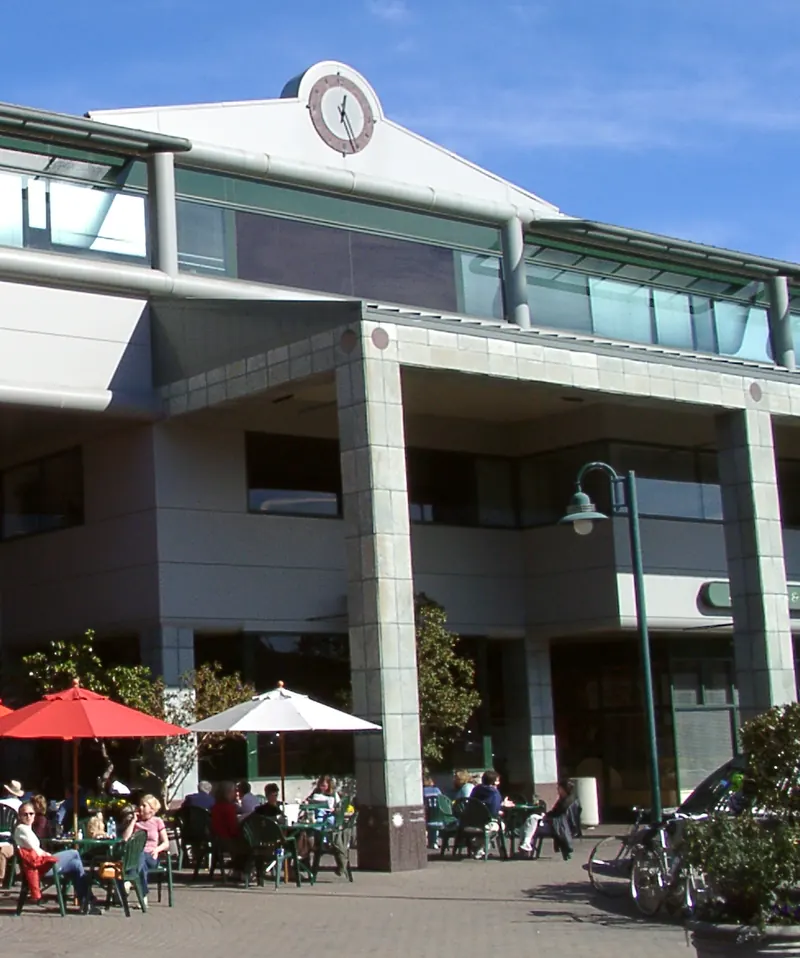

The friendship lasted decades. In 1974 Sandperl published a memoir, A Little Kinder, with Science and Behavior Books in Palo Alto. Baez wrote its introduction. He died in Menlo Park on April 13, 2013, at 90.
The Institute for the Study of Nonviolence
By the mid-1960s Baez was famous and wealthy enough to fund ideas she believed in. With Sandperl she founded the Institute for the Study of Nonviolence. Wikipedia dates it to 1965 in one section and 1964 in another. It opened in Carmel Valley, inland from Carmel. Sandperl ran it and Baez paid for it. It admitted a small number of students who read, discussed and practiced nonviolent action.
Not everyone in Carmel Valley welcomed a school founded by an outspoken folk singer. Neighbors fought its operation and the dispute over a permit went to court, according to Sandperl's biography.
The institute did not stay there. A Stanford Libraries finding aid for the papers of Robert P. J. Cooney Jr. says it "later moved to Palo Alto and continued there until 1976." Those papers, covering 1965 to 1987, are held in Stanford's Department of Special Collections and University Archives. Our page on Special Collections explains how researchers can request them.
Good to know
- We have not found a published street address for the institute's Palo Alto home, so we do not give one.
- Sources disagree on the founding year (1964 or 1965). Both appear in reputable accounts.
- For the Carmel area itself, see our Monterey and Carmel day trip.
Taxes, jail and the draft
Baez practiced what the institute taught. In 1964 she withheld 60 percent of her income taxes in protest of military spending. In 1966 she and Sandperl went to Grenada, Mississippi, to support the desegregation of local schools.
In 1967 she was arrested twice for blocking the entrance to the Armed Forces Induction Center in Oakland. In October of that year she, her mother and dozens of other women were arrested there and held at Santa Rita Jail in Alameda County. Sandperl served time for the same protests.
In jail she met David Harris, a former Stanford student body president who had become a leader of the draft resistance movement. After their release she moved into his draft resistance commune in the hills above Stanford. They married on March 26, 1968, in New York City. Back on the Peninsula they lived at Struggle Mountain, a commune on about 10 acres in Los Altos Hills. The marriage ended in an amicable divorce in 1973.
Teaching and the local scene
Baez also turned up in the Peninsula's alternative education movement. Our 1960s page lists her among the teachers and visitors at the Midpeninsula Free University, the member-run school that offered classes in living rooms and storefronts in Palo Alto, Menlo Park and Mountain View from 1966 to 1971.
Her local years overlapped with the rise of the Palo Alto folk scene that produced Jerry Garcia and the Grateful Dead. Kepler's back room was a meeting point for that crowd too. The scenes touched without merging: Baez was already a national star with a political mission while Garcia's friends were still playing small clubs on University Avenue. Our page on the Grateful Dead's Palo Alto roots follows that thread.
A long public career
Baez's career after the 1960s is well documented and mostly took place far from Palo Alto. A few milestones:
- 1987: Publishes her memoir And a Voice to Sing With.
- February 2007: Receives the Grammy Lifetime Achievement Award.
- April 7, 2017: Inducted into the Rock and Roll Hall of Fame.
- July 28, 2019: Gives her final concert, at the Teatro Real in Madrid, ending her touring career.
- May 2021: Honored as part of the 43rd Kennedy Center Honors, postponed from 2020.
- 2023: The documentary Joan Baez: I Am a Noise is released.
- 2024: Publishes a book of poems, When You See My Mother, Ask Her to Dance.
Tracing her Palo Alto years today
Little marks Baez's time here, which suits the low-key way Palo Alto treats its famous residents. A few places carry the story:
- Palo Alto High School on Embarcadero Road, where she refused to join the air raid drill. It is a working school, so admire it from the street.
- Kepler's Books on El Camino Real in Menlo Park, still open and still hosting author talks. The store moved to its current site in 1989, so it is not the room where she met Sandperl.
- Stanford's Special Collections, which hold the institute's papers.
Baez is a living person with a right to privacy. We do not list homes or private places linked to her. For the full sweep of the decade she helped define, see Palo Alto in the 1960s and our Palo Alto timeline.
Frequently asked questions
Did Joan Baez go to Palo Alto High School?
Yes. She graduated from Palo Alto High School in 1958. While a student there she refused to leave her classroom during an air raid drill, which she has described as her first act of civil disobedience. Her family moved to Boston after she graduated.
Who was Ira Sandperl?
Ira Sandperl (1923 to 2013) was a pacifist and the first employee of Kepler's Books, hired in 1955. He met Joan Baez when she was a high school senior and became her mentor in nonviolence. The two founded the Institute for the Study of Nonviolence in the mid-1960s.
Where was the Institute for the Study of Nonviolence?
It began in Carmel Valley in the mid-1960s. Sources give 1964 or 1965. A Stanford Libraries finding aid says it later moved to Palo Alto and continued there until 1976. Papers on the institute are held in Stanford's Special Collections.
What was Struggle Mountain?
Struggle Mountain was a commune on about 10 acres in Los Altos Hills. Joan Baez and David Harris, a former Stanford student body president and draft resister, moved there after they married in March 1968.
Is Joan Baez still performing?
She retired from touring in 2019 and gave her final concert on July 28, 2019, at the Teatro Real in Madrid. Since then she has been the subject of a documentary, Joan Baez: I Am a Noise (2023). She also published a book of poems in 2024.